


New Delhi's Cautious Nod to Kathmandu's Electoral Exercise
Prime Minister Narendra Modi of India extended congratulations to the people and government of Nepal on the "successful and peaceful conduct" of recent elections. This marks a significant moment, particularly with the Rastriya Swatantra Party (RSP), fronted by Balendra Shah, projected for a substantial victory, challenging established political forces. India has reiterated its commitment to close collaboration with Nepal's new administration, aiming for "shared peace, progress and prosperity."
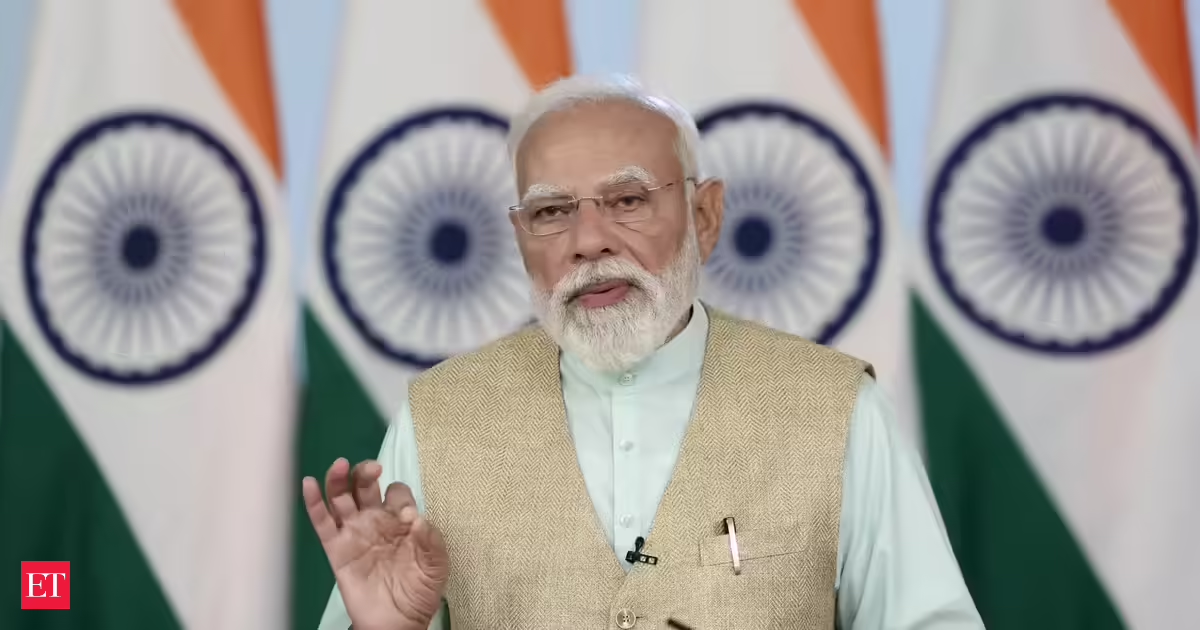
The core message from India highlights a positive reception to the electoral outcome, emphasizing continuity in the bilateral relationship and an eagerness to engage with the emerging leadership.

A Shifting Political Landscape in Nepal
The elections have seen a notable shift, with the RSP, a party formed from a base including a "rapper-turned-politician," Balendra Shah, making significant inroads. Reports indicate the RSP is poised for a "clean sweep" in certain provinces, and Balendra Shah himself has been projected as the RSP's Prime Ministerial candidate. This rise signals a departure from the traditional dominance of parties like the Nepali Communist Party and figures such as former Prime Minister KP Sharma Oli.
Read More: Karnataka Deputy CM D.K. Shivakumar's Silence Fuels Opposition Questions on Budget

The RSP's campaign was notably organized at Janakpur in Madhesh.
Balendra Shah secured a significant margin of victory in his constituency, outpolling KP Sharma Oli.
Discussions are already underway regarding Balendra Shah's potential role as Prime Minister.
India's Stated Intentions
Prime Minister Modi articulated India's stance as a "close friend and neighbour," reaffirming a "steadfast commitment to working closely" with Nepal. This sentiment was conveyed through social media posts and direct communication with key Nepali political figures, including RSP chairman Rabi Lamichhane and Balendra Shah. India’s reiterated vow centers on advancing mutual well-being and prosperity.
Context of Recent Political Upheaval
These elections follow a period of political instability in Nepal, marked by widespread "Gen Z-led protests" last year, which at one point aimed to unseat the government of KP Sharma Oli. The "vibrant exercise" of democratic rights by the Nepali populace is seen as a positive indicator by New Delhi.
Read More: Trump Demands Iran Surrender After Israel Strikes Tehran Bunker
Electoral Performance Snapshot
While the RSP is projected to lead, other parties have also registered successes:
| Party | Seats Won | Seats Leading |
|---|---|---|
| Nepali Communist Party | 2 | 5 |
| Shrama Shakti Party | N/A | 3 |
| Rastriya Prajatantra Party | 1 | N/A |
| Independent Candidate | 1 | N/A |
| Rastriya Swatantra Party (RSP) | (projected landslide) | (projected landslide) |
Pushpa Kamal Dahal Prachanda of the Nepali Communist Party secured a win in Rukum Purba district.
The Nepali Communist Party reportedly swept all constituencies in Kathmandu district.
Keywords
' Nepal Elections ', ' Rastriya Swatantra Party ', ' Balendra Shah ', ' India-Nepal Relations '