


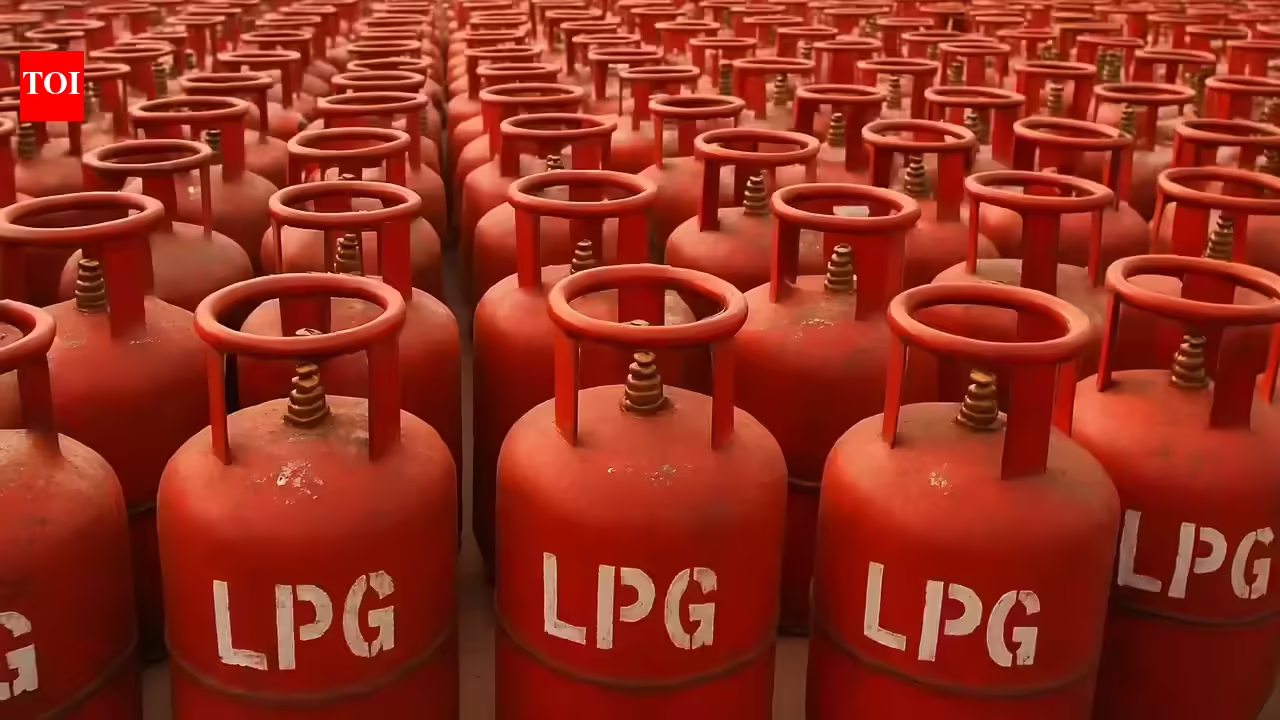
The nation's hospitality sector is grappling with a significant commercial Liquified Petroleum Gas (LPG) shortage, stemming from government directives to prioritize domestic supply and potential disruptions from international conflicts. While industry leaders warn of widespread impact, certain traditional food preparations, like Hyderabad's haleem, may navigate the crisis with adjusted methods.

The government has implemented measures to boost domestic LPG production and has revised natural gas allocation to ensure a steadier supply for households. This strategic shift, however, has led to reduced availability of commercial LPG cylinders for restaurants and hotels across major cities.

Priority Shift: Steps are being taken to bolster LPG production, with directives issued to oil refineries. The government's focus appears to be on securing domestic supply for households, leading to potential shortages for commercial entities.
Industry Concerns: Representatives from the restaurant industry are flagging declining commercial LPG supplies and uncertainty over future availability. Some reports indicate commercial gas supply has already become "dry" in Delhi, with domestic distribution taking precedence.
Logistical Hurdles: A looming strike by approximately 4,000 LPG tanker owners in six southern states – Tamil Nadu, Kerala, Telangana, Karnataka, Andhra Pradesh, and Puducherry – starting March 27th, is poised to exacerbate supply chain issues in those regions.
Haleem Production's Shifting Dynamics
Despite the broader LPG crisis, the large-scale production of the Ramzan delicacy, haleem, in Hyderabad is not expected to be entirely halted. However, the preparation of certain integral components will be affected.

Wood-Fired Resilience: Many haleem producers utilize wood-fired kilns for the primary cooking process, a method that circumvents the reliance on LPG cylinders. This traditional approach offers a buffer against direct LPG shortages for the core haleem preparation.
Auxiliary Impacts: The preparation of "brista," the fried onions crucial for both biryani and haleem, is likely to face disruption. These onions are typically prepared using gas stoves, which depend on LPG.
Ingredient Cost Volatility: Separately, the cost of ingredients for haleem, particularly mutton, has seen a notable increase. Vendors are reportedly hesitant to pass these rising costs onto consumers, leading to steady prices despite increased expenses.
Broader Geopolitical Undercurrents
Reports suggest that international events, including the conflict between the US and Iran, are contributing to the current supply chain pressures. Asia, in particular, is reportedly struggling to secure emergency Liquefied Natural Gas (LNG) cargoes following disruptions in supply from Qatar. The government has indicated it is exploring wider oil sourcing, potentially from up to 40 countries, to stabilize the situation.
Read More: Iran Conflict May Raise Oil Prices, Affecting Gas Costs for Drivers
Background on the LPG Ecosystem
Liquefied Petroleum Gas (LPG) is a commonly used cooking fuel in India, both for domestic and commercial purposes. Its supply chain involves production at oil refineries, distribution through various oil marketing companies, and delivery via a network of distributors and tanker trucks. The current situation highlights the intricate dependencies within this system, where domestic priorities, logistical challenges, and international events can collectively influence availability. The hospitality sector, heavily reliant on commercial LPG for its operations, finds itself at the forefront of these disruptions.