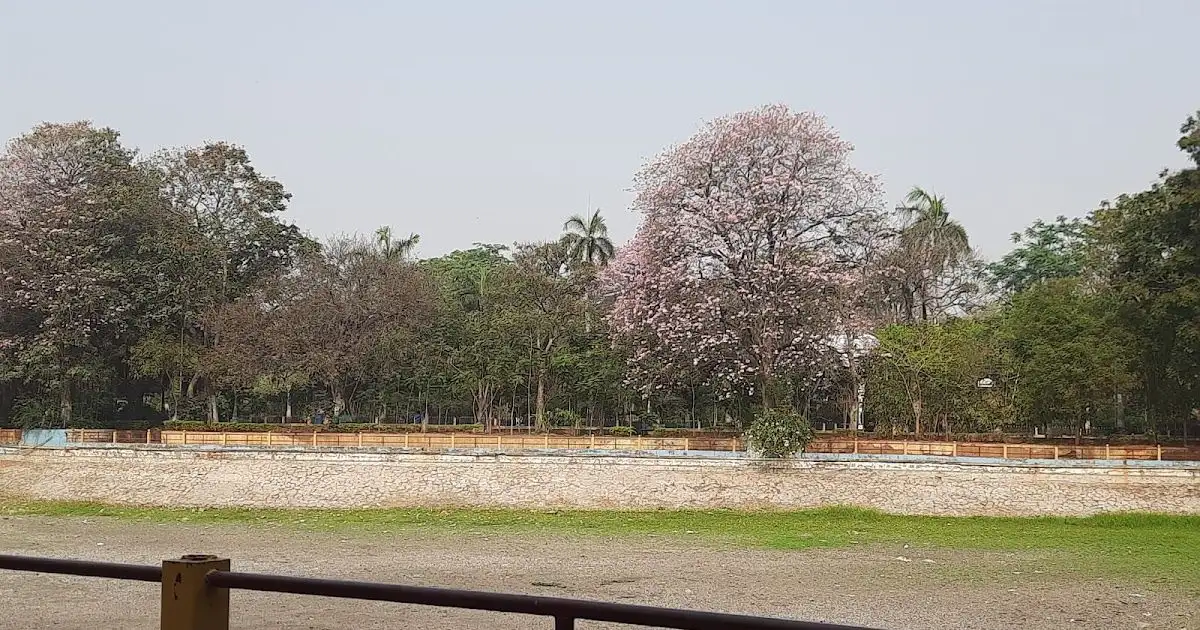
Hyderabad is currently undergoing a brief alteration of its concrete edges as Tropical Trumpet Trees reach their peak flowering stage. These plants, members of the Bignoniaceae family, shed their leaves entirely before pushing out clusters of trumpet-shaped flowers in pale pink, white, and yellow. The timing coincides with the city’s transition into a dry, heating summer, creating a temporary visual layer over the high-traffic zones of Gachibowli and Banjara Hills.
These blooms are biological indicators of a warming climate, functioning as a final burst before the intense heat.
The flowering cycle is notably short, lasting only a few weeks.
Local reports often conflate these species with ' Cherry Blossoms ', though botanists identify the primary pink canopy as Tabebuia rosea.
The Botanical Inventory
The city’s ornamental strategy relies on non-native species that thrive in direct sunlight and late-winter shifts. While the aesthetic is the primary focus of public attention, the biological utility of these trees centers on nectar production during a period when other water sources are scarce.
| Tree Species | Common Label | Primary Color | Habitat Type |
|---|---|---|---|
| Tabebuia rosea | Pink Trumpet | Soft Pink | Roadside Tech Corridors |
| Tabebuia aurea | Yellow Trumpet | Bright Yellow | Avenue Planting |
| Prunus (Sp.) | Cherry Blossom | Pink/White | Public Gardens/Assembly |
The once bare branches now burst forth, providing nectar for birds, insects, and butterflies that rely on these irregular blooms during the dry transition.
Structural Details and Locations
The ' Pink Trumpet Tree ' season is an unstable phenomenon. Unlike temperate springs, the Hyderabad bloom is a reaction to the incoming heat. These trees are largely concentrated in planned urban areas:
Read More: Why bird songs stop different species from mating as of April 2026
Public Gardens near the Assembly house older specimens that exhibit more white and pale-pink variations.
Tech Corridors use the trees as a visual softening agent against glass and steel architecture.
Avenue Rows across the city use yellow variants that bloom simultaneously with the pink species, though they attract different pollinators.
Investigative Background: The Mislabeling of Spring
The tendency to label these blooms as "Cherry Blossoms" points to a cultural desire for imported seasonal narratives. The actual trees, Tabebuia, are tropical imports that have become part of the city's ' ornamental avenue ' infrastructure. They are chosen not for longevity—as the petals fall quickly, creating a messy, decaying carpet—but for their high-impact, short-lived visual presence.
Botanists note that while the trees look delicate, they are sturdy survivors of urban pollution. The shedding of leaves is a survival mechanism to conserve water before the flowers emerge, making the "blossom" a byproduct of drought-stress rather than a simple awakening.