


A colossal 11,000-carat ruby, weighing approximately 4.8 pounds, has been unearthed in the Mogok region of Myanmar, an area historically renowned for its precious gemstones. Officials announced the discovery, highlighting its significant size and describing it as possessing a purplish-red hue with yellowish undertones, a high-quality color grade, moderate transparency, and a highly reflective surface. The finding places this stone among potentially the most valuable rubies ever discovered within the country.
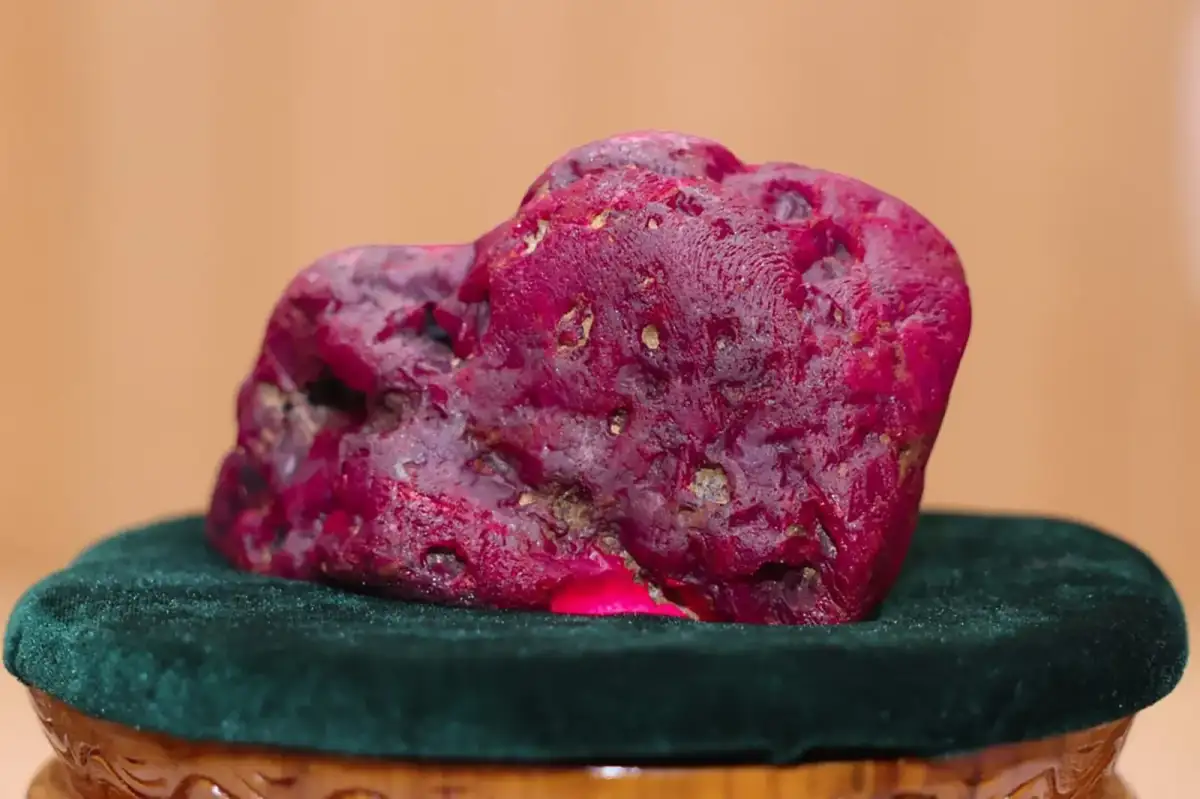
The gem was found near the town of Mogok in the upper Mandalay region, the very heartland of Myanmar's lucrative gem-mining industry. This industry, however, operates within a landscape marked by intense fighting and a wide-ranging civil war that has recently seen control of mining areas shift between guerrilla forces and the military. This juxtaposition of immense natural wealth and persistent conflict underscores the complex economic and political realities of the region.
Read More: Myanmar's Giant Ruby Found Amid Civil War

Images of the massive stone have surfaced, including one showing Min Aung Hlaing, the coup leader and current president, examining the ruby at his office. The Mogok valley has a long history of being contested, with emperors, kings, and warlords vying for control over its hidden treasures. The unique "pigeon-blood" rubies from this area are considered the most expensive in the world, with high-quality stones commanding multi-million-dollar prices in an industry often characterized by a notable lack of regulation.
The Gemstone Economy: A Double-Edged Sword
Gemstones represent a significant source of revenue for Myanmar, contributing both through legitimate trade and illicit channels. This revenue stream is a critical factor fueling both the military government and various ethnic armed groups engaged in protracted struggles for autonomy. This dynamic has been a persistent element contributing to decades of internal conflict.
Read More: Myanmar's Suu Kyi moved from prison to house arrest on Thursday
In response to this reality, human rights organizations, such as the Britain-based Global Witness, have repeatedly urged jewelers to cease purchasing gems sourced from Myanmar. They argue that the industry has served as a vital revenue stream for successive military regimes over many decades. Reports indicate that the control of mines in the region has fluctuated, with instances of groups like the TNLA taking operational control, only for it to be transferred back to the Myanmar army, sometimes mediated by external agreements. The discovery of such a significant gem, therefore, occurs against a backdrop of deeply entrenched political and economic complexities.

