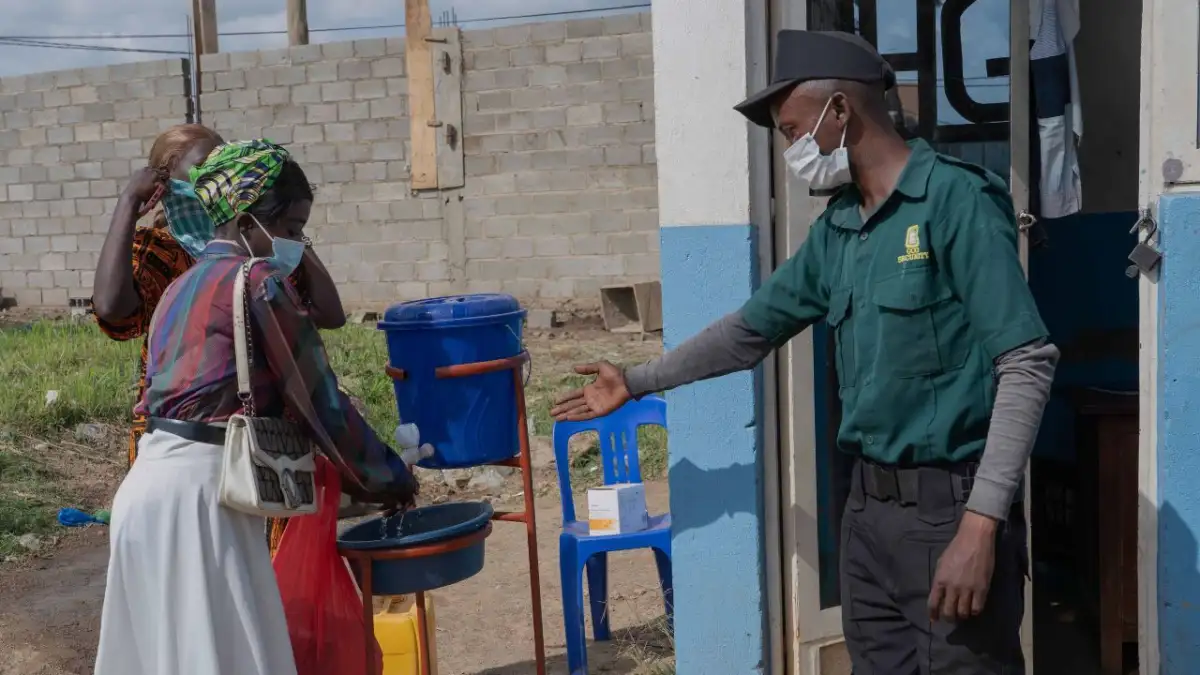
Health Officials Emphasize Low Risk as DRC Team Arrives
Houston is set to become a temporary home for the Democratic Republic of Congo's national football team during the upcoming 2026 FIFA World Cup. The city, slated to host seven matches between June 14 and July 4, is navigating preparations for the global event while acknowledging an escalating Ebola outbreak in Central Africa. Health authorities, including the CDC, have stated that the risk to the American public remains low. The Congolese team is expected to arrive around June 10 or 11 to set up their base camp at SaberCats Stadium.
The CDC has implemented travel restrictions for individuals recently in affected areas of the DRC to mitigate potential transmission risks, while concurrently assuring that the direct health risk to Americans and World Cup attendees in Houston is minimal. The World Health Organization has declared a global health emergency over the outbreak, which has seen hundreds of suspected cases and significant fatalities.
Read More: Spurs Beat Thunder in Double Overtime, Wembanyama Stars

World Cup Spotlight Intensifies Public Health Scrutiny
Houston's role as a host city elevates public health readiness to a level of importance comparable to stadium logistics and fan management. The city's World Cup Host Committee has been briefed on the outbreak, a situation complicated by the fact that none of the DRC players reportedly play professional club soccer within the Congo, potentially reducing their direct exposure to the outbreak zone. However, the precise impact of travel restrictions on the team's contingent, including players, coaches, and staff, remains unclear.
The upcoming tournament marks a significant occasion for the DRC, representing their first World Cup appearance in over fifty years. Community organizers view this as a moment to showcase Congolese culture.
Monitoring and Preparedness
Both FIFA and Houston's World Cup organizers are reportedly in close communication with health experts, continuously monitoring the Ebola situation. The specific strain of Ebola involved in the current outbreak is identified as the Bundibugyo strain, distinct from some previous outbreaks. Despite these concerns, experts maintain that the likelihood of Ebola cases linked to the World Cup entering the Houston area is low. The city's World Cup matches are scheduled to take place at NRG Stadium, designated as Houston Stadium for the tournament. The DRC's opening match is slated for June 17 in Houston against Portugal.
Read More: Ebola outbreak in Congo and Uganda causes 152 deaths as of May 2026