The issue of filling vacant medical seats versus adhering to established admission timelines has reached a critical juncture, with a significant judicial pronouncement clarifying the limits of High Court authority. This ruling addresses a long-standing tension between ensuring all available educational resources are utilized and maintaining the procedural integrity of national admission processes.
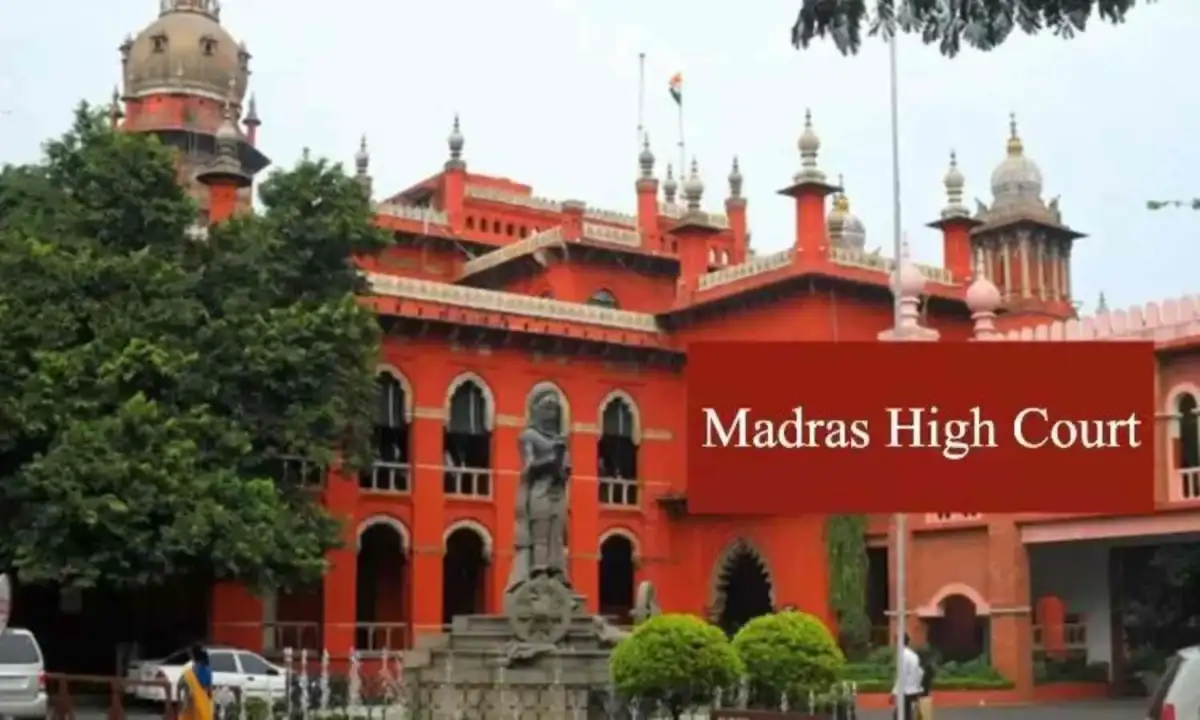
The Madras High Court has ruled that High Courts cannot compel the conduct of counselling for medical admissions beyond the designated cut-off dates, even if medical seats remain unfilled. This decision clarifies the jurisdictional boundaries, stating that only the Supreme Court possesses the authority to make exceptions to these strict timelines. The ruling stems from a situation where medical seats were left vacant, prompting appeals for further counselling rounds.
Background of Medical Admissions and Seat Vacancies
Medical admissions in India are governed by a structured process involving national entrance examinations and subsequent counselling rounds. These processes are managed by committees like the Medical Counselling Committee (MCC) and the Directorate General of Health Services (DGHS), operating under the Ministry of Health and Family Welfare. Strict timelines are established for each stage, from counselling to final admissions, to ensure a fair and orderly intake of students.
Read More: Ontario Police Charge Drivers With Impaired Operation Of Lawn Tractors On Public Roads In 2025
Despite these measures, seats sometimes remain vacant. This can occur due to various reasons, including candidates withdrawing their admissions, not reporting for counselling, or failing to meet subsequent requirements. When such vacancies arise after the official admission deadline, it presents a complex situation, balancing the need to fill these seats against the established procedural rules.
The Madras High Court's Decision
The Madras High Court, in a recent judgment, addressed the question of whether a High Court could order counselling to fill vacant medical seats after the prescribed admission deadline had passed.
The Division Bench of the Madras High Court agreed with the contention that allowing counselling beyond the cut-off date would "open up a pandora's box."
The court explicitly stated that High Courts lack the power to direct counselling for filling vacant seats beyond the fixed cut-off date for admissions.
The ruling acknowledges that even if seats become vacant due to official inaction or other reasons, a High Court cannot issue such directions.
The court referenced a Supreme Court decision in Ashish Ranjan versus Others (2021), which affirmed that medical admission regulations, including their timelines, have the "imprimatur" (authoritative approval) of the Supreme Court.
While acknowledging that High Courts possess broad writ jurisdiction under Article 226 of the Constitution to address arbitrariness and illegalities, the Bench indicated that the Supreme Court's pronouncements on admission timelines supersede this power in this specific context.
Supreme Court's Authority in Admission Regulations
The ruling emphasizes the unique position of the Supreme Court in matters concerning national medical admissions.
The Supreme Court has previously affirmed the regulatory framework and timelines governing medical admissions.
These regulations, bearing the Supreme Court's endorsement, are considered binding across all levels of the judiciary.
Therefore, the power to carve out exceptions to these established timelines is exclusively vested with the Supreme Court, not with the High Courts.
Conflicting Precedents and Interpretations
While the Madras High Court's decision provides a clear directive, there have been instances where courts have directed authorities to conduct additional counselling to fill vacant seats, particularly in specialized courses.
Read More: India Lok Sabha Seats: Southern States Will Not Lose Seats Amidst Expansion Plans
| Court's Action | Context | Outcome |
|---|---|---|
| Madras HC (Recent Ruling) | Fills vacant medical seats post-deadline. | Held that High Courts cannot order counselling beyond the admission deadline. |
| Madras HC (September 2025) | ~600 super-specialty seats vacant after NEET SS 2024-25. | Directed MCC and DGHS to conduct mop-up counselling within four weeks. |
| Kerala HC (January 2026) | Involved admission to MBBS course and common counselling structure. | Judgment details concerning specific case, common counselling structure. |
| Supreme Court (Referenced by Madras HC) | Ashish Ranjan versus Others (2021). | Affirmed the regulatory timelines for medical admissions. |
The discrepancy highlights the ongoing judicial deliberation on how to best balance procedural adherence with the efficient use of limited educational resources. The Madras High Court's recent ruling appears to provide a more restrictive interpretation of High Court powers in this regard.
Expert Analysis and Implications
Legal experts note that this judgment clarifies a critical point of law concerning the finality of admission deadlines in higher education, particularly in professional courses like medicine.
The decision reinforces the importance of adhering to timelines established by regulatory bodies and affirmed by the Supreme Court.
It suggests that any exceptions to these timelines must be sought directly from the Supreme Court, preventing a cascade of individual orders from High Courts that could disrupt the national admission process.
The ruling may lead to greater discipline in the admission process, encouraging all stakeholders – students, institutions, and authorities – to complete their steps within the stipulated periods.
However, concerns might persist regarding the fate of vacant seats and the potential wastage of educational infrastructure if no avenues for filling them are available post-deadline.
Conclusion and Future Considerations
The Madras High Court's definitive stance that High Courts cannot order counselling beyond the admission deadline, irrespective of vacant seats, establishes a significant legal precedent. This ruling underscores the Supreme Court's paramount authority in dictating the framework and timelines for medical admissions.
The judgment serves as a strong signal to all High Courts to refrain from issuing directives that extend beyond the officially mandated admission cut-off dates.
Students and institutions must now operate with a heightened awareness of these strict deadlines, ensuring all admission-related activities are concluded within the prescribed periods.
The ruling, however, does not preclude the Supreme Court from exercising its inherent power to grant exceptions or modify regulations in exceptional circumstances.
The effective management of vacant seats will now rely heavily on the efficiency of the authorities responsible for conducting counselling within the designated timelines.
Sources
The Hindu: High Courts cannot order conduct of counselling beyond admission deadline even if medical seats go vacant: Madras HC. Published: February 13, 2026. https://www.thehindu.com/news/national/tamil-nadu/high-courts-cannot-order-conduct-of-counselling-beyond-admission-deadline-even-if-medical-seats-go-vacant-madras-hc/article70627193.ece
Medical Dialogues: 600 Super-speciality seats lying vacant- Madras HC tells MCC, DGHS to conduct NEET SS mop up round. Published: September 20, 2025. https://medicaldialogues.in/news/education/medical-admissions/600-super-speciality-seats-lying-vacant-madras-hc-tells-mcc-dghs-to-conduct-neet-ss-mop-up-round-155574
Casemine: RINCY RUDIYARD.M v. KARTHIK E BINOD, Kerala High Court, Judgment. Heard on January 8, 2026, Judgment passed on February 3, 2026. https://www.casemine.com/judgement/in/6982d8a84807061d735cfab1
Legal Bites: Case Summary: National Medical Commission v. Index Medical College, Hospital and Research Centre & Ors. (2025). Published: September 5, 2025. https://www.legalbites.in/landmark-judgements/case-summary-national-medical-commission-v-index-medical-college-hospital-and-research-centre-ors-2025-neet-ug-counselling-and-conditional-renewal-of-mbbs-seats-1182945