
The streets of Hamburg are reeling from a horrifying incident at the Wandsbek Markt subway station, where a young woman, Fatimeh Z., 18, lost her life after being brutally dragged onto the tracks by Ariop A., 25, a Sudanese migrant. The pair were both killed by an oncoming train on January 29th. While the immediate shock of such a violent act is palpable, a deeper, more unsettling question emerges: how could this man, with a documented history of aggression and police involvement, have been free to commit such a devastating crime?
This investigation seeks to untangle the events leading up to this tragedy, examining the suspect's prior encounters with the law and the system's response. The focus is not on the sensationalism of the act itself, but on the critical failures that may have allowed it to happen, demanding answers from the authorities tasked with public safety.
Read More: University of Bonn study shows visual signs boost animal welfare sales
"Prosecutors confirmed on Thursday that the suspect had been drinking on the platform in the moments leading up to the attack."
A Life Cut Short: The Events of January 29th
On the evening of January 29th, Fatimeh Z., an 18-year-old Iranian national, was waiting for a train at the Wandsbek Markt subway station in Hamburg. Her life, tragically, was to be extinguished in a sudden, unprovoked act of violence. According to reports, Ariop A., a 25-year-old South Sudanese refugee, approached her, grabbed her, and dragged her onto the train tracks just as a train was entering the station. The ensuing collision claimed both their lives.

Initial reports from local media painted a grim picture:
Random Selection: Investigators believe Ariop A. randomly selected Fatimeh Z. as his victim. There is no indication they knew each other. (Source: Daily Mail, European Conservative)
Platform Drinking: Prosecutors have confirmed that Ariop A. had been drinking beer on the platform prior to the attack. (Source: Daily Mail, The Sun)
Sudden Assault: The act was described as sudden and without warning, occurring in front of bewildered passengers. (Source: European Conservative, The Sun)
Scuffle Footage: Footage has emerged showing Ariop A. throwing a punch during a scuffle prior to the fatal incident. (Source: Daily Mail)
The motive behind this horrific act remains unclear, but the perpetrator's own demise meant that answers were sought from his past.
A Pattern of Violence? Examining Prior Incidents
What is deeply disturbing is that Ariop A. was not a stranger to law enforcement. Reports indicate a history of concerning behavior, raising serious questions about why he was not more closely monitored or why his previous actions did not lead to more stringent interventions.
Read More: Third Teen Charged in Fatal Stabbing Near Melbourne Hospital on Wednesday

January 15th Incident: Just over two weeks before the fatal attack, Ariop A. was involved in another incident at the refugee accommodation where he lived. He reportedly argued with other residents and allegedly hit his roommate on the arm. (Source: Daily Mail, The Sun)
Aggravated Assault Allegations: He had also reportedly been arrested and was facing charges for aggravated assault, allegedly attacking police officers just days before the Wandsbek Markt tragedy. (Source: The Sun, Daily Mail)
Known to Police: Chief Public Prosecutor Melina Traumann stated that Ariop A. was "well-known to police" prior to the murder. (Source: The Sun)
Residence Permit: He held a valid residence permit and lived in communal accommodation in Hamburg. (Source: European Conservative)
This timeline suggests a pattern of escalating aggressive behavior.
| Incident Date | Nature of Incident | Suspect's Status | Location of Incident |
|---|---|---|---|
| Prior to Jan 29th | Alleged aggravated assault; attacked police officers. | Arrested, then released. | Unknown |
| January 15th | Argument with residents; allegedly hit roommate. | Residing in refugee accommodation. | Refugee accommodation, Hamburg |
| January 29th (approx. 10 PM) | Randomly selected and dragged 18-year-old woman onto train tracks. | Consuming alcohol on platform; then fatal attack. | Wandsbek Markt subway station, Hamburg |
Given these prior encounters, one must ask:
Were these incidents adequately investigated and prosecuted?
What measures were in place to assess the risk posed by Ariop A. following these events?
Why was he not detained or subjected to stricter supervision after allegedly attacking police officers just days before the fatal incident?
Did the authorities have a clear understanding of his mental state and potential for violence?
The Shadow of Previous Tragedies: A Chilling Parallel
The horrific events in Hamburg are not isolated. This incident tragically echoes a similar case that occurred in Lower Saxony just months prior, raising concerns about a broader systemic issue in handling individuals with violent tendencies and complex asylum statuses.
On August 14th, 2025, Liana K., 16, a Ukrainian girl, was reportedly pushed in front of a freight train in Friedland, Lower Saxony. The alleged perpetrator, Muhammad A., 31, was an asylum seeker diagnosed with paranoid schizophrenia at the time of the attack. (Source: The Sun)

"Most read in The US Sun On January 15, Ariop was involved in another incident during a police operation at the refugee accommodation where he lived. It has been confirmed today that the killer had been boozing on the platform of the Hamburg subway station before carrying out the fatal attack."
The juxtaposition of these two incidents is stark:
Victim Demographics: Both victims were young women, and both were of migrant or refugee backgrounds.
Method of Attack: Both involved being pushed or dragged onto train tracks in front of an oncoming train.
Perpetrator Status: Both perpetrators were asylum seekers or migrants with prior documented issues.
Timing: The Hamburg incident occurred only months after the Lower Saxony tragedy.
These parallels demand a critical examination of how authorities are responding to cases involving individuals with a history of aggression, particularly those within refugee and asylum-seeking communities. Are there adequate protocols in place to identify and manage potential risks before such devastating outcomes occur?
Read More: Bayern Munich signs Nathaniel Brown for 55 million euros on 7 April 2026
Echoes of Disquiet: Political and Public Reaction
The incident has understandably sparked public outcry and political commentary. Co-leader of the Alternative für Deutschland (AfD), Alice Weidel, took to X (formerly Twitter) to express her shock:
"Terrible act in Hamburg: A South Sudanese man drags an 18-year-old woman in front of an incoming subway train with him."
This statement highlights the immediate focus on the perpetrator's migrant status, a common theme in political discourse surrounding such events. However, as investigative journalists, our role is to move beyond immediate reactions and delve into the systemic failures that might have contributed to the tragedy.
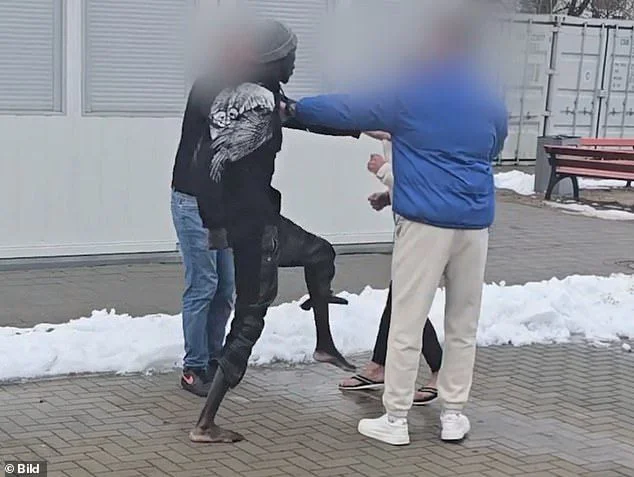
The fact that Ariop A. allegedly attacked police officers just days before the incident is particularly alarming. Why was he released? What was the nature of the aggravated assault charge? Were his mental state and past behavior thoroughly assessed at that time?
The Unanswered Questions: Towards Accountability
The death of Fatimeh Z. is a profound loss, leaving behind a void and a multitude of unanswered questions. The tragedy of Ariop A.'s own demise means that a full account of his intentions may never be known. However, the focus must now shift to accountability and prevention.
Read More: Three hearses burned in Roselands arson attack on 4 April 2026
The confirmed details paint a disturbing picture: a man, allegedly consuming alcohol, with a history of violence, including alleged assaults on police officers, was free to roam the streets and commit an act of unspeakable brutality.
What specific charges were pending against Ariop A. before the Hamburg incident, and what was the status of his legal proceedings?
What protocols exist within Hamburg and the wider German state for assessing and managing individuals with documented histories of violence, especially within accommodation facilities?
Was there any communication or information sharing between different law enforcement agencies and social services regarding Ariop A.'s behavior and potential risk?
How can we ensure that similar incidents are prevented in the future, without resorting to xenophobia but by strengthening robust public safety measures and mental health support systems?
The answers to these questions are not merely academic; they are crucial for honoring the memory of Fatimeh Z. and for preventing future tragedies. The public deserves transparency, and the authorities owe a duty to explain how this could have happened.
Sources:
Daily Mail: https://www.dailymail.co.uk/news/article-15537575/Sudanese-migrant-drank-beer-pulled-woman-train-killed-Hamburg.html
The Sun: https://www.thesun.co.uk/news/38139673/migrant-killed-teen-dragging-train-guzzled-beer-waited-victim/
Express: https://www.express.co.uk/news/world/2165074/woman-dies-migrant-train-tracks
European Conservative: https://europeanconservative.com/articles/news/migrant-pulls-18-year-old-woman-onto-hamburg-subway-tracks/
Daily Mail (Release): https://www.dailymail.co.uk/news/article-15515501/Sudanese-migrant-dragged-woman-18-rail-tracks-killed-train-arrested-police-released-just-days-before.html
The Sun (Dual Victim): https://www.thesun.co.uk/news/38077323/woman-killed-train-sudanese-migrant/


/cloudfront-ap-southeast-2.images.arcpublishing.com/nzme/RVI7RFHOI34HTKKRUG3LS6DNVY.jpg)