
The ongoing dialogue surrounding application programming interfaces (APIs) reveals a persistent tension between gRPC and REST. While both serve as frameworks for inter-service communication, their underlying mechanisms and resulting capabilities diverge, shaping how modern systems interact. The choice between them is not a matter of simple preference, but a nuanced decision dictated by specific use cases, performance demands, and architectural philosophies.
At the heart of the distinction lies the communication protocol and data serialization methods employed. gRPC leverages HTTP/2, a protocol offering advantages in performance and enabling various streaming types, including bidirectional streams. This contrasts with REST, which traditionally relies on HTTP/1.1. gRPC's efficiency is further amplified by its use of Protocol Buffers (Protobuf), a binary serialization format known for its speed and compact data representation. REST, conversely, often utilizes human-readable formats like JSON or XML, offering greater accessibility but at the cost of performance and bandwidth.
Read More: Chrome mimeHandler API lets extensions handle file types

The gRPC Proposition: Performance and Real-Time Needs
gRPC is frequently positioned as the superior choice for scenarios demanding high performance, low latency, and real-time data exchange. Its architecture is particularly suited for:
Internal Microservices Communication: Facilitating rapid and efficient interaction between tightly coupled services within an organization's infrastructure.
Real-Time Data Streaming: Enabling applications like chat services, video streaming platforms, or telemetry monitoring systems where continuous data flow is paramount.
Schema-First Development and Type Safety: gRPC's reliance on
.protofiles for defining service contracts inherently promotes a structured, type-safe approach to API development, leading to fewer runtime errors.
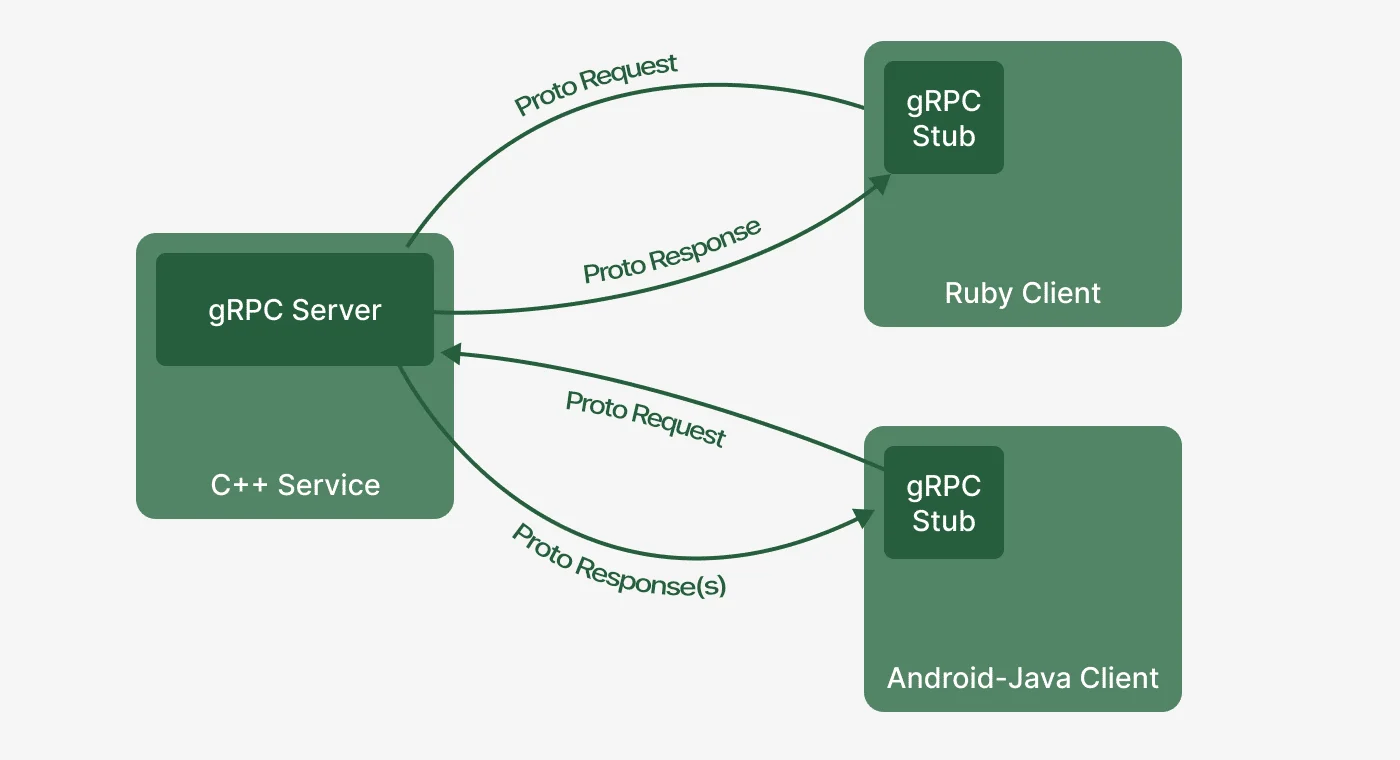
The operational model of gRPC involves clients choosing specific procedures to invoke, a stark contrast to REST's URL-path template selection. This procedural focus, combined with HTTP/2's capabilities, allows for features such as client-side streaming, server-side streaming, and full-duplex bidirectional streaming – patterns less naturally accommodated by REST.
The REST Paradigm: Simplicity and Broad Accessibility
REST, on the other hand, has long been the bedrock of web APIs, celebrated for its simplicity, statelessness, and resource-based communication. Its adherence to standard HTTP methods makes it widely understood and easily testable using common tools like browsers and Postman. Key advantages of REST include:
Public-Facing APIs: Its human-readable nature and browser compatibility make it an ideal choice for APIs intended for external developers or broad public consumption.
Human Readability: The use of formats like JSON and XML simplifies debugging and integration for developers less familiar with binary protocols.
Ubiquitous Browser Support: REST APIs can be natively accessed by web browsers using standard fetch or AJAX requests, a convenience not directly offered by gRPC without additional tooling like gRPC-Web.
While REST is generally perceived as slower than gRPC due to its text-based communication and reliance on HTTP/1.1, its enduring presence underscores its value in scenarios where accessibility and ease of implementation outweigh raw performance.
Read More: Why Manual Prompt Editing Is Better For AI Apps In April 2026
Navigating the Hybrid Landscape
The discussion is not always a binary choice. Many modern architectures adopt a hybrid approach, leveraging the strengths of both gRPC and REST. This often translates to using gRPC for internal, performance-critical microservices, while exposing RESTful endpoints for external-facing applications or public APIs. Tools like gRPC-Gateway exist to bridge this gap, allowing gRPC services to be exposed as REST endpoints, facilitating gradual migration and integrated systems.
Ultimately, the decision between gRPC and REST hinges on a thorough understanding of the specific requirements:
Performance Criticality: For low-latency, high-throughput needs, gRPC often presents a more robust solution.
Audience and Accessibility: Public APIs or those requiring broad developer access often benefit from REST's inherent simplicity and readability.
Real-Time Demands: Applications needing live data updates or continuous communication streams are strong candidates for gRPC's streaming capabilities.
Development Ecosystem: While gRPC offers multi-language support with integrated tooling, REST's widespread adoption means a vast ecosystem of libraries and frameworks are readily available.
The choice between these architectural styles fundamentally shapes how systems are designed, tested, and scaled, impacting their ability to generate value and adapt to future demands.