


Officials Cite 'Under Control' Situation, Advise Against Hoarding
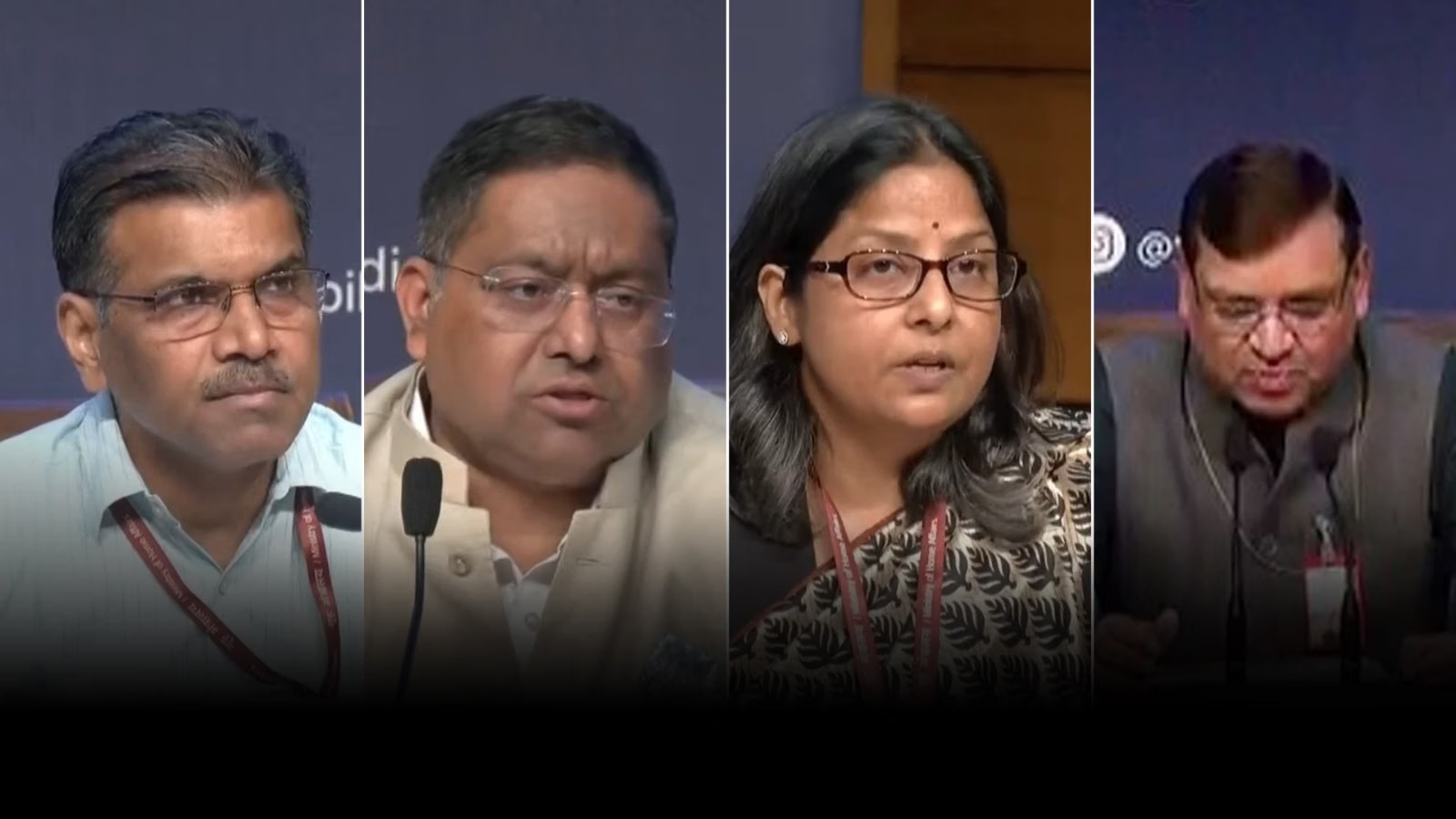
The government has publicly stated that the domestic Liquefied Petroleum Gas (LPG) supply is "under control" and consumers have been urged to avoid "panic booking" and hoarding. This assertion comes in the wake of field reports indicating an uptick in consumers rushing to book cylinders. The normal delivery cycle for domestic LPG is reportedly around 2.5 days, and officials maintain that no dry-outs have been reported at any LPG bottling plants.

The official stance is that the domestic LPG supply remains stable, with consumers advised against unnecessary bookings due to increased pressure on the supply chain stemming from global energy disruptions.

Authorities are continuously monitoring the global energy situation, particularly concerning the impact of the West Asia conflict and the closure of the Strait of Hormuz, a crucial maritime route for oil and liquefied natural gas (LNG) shipments. This geopolitical unrest has led to increased LPG bookings, reportedly surging to 75.7 lakh compared to a pre-war average of 55.7 lakh.
Read More: Yum! Brands Raises Dividend Despite Missing Q4 Earnings, Expands KFC
Prioritizing Essential Sectors and Industrial Supply
For non-domestic LPG, a tiered supply system is reportedly in place, prioritizing essential sectors. Hospitals and educational institutions are slated to receive full supply. The statement indicates that domestic piped natural gas (PNG) and compressed natural gas (CNG) for vehicles will also see 100% supply. Industrial consumers, including the tea industry and manufacturing units connected to the gas grid, are expected to receive approximately 80% of their previous six-month average supply. Fertilizer plants will receive about 70%, while refineries and petrochemical units may face a reduction of roughly 35% to ensure higher priority sectors are protected.

India's Import Dependency and Diversification Efforts
India's reliance on imports for energy remains significant, with the country sourcing approximately 88% of its crude oil, 50% of its LNG, and 60% of its LPG demand internationally. A substantial portion of these imports historically transits through the Strait of Hormuz. In response to potential disruptions, officials have stated that oil marketing companies are actively diversifying import sources, securing crude cargoes from multiple international suppliers. Domestic refineries are reported to be operating at high utilization levels to ensure adequate product availability, with assurances that crude oil supply remains secure.
Read More: Supreme Court hears pleas against Islamic inheritance law for Muslim women
"There is no need for panic booking, and no LPG dealer has reported running out of stock." - Sujata Sharma, Joint Secretary, Ministry of Petroleum and Natural Gas
Officials have also pointed to an increase in domestic LPG production, with one report suggesting a 28% rise. The government has reportedly rejigged natural gas allocation priorities to ensure uninterrupted supply of cooking gas and CNG. Some regional governments, such as Haryana, are reportedly monitoring the situation closely and seeking daily reports from districts on gas availability. Despite fears of shortages, the government maintains that adequate LPG stocks are available across the country.