


The Supreme Court is examining petitions that question the current Islamic inheritance statutes, which petitioners argue discriminate against Muslim women by granting them a lesser share of property compared to male heirs. The court, while hearing these matters, has indicated that a Uniform Civil Code might offer a solution, while also expressing concern about creating a legal void should the Shariat provisions be invalidated. Simultaneously, the All India Muslim Personal Law Board (AIMPLB) has vehemently condemned these challenges, labeling them "mischievous" and asserting that Islamic inheritance laws are fundamental religious practices, derived from the Quran and Sunnah, and thus obligatory for Muslims.
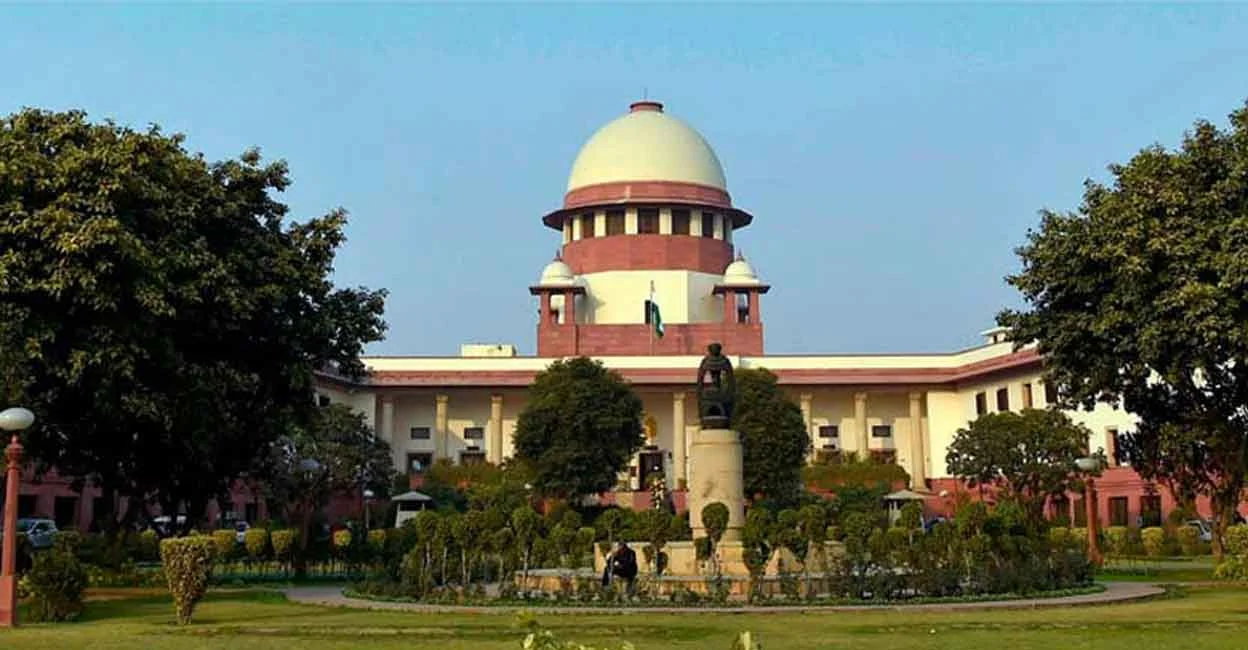
The core of the legal contest revolves around claims of gender-based discrimination in Islamic inheritance law and the constitutional right of individuals to opt out of religious mandates regarding property distribution.
Read More: Bengaluru MLA Byrathi Basavaraj Gets Bail in Murder Case on February 26, 2026

The bench, comprising Justices Surya Kant, Joymalya Bagchi, and R Mahadevan, has questioned the court's capacity to adjudicate the constitutionality of personal law practices. It has also prompted petitioners to clarify the remedies that would apply if the Shariat inheritance provisions were indeed struck down, suggesting that legislative action, possibly through a Uniform Civil Code, would be the preferred route. The court has acknowledged that invalidating these provisions without an existing statutory framework could lead to a significant legal vacuum for Muslim women.

Board's Firm Stance on Religious Practice
The AIMPLB, through its spokesperson S Q R Ilyas, has been vocal in its opposition. The Board argues that Islamic family laws are not merely customs but are intrinsically linked to religious observance, citing the Quran and the tradition of Prophet Muhammad as their origin. They reject the notion that these laws are subject to alteration based on external legal challenges and stress that their observance is a religious obligation. The Board has further contended that Article 44 of the Directive Principles of State Policy, which advocates for a Uniform Civil Code, is a guiding principle and cannot be imposed upon Muslims without their consent.
Read More: Free Cochlear Implants for Children Under Six with Severe Hearing Loss in Trichy

Nature of the Petitions
Recent legal filings have brought forward varied arguments. One petition, filed by advocate Naushad KK, does not seek to reform Muslim personal law itself but questions the state's authority to enforce religious mandates on individuals who wish to bequeath property under the Indian Succession Act or through their own will, without renouncing Islam. This plea, alongside others from entities like the Sunnath Society, raises questions about individual autonomy, freedom of conscience, and the potential conflict between religious law and constitutional rights such as Articles 14, 21, and 25. These petitions have been tagged together by the court for joint consideration.
The petitioners have also invoked international human rights standards, referencing the Universal Declaration of Human Rights and the International Covenant on Civil and Political Rights, to argue for domestic laws that uphold property rights and freedom of conscience. They point to the state's selective enforcement of religious rules, arguing that while certain religious duties are not mandated, adherence to specific inheritance laws is enforced.
Read More: Alabama Governor Stops Execution for 75-Year-Old Man After 33 Years on Death Row
Broader Legal and Political Context
This judicial engagement occurs against the backdrop of a prolonged debate surrounding a Uniform Civil Code in India. The AIMPLB has previously expressed strong opposition to certain legislative actions, including amendments to the Waqf Act. Their resistance to perceived governmental encroachment on religious laws has led to protests and legal challenges, indicating a broader pattern of contention over personal laws and their governance. The Waqf (Amendment) Bill, 2024, for instance, faced significant opposition from the Board, who alleged it was designed to "usurp" Waqf properties. These events highlight a complex interplay between religious identity, gender justice, and the state's role in regulating personal laws.