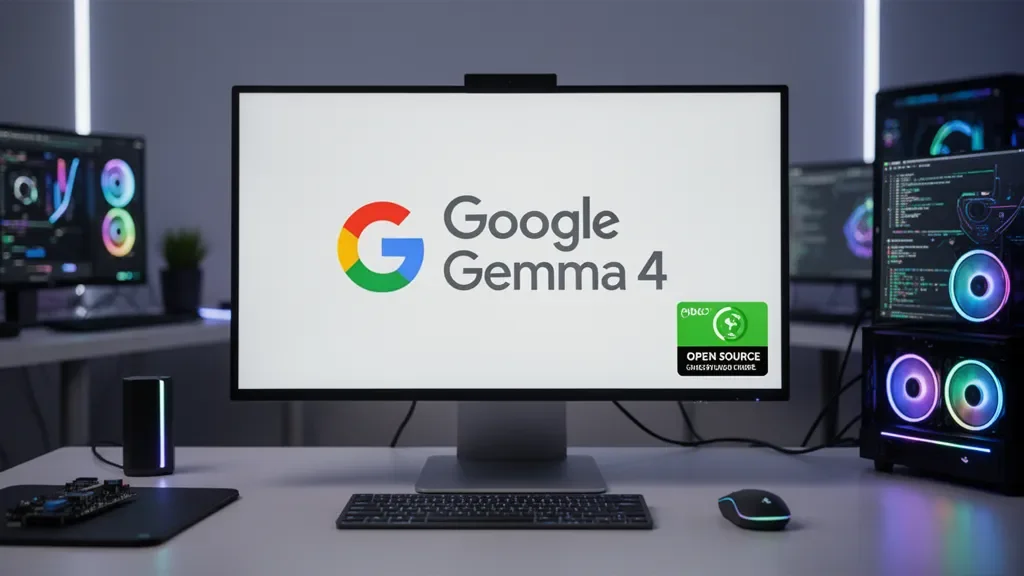
Google DeepMind has introduced Gemma 4, a new family of open-source AI models designed for efficient local deployment. These models, derived from the same technologies as Google's larger Gemini series, aim to democratize generative AI by enabling powerful on-device applications. The Gemma 4 lineup includes various sizes, such as the Gemma 4 31B IT, 26B A4B IT, E4B IT, and E2B IT, catering to different hardware capabilities and performance needs.
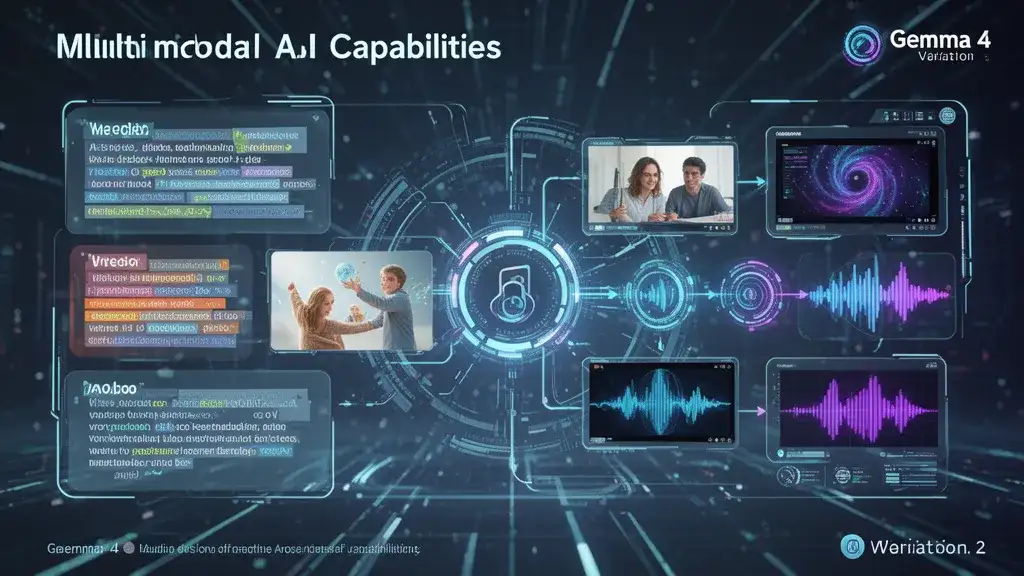
Gemma 4's primary innovation lies in its efficiency, making advanced AI functions accessible on personal computers, mobile devices, and IoT systems. The models exhibit enhanced reasoning abilities, capable of understanding complex software architectures, suggesting optimizations, and identifying potential vulnerabilities. This makes them suitable for a range of applications, from conversational AI and content creation to code generation and multimodal analysis that incorporates text, audio, image, and even video.
Read More: Chrome mimeHandler API lets extensions handle file types
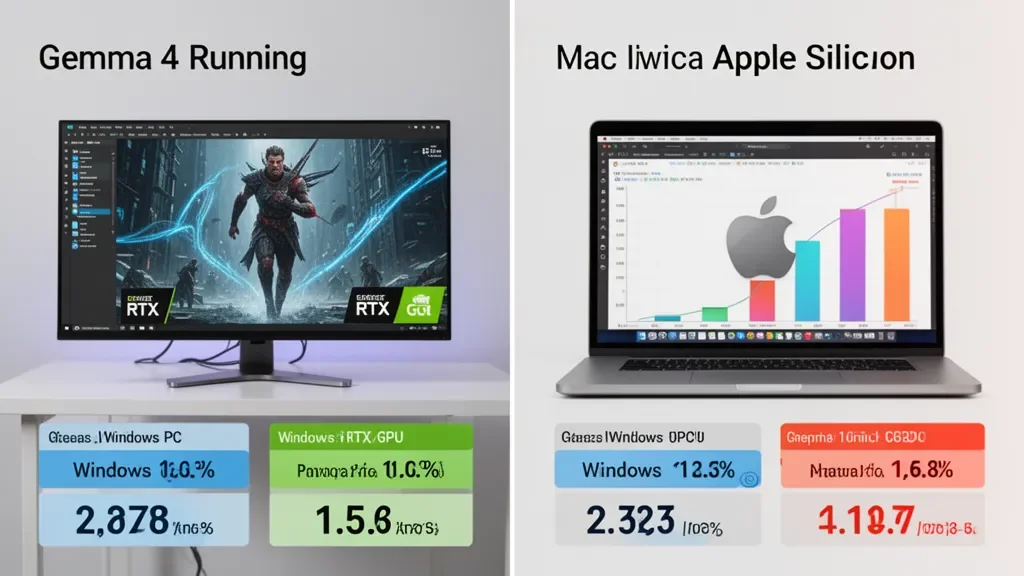
The deployment of Gemma 4 on local hardware offers significant advantages, including improved efficiency, development speed, and enhanced privacy due to reduced reliance on cloud processing. Users can install and run these models using specialized software like LM Studio or Ollama, mirroring the established methods for deploying other open-source AI models. This move aligns with Google's broader strategy to complement its large-scale AI offerings with accessible, on-device solutions.
Google emphasizes that Gemma 4 models incorporate the same security protocols as their proprietary counterparts, providing a transparent and reliable foundation for businesses and sovereign organizations. Previous iterations of Gemma were trained on massive datasets, with versions ranging from 7 billion to 2 billion parameters, optimized for efficient execution on GPUs, TPUs, or even CPUs and embedded devices. These pre-trained and fine-tuned checkpoints are designed for research, dialogue, and instruction-following prompts.
Read More: New AI Method Maps API Logic for Safety by April 7, 2026
The practical applications of Gemma 4 are extensive. They can function as intelligent personal assistants, power conversational agents, facilitate embedded natural language processing, enable lightweight robotics and IoT systems, and support offline applications requiring low latency and high privacy. Furthermore, Gemma 4 is positioned to aid in prototyping and open-source AI research. The models are expected to maintain strong performance in language understanding, reasoning, and security, surpassing many comparable models through at least mid-2026.