Markets Assess Trade and Monetary Policy Signals
Gold prices have seen a noticeable decline, with the precious metal falling by over 1% in recent trading sessions. This downturn appears linked to a firmer U.S. dollar and a reduction in investor demand for safe-haven assets. Trading volumes were also described as thin in some Asian markets due to public holidays, potentially magnifying price movements. The shifts in gold's value are occurring against a backdrop of evolving U.S. trade policy, anticipation surrounding Federal Reserve monetary policy, and geopolitical events.
Economic Data and Central Bank Actions
Recent economic data has presented a mixed picture, influencing expectations for Federal Reserve interest rate decisions. While U.S. consumer prices increased less than anticipated in January, job growth unexpectedly accelerated during the same month. Earlier data indicated a decline in U.S. job openings in November, yet private payrolls saw a modest increase.

Federal Reserve officials have acknowledged these indicators. Austan Goolsbee, President of the Federal Reserve Bank of Chicago, noted that interest rates could be lowered, but also pointed to persistent high inflation in the services sector. This has led market participants to largely anticipate that the Fed will maintain current interest rates at its upcoming March 18 meeting.

Historically, gold, being a non-yielding asset, tends to perform well in environments with low interest rates and during periods of economic uncertainty. However, other factors appear to be presently overshadowing this dynamic.

Geopolitical Events and Trade Policy Influence
Geopolitical developments have also played a role in market sentiment. The capture of Venezuelan President Nicolas Maduro over the weekend preceded U.S. President Donald Trump's announcement of plans to refine and sell Venezuelan crude. Concurrently, the White House confirmed discussions regarding the acquisition of Greenland, including potential military involvement.
Read More: Why Global Banks Are Making More Money In May 2026
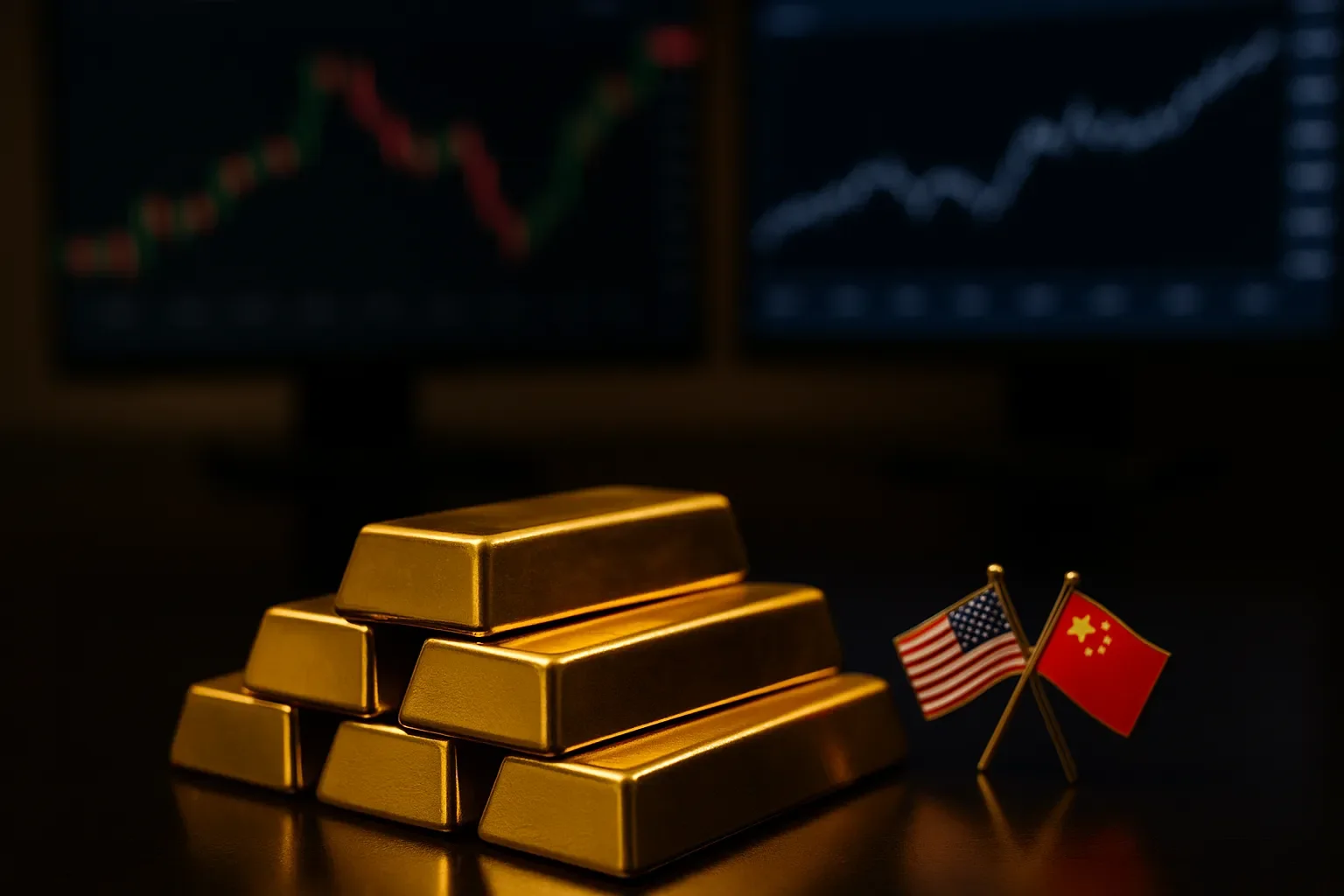
Separately, ongoing U.S. trade negotiations have kept markets on edge. Hints from Scott Bessent, the Treasury Secretary, regarding the possibility of extending talks with key partners beyond an initial notification deadline have led investors to reassess risks. Optimism surrounding potential trade agreements, particularly between the U.S. and China, has also contributed to easing demand for gold as a safe-haven asset. This optimism was reinforced when China exempted some U.S. imports from tariffs, although the extent of these negotiations remains a point of discussion.
The Dollar's Ascendancy
A consistently firmer U.S. dollar has demonstrably reduced gold's appeal for investors using other currencies. The Bloomberg Dollar Spot Index has seen a mild increase, further limiting the safe-haven flows into gold. When the dollar strengthens, it makes gold, priced in dollars, more expensive for those holding different currencies, thereby dampening demand. Managers have also reported a slight decrease in holdings in the SPDR Gold Trust, consistent with reduced haven demand amid trade optimism and a stronger dollar.
Read More: US Markets Drop as Consumer Spending Slows Down
Divergent Market Conditions
The impact of these factors has been observed across different trading sessions and regions. While U.S. markets were closed for Presidents' Day, markets in China and other Asian countries experienced thin trading due to Lunar New Year holidays. These varying market conditions could have amplified the price movements observed.
Expert Perspectives
Eurasian Economic News noted that while softer employment data supports the case for Fed easing, which has previously underpinned gold, other factors are now dominant.
The general market sentiment indicates that when hopes for a U.S.-China trade deal rise, the perceived need for gold as a safe haven diminishes, leading to price dips.
Conclusion and Future Outlook
The recent decline in gold prices is a complex phenomenon, influenced by a confluence of factors. A strengthening U.S. dollar is exerting downward pressure, making the metal less attractive to foreign buyers. Simultaneously, evolving U.S. trade policies and intermittent optimism surrounding potential U.S.-China trade agreements are eroding gold's safe-haven appeal. While some economic data points might suggest a future path towards lower interest rates, which typically benefits gold, these considerations are currently being outweighed by the immediate impact of a robust dollar and trade-related uncertainty. The persistent geopolitical developments add another layer of complexity to the market landscape. The anticipation of the Federal Reserve's next meeting on March 18, and any further clarity on monetary policy and trade negotiations, will be crucial in shaping gold's trajectory.
Read More: Top Teachers Can Earn Over $173,000 in Luxembourg
Sources:
CNBC: Gold falls more than 1% as investors lock in profits. Published January 7, 2026. https://www.cnbc.com/2026/01/07/gold-drops-as-traders-reassess-us-venezuela-relations.html
Gurutrade: Gold Declines on Thin Trading, Stronger Dollar. Published 1 day ago (relative to input date). https://www.gurutrade.com/news/gold-declines-on-thin-trading-stronger-dollar-1771244002.html
WIONews: Gold slips with investors wary of US trade moves and firm dollar. Published July 7, 2025. https://www.wionews.com/business-economy/gold-slips-with-investors-wary-of-us-trade-moves-and-firm-dollar-1751870622890
Tredu: Gold Dips on Stronger Dollar, US–China Deal Hopes. Published October 27, 2025. https://www.tredu.com/news/gold-dips-as-stronger-dollar-us-china-deal-hopes-weigh
Business Times: Gold falls on firmer dollar, US-China trade tension subside. Published April 28, 2025. https://www.businesstimes.com.sg/companies-markets/energy-commodities/gold-falls-firmer-dollar-us-china-trade-tension-subside