Recent reports suggest a complex economic landscape where rising uncertainty coexists with pockets of positive sentiment and shifts in trade policy. This environment prompts questions about individual career strategies and broader economic trends.
Economic uncertainty has become a pervasive theme, with indices tracking global unknowns doubling in recent months. This surge, noted by institutions like the IMF, is attributed partly to significant policy shifts and ongoing trade negotiations. While uncertainty is described as "likely here to stay," the impact on economic sentiment and decision-making remains a subject of analysis. Some indications suggest that, despite the broader unease, economic sentiment has not entirely soured, and certain policy actions are aimed at clarifying future trends.
Current Economic Landscape
Multiple reports from early to mid-2025 highlight a global economy grappling with heightened uncertainty. This uncertainty stems from various sources, including policy changes and international trade agreements. Despite these factors, some indicators of economic sentiment remain positive.
Read More: Goldman Sachs predicts 15 million US jobs lost to AI by 2036
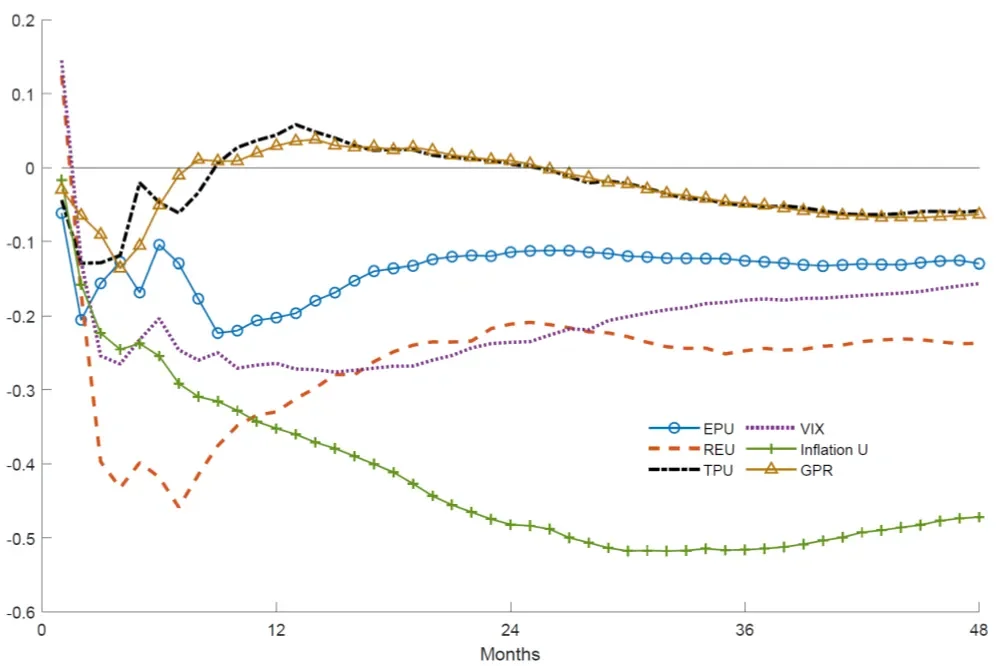
Global Uncertainty Index: The World Uncertainty Index has doubled since January, reaching "exceptionally high levels globally." This is linked to major policy shifts throughout the year. (IMF)
Trade Policy Developments: Agreements have been reached between the United States and India, with India agreeing to zero tariffs on key products. The United States and India also seem to have found common ground on trade. (Deloitte)
Economic Sentiment: Despite the surge in global uncertainty, economic sentiment has remained positive in some assessments. (IMF)
Behavioral Impact: Increased caution in purchasing decisions and a tendency towards self-sufficiency (like doing yard work) have been observed as direct consequences of economic uncertainty. (TIME)
Small Business Outlook: Small-business optimism saw a decline in March, though their uncertainty index also decreased. (TIME)
Analyzing the Impact of Uncertainty
The current economic climate presents a dichotomy: rising global uncertainty on one hand, and the potential for strategic shifts and positive sentiment on the other. This situation raises questions about how individuals and businesses are responding and what the long-term implications might be.
Uncertainty and Individual Career Choices
The prevailing economic uncertainty prompts advice for individuals regarding their career paths. While it is acknowledged that staying in a liked and fulfilling job can enhance marketability and negotiation power, there is also an implicit suggestion that the current environment might not be ideal for passive career advancement.
Strategic Engagement: The current economic climate is presented as a time when individuals are not taking strategic risks or learning new skills. (The Guardian)
Job Security vs. Growth: The advice is not to leave a current job if it is satisfying, but rather to focus on maintaining marketability and negotiating strength while employed. (The Guardian)
Policy and Economic Trends
Economic policies, particularly those related to trade, are identified as significant drivers of uncertainty. The resolution of some of these policy ambiguities may pave the way for clearer economic direction.
Tariff Reductions: The agreement between India and the United States to eliminate tariffs on key products represents a move towards clarifying trade terms. (Deloitte)
Trade Deals: This follows a pattern of recent trade agreements, such as one between the United Kingdom and India. (Deloitte)
Recessionary Fears: Acute uncertainty, such as that generated by tariff changes, has been linked to increased caution and can potentially lead to recessionary conditions. (TIME)
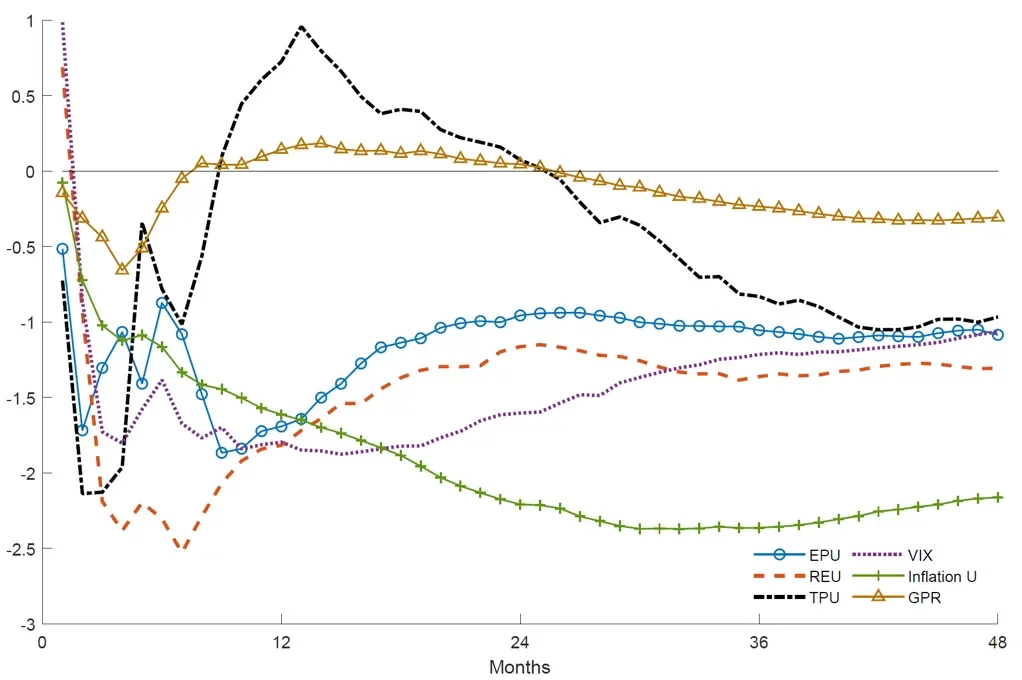
Demand Shocks: Uncertainty shocks are described as aggregate demand shocks, indicating a direct link between uncertainty and economic activity. (Federal Reserve)
Economic Sentiment Amidst Global Unrest
While uncertainty is high, economic sentiment has not necessarily followed suit across the board. Some analyses indicate resilience in positive outlooks, suggesting that specific sectors or regions may be weathering the storm differently.
Read More: UN Panel Warns AI Risks Grow Faster Than Science and Rules
Resilient Sentiment: Despite global uncertainty surging to exceptionally high levels, economic sentiment has, in some contexts, remained positive. (IMF)
Policy's Role: The International Monetary Fund notes that major policy shifts have been adding to the unknowns about the future. (IMF)
Expert Perspectives
Academics and institutions are studying the multifaceted nature of economic uncertainty and its effects.
"Uncertainty shocks are aggregate demand shocks."— Federal Reserve economists analyzing the effects of rising uncertainty.
"Uncertainty has surged to an exceptionally high level globally, and it’s likely here to stay…"— A statement from the IMF on global economic conditions.
Nicholas Bloom, a professor of economics at Stanford University, has extensively researched uncertainty, including its role in the economy. His work, co-authored with other researchers, includes studies on the methodology for measuring global economic uncertainty. (IMF)
Conclusion and Implications
The current global economic environment is characterized by a significant increase in uncertainty, driven by policy changes and trade developments. While this has led to greater caution among individuals and businesses, some indicators of economic sentiment remain positive, suggesting a complex and varied impact.
The interplay between heightened global uncertainty and specific policy actions, such as trade agreements, is a key area for continued observation. The advice for individuals to remain strategic in their career development, even while employed, underscores the adaptive approach needed in the current climate. Further analysis is required to understand how the perceived permanence of this elevated uncertainty will shape long-term economic growth and individual financial planning.
Read More: New ways to measure AI's impact on jobs and economy
The Guardian: "Even amid rising economic uncertainty, now is not the time to hug your job." Published 10 minutes ago. https://www.theguardian.com/business/2026/feb/15/economic-uncertainty-job-changes
IMF: "Even as Global Uncertainty Surges, Economic Sentiment Remains Positive." Published Nov 10, 2025. https://www.imf.org/en/blogs/articles/2025/11/10/even-as-global-uncertainty-surges-economic-sentiment-remains-positive
TIME: "How Economic Uncertainty Can Lead To Recession." Published Apr 9, 2025. https://time.com/7276190/economic-uncertainty-tariffs-recession/
Federal Reserve: "Costs of Rising Uncertainty." Published Apr 24, 2025. https://www.federalreserve.gov/econres/notes/feds-notes/costs-of-rising-uncertainty-20250424.html
Deloitte: "What’s happening this week in economics?" Published 6 days ago. https://www.deloitte.com/us/en/insights/topics/economy/global-economic-outlook/weekly-update.html