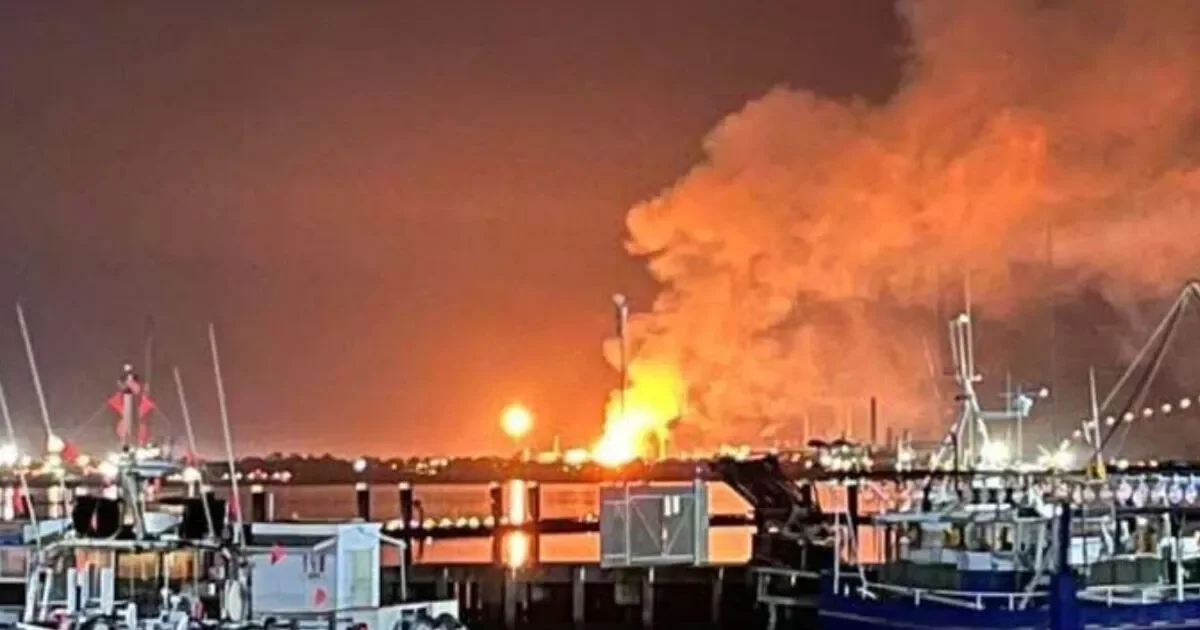
MELBOURNE — A substantial fire that erupted early on April 16 at Viva Energy Group’s Geelong oil refinery, one of only two remaining in Australia, has compounded an already strained national fuel situation. The blaze, which commenced around 11 PM on April 15, has impacted the facility's production, though Energy Minister Chris Bowen stated it is still producing diesel and jet fuel at reduced capacities.

The Geelong refinery supplies over 50% of Victoria’s fuel and 10% of Australia's total. This incident arrives amidst ongoing concerns about international supply chains and broader geopolitical tensions affecting oil imports.

The refinery fire’s timing is particularly unhelpful, according to Chris Bowen, who acknowledged the situation as “not great timing.” While Bowen assured that some fuel production continues, the reduction in output from a critical national asset will inevitably tighten supply further.
Read More: Viva Energy Geelong Refinery Fire Halts Production, May Increase Fuel Imports

Broader Supply Chain Vulnerabilities Exposed
This refinery incident follows weeks of reported disruptions, including the cancellation or deferral of six fuel ships bound for Australia in late March. Minister Bowen had previously conceded that the "flow of oil to Asian refineries has slowed," highlighting a dependency on imports predominantly from Asia. These disruptions, linked in part to global energy shocks stemming from the 'US-Israel war on Iran', have put pressure on Australia's fuel reserves.

Records show that in March, Australia was receiving record amounts of US fuel due to these global supply chain issues. Prior to the refinery fire, reports indicated average diesel prices had risen by 28 cents per litre across major Australian cities in the week leading up to March 25. Furthermore, reports from late March indicated that hundreds of service stations had run out of petrol, with Chris Bowen previously attributing shortages partly to panic buying.
Read More: Geelong Refinery Fire April 15th Causes Fuel Supply Concerns for Victoria
Political Undercurrents and Defence Concerns
The government’s handling of the fuel situation and broader defence spending is also facing scrutiny. The Coalition has expressed dissatisfaction with recent defence spending promises.
Separately, the Albanese government has maintained that it is "not considering" joining a potential US blockade of the Strait of Hormuz, a critical international shipping lane. This stance was reiterated as diplomatic efforts in the Middle East continued, with Pakistani mediators reportedly arriving in Tehran. Concerns persist regarding Iran's threats to block trade routes if the US does not lift its blockade on Iranian ports.
Background: A History of Fuel Worries
The current situation builds on anxieties that have been evident for weeks. In mid-March, Chris Bowen highlighted that efforts to increase fuel supply would be undermined by panic buying, stating it was "very much" behind existing shortages. At that time, the government had approved the release of emergency fuel reserves and the use of lower-quality fuel to mitigate supply issues, with Bowen assuring fuel companies were presenting plans to deliver to regional areas.
Read More: Adelaide Study: Feeders Help Starving Wildlife After Fires, But Risks Exist
Calls for transparency from fuel suppliers, such as those made by the Western Australian premier in late March, have also underscored the sensitivity surrounding fuel availability and pricing. Discussions around potential fuel rationing had also surfaced, with opposition figures questioning the government’s preparedness. The broader context of fuel insecurity has been framed by analyses pointing to Australia's relative unpreparedness for such a crisis, exacerbated by reliance on oil imports from an increasingly volatile Asian region.