
Developers and hobbyists now possess an expansive and accessible resource for free public APIs, largely thanks to community-driven curation on platforms like GitHub. These repositories, often maintained as README files rather than codebases, function as extensive directories, cataloging thousands of APIs across diverse categories.

The "public-apis/public-apis" repository on GitHub stands out as a significant collection, featuring a broad spectrum of APIs. This list is regularly updated and categorized, covering everything from geocoding and weather data to government information, entertainment, and machine learning tools. Each entry typically details the API's name, a brief description, authentication requirements (apiKey, OAuth, none), HTTPS support, and CORS status. This structured format facilitates efficient discovery and evaluation for potential integration into projects.
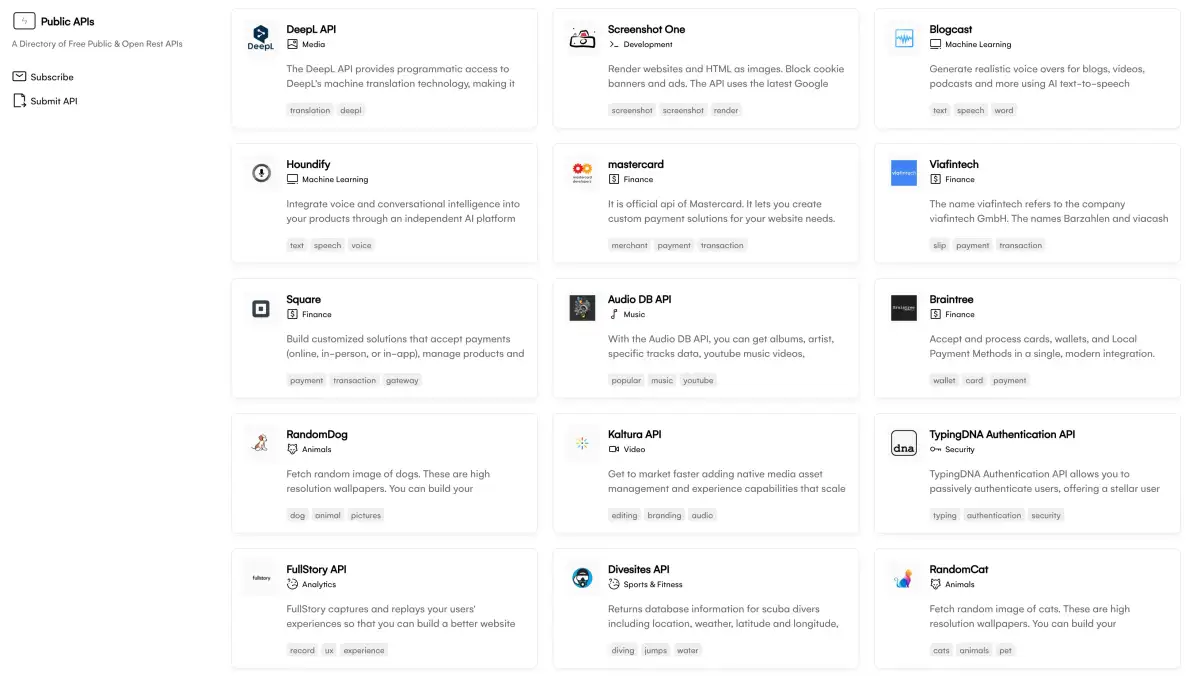
Scope and Utility of the Collections
The sheer breadth of APIs documented is remarkable. One can find services for:
Read More: Chrome mimeHandler API lets extensions handle file types
Geographical Data: Geocoding, reverse geocoding, IP geolocation, and address data for numerous countries and regions. This includes specialized services for specific locations like Mexico zip codes or UK postcodes.
Government and Open Data: Access to legislative information, national statistics, company registries, and public datasets from governments worldwide, spanning the USA, UK, Canada, Australia, and many European nations.
Content and Media: APIs for movie and TV show information, music data (lyrics, streaming, charts), book details, and even specific media franchises like Star Wars or Game of Thrones.
Scientific and Environmental Data: Resources for weather forecasts, air quality indexes, earthquake information, and environmental data analysis.
Development Tools: APIs related to AI, machine learning, code review, image processing, and testing data generation.
Financial and Business Information: Stock market data, currency exchange rates, and company registry information.
Health and Nutrition: Data on COVID-19 statistics, food composition, and healthcare provider information.
The utility of these curated lists extends to various development scenarios. They serve as a crucial reference point for 'API discovery', particularly for those building prototypes, working on 'hackathons', or seeking alternatives to paid services. The emphasis on 'free data sources' makes them invaluable for personal projects and Minimum Viable Products (MVPs).
Background: The Rise of API Aggregation
The concept behind these repositories is to alleviate the common developer pain point of searching for reliable, free APIs. Instead of sifting through individual documentation or encountering paywalls, developers can consult these aggregated lists. The 'public-apis/public-apis' repository, in particular, has garnered substantial attention, indicated by its high star count on GitHub, highlighting its perceived value within the developer community. These lists are not typically code repositories themselves but rather meticulously organized collections of links and metadata designed for rapid information retrieval. They underscore a growing trend of community-driven knowledge sharing in the software development ecosystem.
Read More: Why Manual Prompt Editing Is Better For AI Apps In April 2026