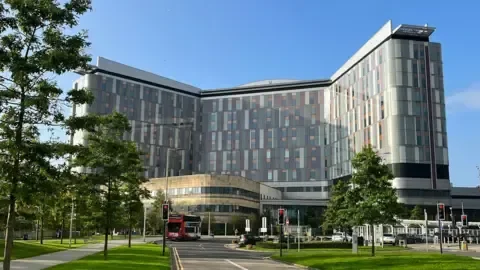
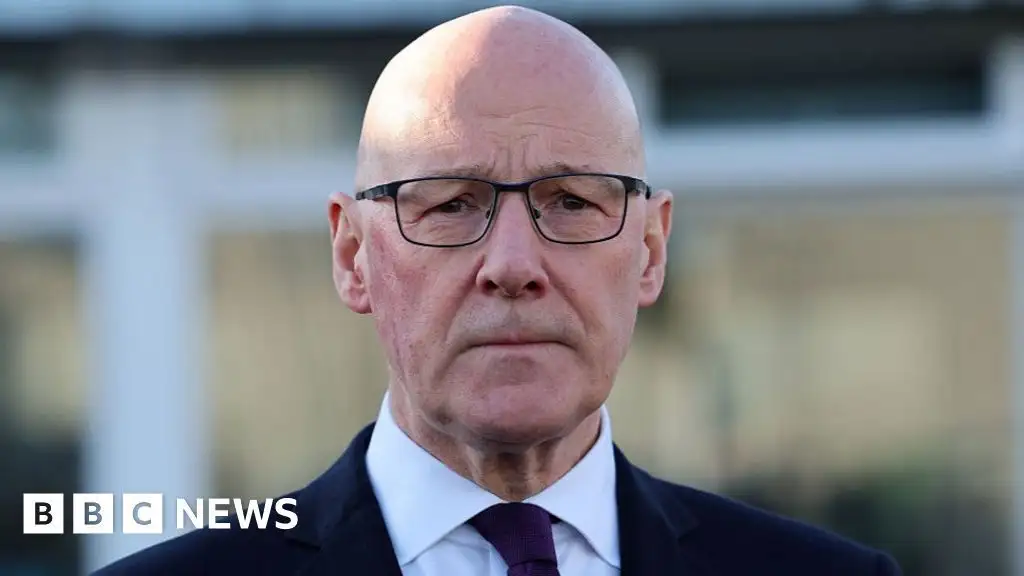
Glasgow's Queen Elizabeth University Hospital (QEUH) remains a site of contention, with families directly challenging First Minister John Swinney over his recent claims of offering an apology. Swinney stated during a BBC interview that his government, via NHS Greater Glasgow and Clyde, was addressing issues and had apologized during a private meeting with affected families on Thursday. However, multiple relatives present at that meeting have stated no such formal apology was made. This direct contradiction between the First Minister's public statements and the accounts of those most impacted underscores a deep fissure in communication and trust surrounding the hospital's safety concerns.

The controversy resurfaced as an infection alert level was recently upgraded to red on a ward treating bone marrow transplant patients. This has brought renewed attention to long-standing issues concerning water and ventilation systems at the QEUH, which have been linked to infections among vulnerable patients, including children undergoing cancer treatment. Families have detailed how their children have suffered severe disabilities, often linked to the necessity of powerful anti-infection drugs. Police and prosecutors are currently examining the possibility of corporate homicide in relation to patient deaths.
Read More: India IVF Costs And Social Barriers Limit Access In April 2026

Swinney, along with Health Secretary Neil Gray and senior NHS officials, met with families for 90 minutes online. He described the conversation as "the start of a wider discussion to help families get the answers they deserve." Yet, in a joint response, families indicated that while the discussion was serious, neither minister extended a formal apology. Their aim, they stated, was to achieve transparency and acknowledgement of their suffering.

Further compounding the dispute, opposition parties and families have questioned Swinney about whether the hospital received full safety validations for all wards before opening. Swinney has asserted that the hospital's water and ventilation systems have seen "significant improvements," exceeding standard guidance. This assertion is contested by families who state they require more clarity on compliance standards, citing the current ventilation system as a potential risk to immunocompromised patients.
Read More: Cairngorms National Park bans campfires and barbecues until September 2026
Background to the QEUH Controversy
The QEUH has been the subject of a protracted controversy involving patient deaths and infections attributed to contaminated water and ventilation systems. An independent inquiry has been examining the hospital's design, build, commissioning, and maintenance, with its impact on patient safety being a central focus. The inquiry heard from 186 witnesses, with particular attention paid to the Royal Hospital for Children, where immunocompromised young people were treated for blood disorders and cancer.
In a separate development, the Crown Office is reviewing the deaths of seven patients at the hospital for potential links to the hospital environment.
Families have also raised concerns about the prophylaxis regimes their children were subjected to, with some only discovering after their children's deaths that they had been administered specific drugs. Many parents express a complete loss of trust in the QEUH, with some opting to travel to other hospitals for treatment. A plea has been made to Swinney to commit to an expert-led review of individual cases involving children who have experienced pain and harm.
Read More: Georgia Toffolo's Lake Como Trip After Fertility Talks
Earlier controversies have seen claims from opposition MSPs suggesting political pressure to open the hospital prematurely. Both Swinney and former First Minister Nicola Sturgeon have emphatically denied these allegations.