Many young people under the age of 18 leave their homes because they feel rejected or unsafe. A new study across Europe and the UK shows that these children often have nowhere to go. While some find help, many others find that support services are not ready to meet their needs. The report shows that for these youth, the choice is often between an unsafe home and a system that does not understand them.
"LGBTIQ+ young people and children under 18 who face homelessness, live away from home, or 'go missing' do not find it safe to go home." — Young, Queer & Away from Home Study
The Background of the Investigation
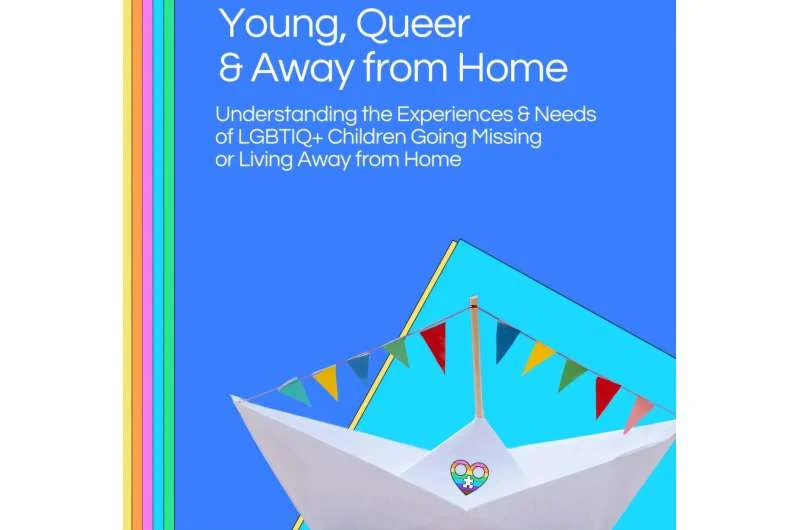
The research, titled Young, Queer & Away from Home, was conducted by Missing Children Europe, IGLYO (The International LGBTQI Youth & Student Organisation), and the University of Portsmouth. This is the first time researchers have gathered facts across the entire European Union and the UK regarding this specific group.
Scope: The study focused on children under 18 who left home or were forced out.
Participants: Researchers spoke with 36 young people and several youth workers.
Goal: To understand why these children go missing and what happens when they try to get help from the government or charities.
The study found that identity-based rejection at home is a primary driver for youth homelessness, yet support systems remain "patchy" and "inconsistent."
Read More: India Bonded Labourers Not Getting Help After Rescue Due to Slow Support
Evidence and Data Findings
The data shows a clear gap between the help that is available and what young people actually need.
| Category | Key Finding |
|---|---|
| Safety at Home | Most participants reported they could not return home because it was not safe. |
| Service Quality | Help was described as "inconsistent," meaning it was good in some places but very bad in others. |
| Discrimination | Nearly 33% (one-third) of participants saw or felt discrimination within support services. |
| Staff Training | Many youth workers lacked the training to handle the specific needs of LGBTIQ+ children. |
The Problem of "Unsafe Returns"
The study highlights a difficult cycle. When a child goes missing or runs away, the standard goal of many agencies is to return the child to their parents. However, the evidence suggests this may put the child in danger.
Children reported they left home because of who they are.
Returning to those homes often meant returning to the same environment that caused them to leave.
Is the current system of returning children to their families causing more harm than good for this specific group? The study suggests that without a change in policy, these children remain at risk.
Barriers to Accessing Help
Even when young people try to find a place to sleep or professional help, they face hurdles. The research found that some services were not welcoming.
Some youth workers were unaware of how to speak to or support LGBTIQ+ children.
Young people felt they had to hide their identity to get a bed in a shelter.
When services were practical and supportive, they were described as a "lifeline," but these examples were not common enough.
Training and Awareness Gaps
A major part of the report focuses on the people who run the shelters and help lines. The evidence points to a lack of professional training.
There is a lack of "specialist provision," which means there are very few places designed specifically for LGBTIQ+ youth.
Professional training is often "patchy," meaning it depends on the individual worker rather than a set rule.
Why is there no coordinated plan across Europe to train staff on these issues? The researchers argue that without a coordinated plan, the support remains a matter of luck rather than a guarantee.
Expert Analysis
The researchers and organization leaders suggest that the lack of data has been a shield for poor services in the past. Jeremy Gobin, from IGLYO, points out that until this study, there was no strong evidence that applied to the whole EU.
Read More: Manchester United Women Win Champions League Playoff Against Atletico Madrid on Feb 19 2026
Experts involved in the study state that:
Training must be mandatory for anyone working with missing children.
Policy must move away from simply "sending children home" and instead focus on "finding a safe place."
Support networks for LGBTIQ+ people and homelessness services must talk to each other more often to bridge the current gaps.
Findings and Next Steps
The investigation concludes that the current support system for homeless LGBTIQ+ youth is not working for everyone. The study identifies that children are being forced into a crisis because they have no safe home and no reliable system to catch them.
Next steps identified by the report include:
Creating new laws that protect children who cannot safely return to their parents.
Funding specialist training for all youth workers across the EU and UK.
Setting up coordinated services so a child gets the same quality of help regardless of which country they are in.
Sources Used
Phys.org: New research reveals critical support gaps for LGBTIQ+ youth facing homelessness. https://phys.org/news/2026-02-reveals-critical-gaps-lgbtiq-youth.html
Missing Children Europe: LGBTIQ+ Youth Facing Homelessness Do Not Find It Safe to Return Home. https://missingchildreneurope.eu/lgbtiq-youth-facing-homelessness/
Mirage News: Research Uncovers Key Support Gaps for Homeless LGBTIQ+ Youth. https://www.miragenews.com/research-uncovers-key-support-gaps-for-homeless-1622828/
IGLYO: Young, Queer & Away from Home Report and Policy Recommendations. https://www.iglyo.org/news/yqa-report-pr-2026