New research confirms a structural lag in the deployment of Large Language Models (LLMs) within the European Union compared to global counterparts. Of 68 documented instances where AI services were either delayed or withheld from the market, regulatory intervention served as the primary obstacle in 56 cases.
| Impact Factor | Frequency/Observation |
|---|---|
| Primary Barrier | GDPR and data privacy frameworks |
| Worst Affected | Audio and real-time video processing models |
| Market Outcome | Strategic delay or total regional exclusion |
Frontier AI developers increasingly identify the EU’s regulatory climate—specifically the enforcement of the General Data Protection Regulation—as the deciding factor in launch timelines. While the UK and EU operate under historically aligned data laws, research indicates that the EU faces significantly higher friction, attributed to more aggressive enforcement and a lack of clear guidance on how data privacy rules apply to the training phases of machine learning.
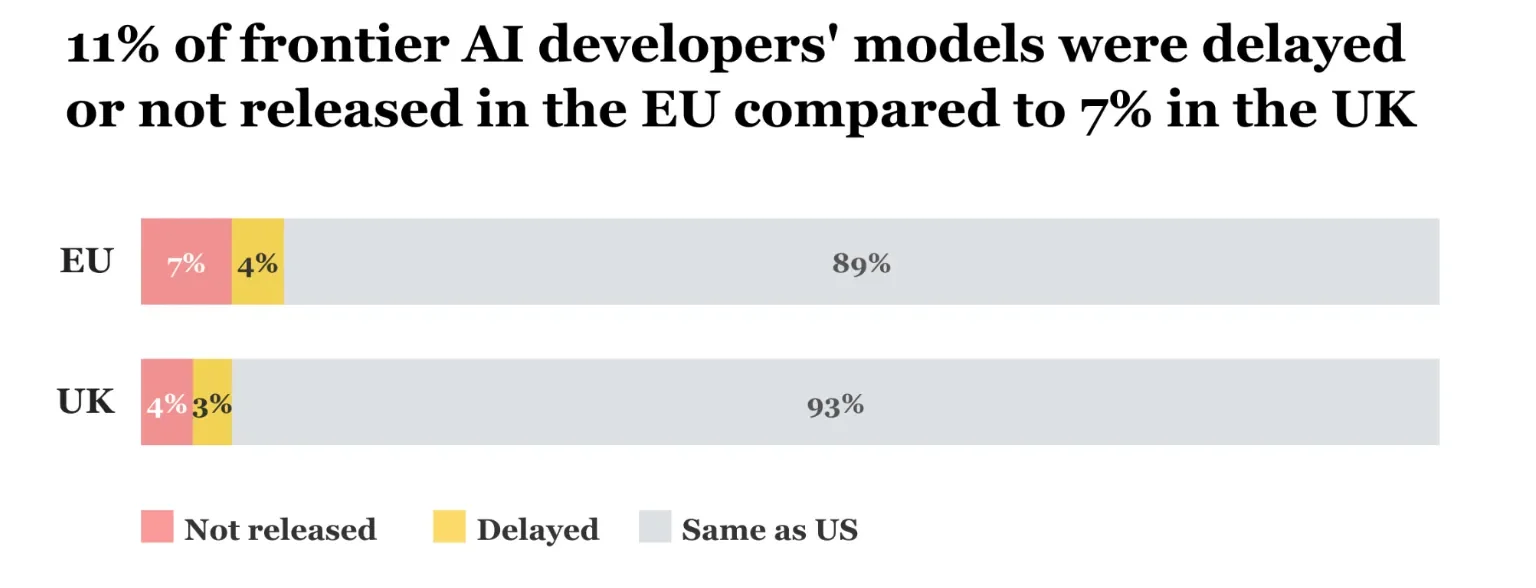
The Mechanism of Delay
The disconnect between innovation and compliance is not merely bureaucratic but rooted in divergent interpretations of law. Tech firms frequently cite a trio of regulatory instruments as the drivers for restricted access:
Read More: Chrome mimeHandler API lets extensions handle file types
GDPR: The primary source of conflict, often leading to immediate halts in data processing for AI training.
AI Act: Complicates the development landscape through rigorous safety and compliance requirements.
Digital Markets Act (DMA): Adds layers of oversight regarding platform and data competition.
"It’s important that policymakers in the EU and the UK are calibrated to the risk of regulatory barriers causing delays for their citizens and businesses in accessing the latest AI models." — John Lidiard, AI Policy Researcher at GovAI.
The Innovation Trade-off
The broader investigation into this phenomenon reveals a deep-seated regulatory-innovation trade-off. While proponents of strict privacy standards, such as consumer advocacy groups like BEUC and noyb, argue that such safeguards are necessary to protect citizens from non-consensual data usage, the resulting landscape is increasingly fragmented.
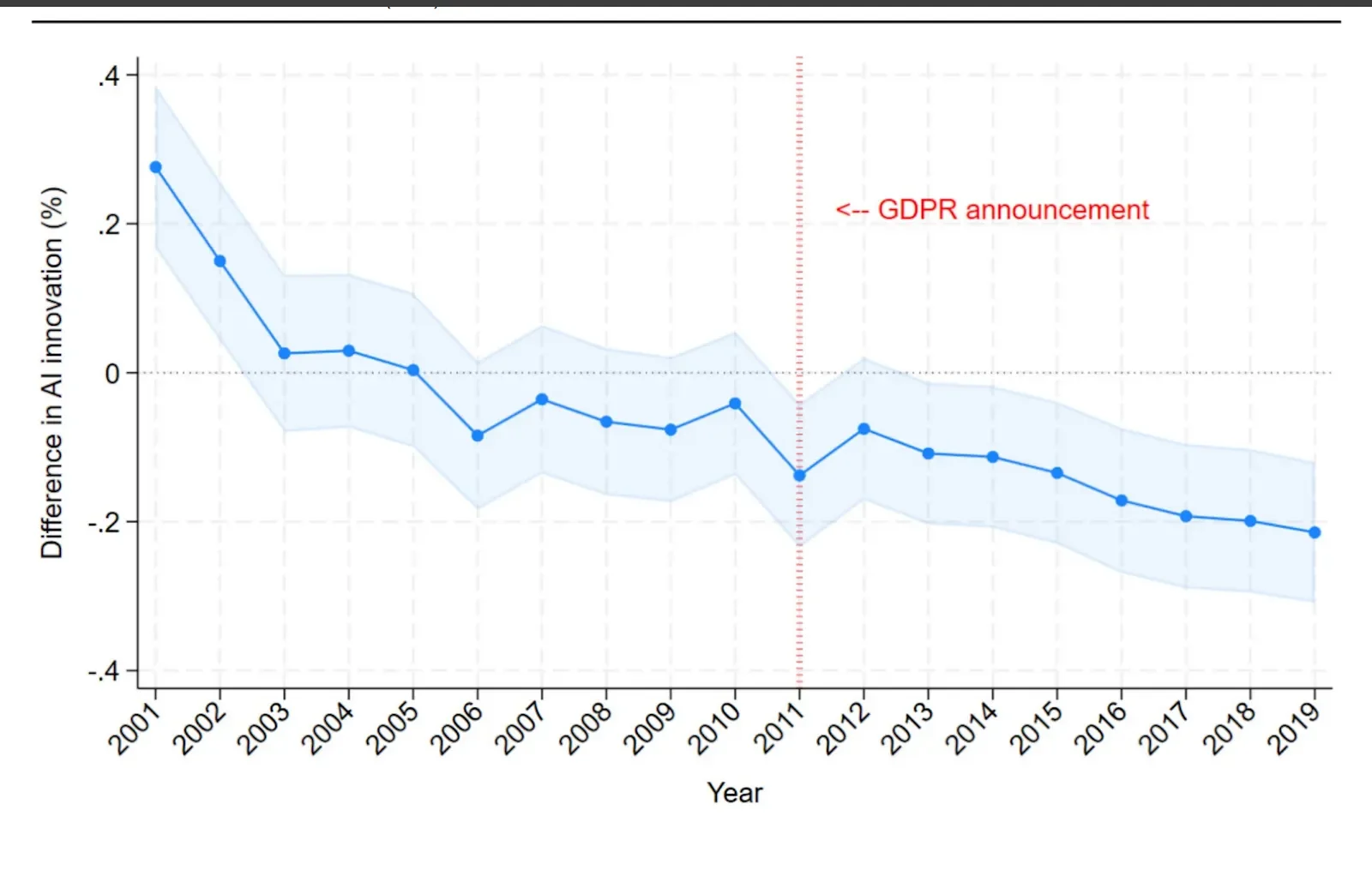
This fragmentation places European AI firms at a potential disadvantage, as global competitors favor jurisdictions with more flexible governance. There is a palpable movement to address these headwinds; the Digital Omnibus is currently under consideration in the European Parliament, aiming to clarify how data rules might coexist with the operational requirements of AI development.
Ultimately, the delay of services like the Llama 4 series in European markets highlights a widening gap. While civil society organizations prioritize the safety and privacy of the individual, the cost of this protection is an evolving digital divide, where European consumers and businesses operate with older or less capable tooling than their counterparts in the US and more permissive regulatory environments.
Read More: BEREC Asks for Mobile Network API Ideas from Developers