
A massive leak of documents related to the late financier Jeffrey Epstein has sent shockwaves through the nation, not for what new truths it has uncovered about his alleged enablers, but for a devastating betrayal of the very people he harmed. Despite explicit legal mandates and repeated promises from the U.S. Department of Justice (DOJ) to protect the identities of victims, thousands of documents, including nude photographs and personal information, have been publicly exposed. This catastrophic failure has left survivors of Epstein's alleged abuse re-traumatized and feeling abandoned by the very government sworn to protect them. The DOJ's botched redaction efforts have not only identified numerous survivors, some of whom had not previously come forward, but have also raised grave questions about the competence, transparency, and potentially, the intent behind this deeply flawed release.
Read More: Kristi Noem Out as Homeland Security Secretary After $220 Million Ad Campaign Criticism
The Unfolding Nightmare: A Timeline of Betrayal
The recent release of documents, mandated by Congress through the Epstein Files Transparency Act, was intended to shed light on the vast network surrounding Epstein. However, what followed was a devastating unmasking of survivors.
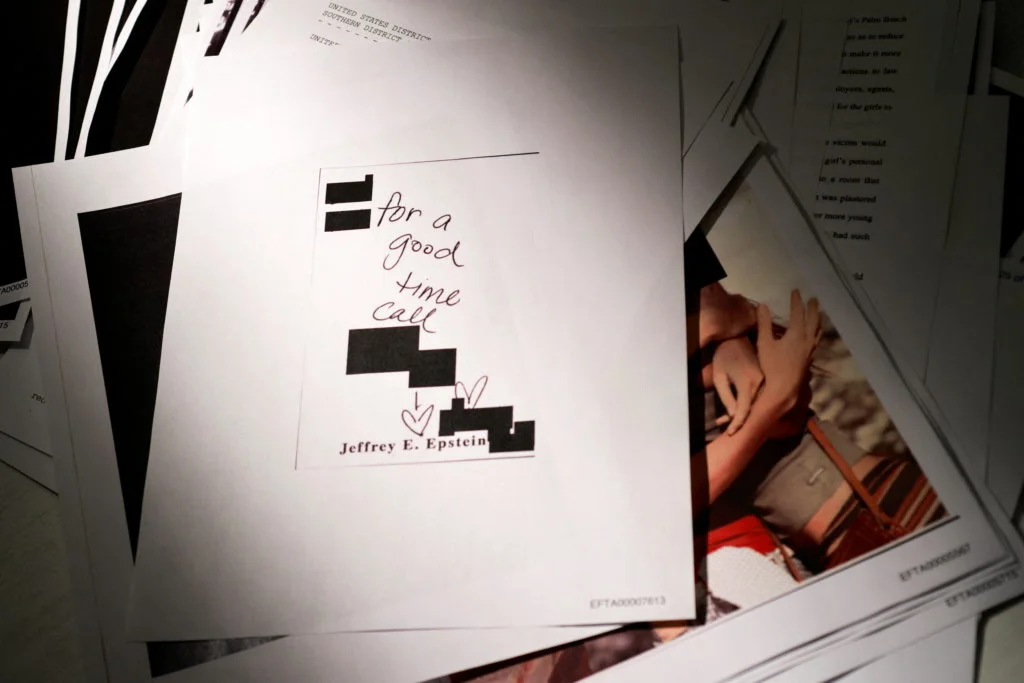
Friday's Release: The DOJ began releasing a massive trove of documents, reportedly containing millions of pages and numerous photographs. (Source: CBS News, Salon)
Immediate Alarm Bells: Almost immediately, reports surfaced that despite efforts to redact sensitive information, numerous victims' names, faces, and even nude photos were left unredacted. (Source: BBC News, KSAT)
Victims and Lawyers Cry Foul: Survivors and their legal representatives quickly condemned the release, highlighting the re-traumatization and potential dangers posed by the exposed information. (Source: PBS NewsHour, CNN Politics)
DOJ's "Fix-It" Mode: Following widespread criticism and media attention, the DOJ began removing thousands of documents from public access and initiated a process of fixing the redactions. (Source: BBC News, PBS NewsHour)
Legal Intervention: Lawyers representing victims filed requests for judicial intervention, demanding immediate action to rectify the privacy breaches. (Source: NBC News)
Judicial Cancellation: A scheduled court hearing to discuss these privacy issues was ultimately cancelled, with a judge noting that victims and the DOJ had reportedly reached a resolution regarding the privacy concerns. (Source: BBC News)
This sequence of events paints a picture of a government agency scrambling to contain a crisis of its own making, a crisis that has inflicted further harm on those already grievously wronged.
A Gaping Wound: The Devastation of Exposed Identities
The implications of this data leak for the survivors are profound and far-reaching. Beyond the immediate emotional and psychological distress, their safety and privacy have been critically compromised.

Re-traumatization: For individuals who have endured horrific abuse, having their identities and even intimate images exposed publicly is a deeply re-traumatizing experience. This brings them back to the very moments of their abuse, amplified by public exposure.
Safety Risks: The exposure of names and personal information can place survivors at risk from individuals connected to Epstein's network or from those who might seek to exploit their trauma.
Compromised Investigations: Survivors who had not previously come forward are now potentially identified, which could impact any future investigations or legal actions they might wish to pursue.
Erosion of Trust: This incident severely erodes the trust survivors place in government institutions to protect their most vulnerable information. How can they feel safe coming forward or cooperating with authorities when such egregious errors occur?
"We feel like they're playing some games with us but we're not going to stop fighting." - An unnamed survivor, as quoted by Gloria Allred, lawyer for many Epstein victims. (Source: BBC News)
The core issue here is not just a bureaucratic error, but a fundamental breach of trust that inflicts continued harm on victims.
The Redaction Fiasco: From Promises to Public Exposure
The DOJ's public statements and its own website initially claimed that victim information had been redacted. However, the reality revealed a starkly different picture.
Read More: Australian Footballers Dylan Moore and Connor Macdonald Arrested for Trespassing in Arizona

| Document Type | Alleged Redaction Status | Actual Exposure | Source(s) |
|---|---|---|---|
| Victim Names | Redacted | Exposed, some appearing over 100 times | BBC News, KSAT, Salon, NBC News, France24 |
| Nude Photographs | Redacted | Dozens of unredacted images of young women exposed | BBC News, PBS NewsHour, KSAT, NYMag, Salon |
| Personal Identifying Info | Redacted | Credit card numbers, driver's license images exposed | PBS NewsHour, Salon |
| Faces in Photos | Redacted | Unredacted faces of potential victims | BBC News, KSAT, NYMag, Salon |
The DOJ's own guidelines stated that redactions should be limited to victim information. However, many documents saw other individuals, like lawyers and public figures, also redacted. This selective application of redaction rules raises questions:
Why were so many victims' details overlooked when the primary directive was to protect them?
Were the individuals tasked with redaction adequately trained or resourced?
Is it possible that some of these redaction failures were not accidental?
"The Justice Department has said staff tasked with preparing the files for release were instructed to limit redactions only to information related to victims and their families…" (Source: KSAT, France24)
The DOJ's own stated protocol highlights the severity of the failure, suggesting a breakdown in execution, not necessarily in intent, though intent remains a critical question.

A Legal Mandate Ignored? The Epstein Files Transparency Act
The release of these documents was not a voluntary act by the DOJ; it was a legislative mandate.
The Act: The Epstein Files Transparency Act was passed by both chambers of Congress and signed into law by President Trump in November 2025, compelling the DOJ to publish records related to Epstein. (Source: CNN Politics, Wikipedia)
Deadline Pressure: The act reportedly gave the DOJ a strict deadline of 30 days to release the files. (Source: KSAT, France24)
Purpose: The intention was to foster transparency and allow the public to understand the scope of the investigation and Epstein's network.
The Paradox: While the act aimed for transparency, the flawed execution has led to a situation where the privacy and safety of victims have been jeopardized in the name of that transparency.
"Congress forced the disclosure of the Epstein documents after passing the Epstein Files Transparency Act last November over Trump’s initial objections." (Source: CNN Politics)
The very law designed to bring secrets to light has, through flawed implementation, created a new trauma for those who suffered. Was the rush to meet the deadline the sole cause of these errors, or did other factors contribute?
Questioning Competence and Intent: Probing the DOJ's Actions
The sheer scale of the failures has prompted intense scrutiny of the DOJ's handling of these sensitive documents.
Read More: Alexander Butterfield, Who Revealed Nixon Tapes, Dies at 99
The "Slapdash Job": Lawyers for survivors have described the redaction efforts as "slapdash," pointing out that even a "simple name search" could have identified and redacted many of the exposed identities. (Source: NBC News, Salon)
"Grave Error" or Worse?: Some legal experts and survivor advocates are not ruling out the possibility that these errors were intentional. If the errors were so easily preventable, as suggested by the "simple name search" analysis, why did they happen on such a large scale?
DOJ's Response: The DOJ has stated that they are "working around the clock to address any victim concerns" and that "0.1 percent of released pages have been found to have victim identifying information unredacted." (Source: Salon, Ars Technica) However, survivors and their legal teams find this response insufficient and the errors unacceptable.
| Key Fact | DOJ's Stated Percentage of Errors | Survivor/Lawyer Perspective |
|---|---|---|
| Names and nude photos exposed | (Not specified) | "Dozens of names," "40 separate images" reported |
| Number of affected victims | Unknown | "Dozens of women," at least one new accuser identified |
| Preventability of errors | (Not specified) | "Completely preventable," "simple name search" would suffice |
| DOJ's "fix" timeline | "Working around the clock" | Demand for "immediate judicial intervention" |
| DOJ's internal review capacity | 500 reviewers | Questions raised about their effectiveness given the outcome |
| Acknowledged error rate: "0.1 percent of pages" | Claims 0.1% error rate | Critics question if this percentage accurately reflects the harm |
"It’s been acknowledged as a grave error; there is no excuse for failing to immediately remedy it unless it was done intentionally.” - Lawyers for Epstein survivors. (Source: Salon)
Are we to believe that with "500 reviewers looking at millions of pages," such fundamental errors slipped through? If not, what was the true intent behind this flawed release?
Looking Ahead: Accountability and the Path to Justice
The fallout from this catastrophic redaction failure demands more than just apologies and digital "fixes." It requires a thorough, independent investigation into how and why this happened.
Accountability: Who within the DOJ bears responsibility for the failures in redacting victim information? What disciplinary actions, if any, will be taken?
Independent Review: An independent body, free from the DOJ's direct influence, should review the entire process of document preparation and release to identify systemic weaknesses and potential malfeasance.
Survivor Support: Beyond taking down documents, the DOJ and relevant authorities must provide tangible support and reassurance to the affected survivors. This includes enhanced security measures and a clear communication channel for ongoing concerns.
Transparency on Enablers: While the focus has been on the redaction failures, the larger purpose of these files was to expose Epstein's network. Will the ongoing redaction process hinder or help in revealing those who enabled him? Will information that could identify potential enablers also be suppressed under the guise of redaction?
Rebuilding Trust: The DOJ must implement robust, transparent protocols for handling sensitive information in future releases, demonstrating a genuine commitment to protecting victims and earning back public trust.
The recent release of the Epstein files, intended to bring light, has instead cast a shadow of doubt and re-traumatization over survivors. The question is no longer if mistakes were made, but how these profound errors occurred, and what it will take to ensure such a devastating betrayal of trust never happens again.
Sources:
BBC News: Thousands of Epstein documents taken down after victims identified (https://www.bbc.com/news/articles/cn0k65pnxjxo)
PBS NewsHour: Government says it's fixing thousands of documents in Epstein-related files that may have had victim information (https://www.pbs.org/newshour/politics/government-says-its-fixing-thousands-of-documents-in-epstein-related-files-that-may-have-had-victim-information)
KSAT: Epstein files rife with uncensored nudes and victims’ names, despite redaction efforts (https://www.ksat.com/news/politics/2026/02/04/epstein-files-rife-with-uncensored-nudes-and-victims-names-despite-redaction-efforts/)
NYMag: DoJ Makes Appalling Mistakes in Release of New Epstein Files (https://nymag.com/intelligencer/article/doj-makes-appalling-mistakes-in-release-of-new-epstein-files.html)
CBS News: Massive trove of Epstein files released by DOJ, including 3 million documents and photos (https://www.cbsnews.com/live-updates/epstein-files-released-doj-2026/)
CNN Politics: Justice Department under scrutiny for revealing victim info and concealing possible enablers in Epstein files (https://www.cnn.com/2026/02/05/politics/justice-department-under-scrutiny-for-revealing-victim-info-and-concealing-possible-enablers-in-epstein-files)
Brave (via DOJ website): DOJ Disclosures (https://www.justice.gov/epstein/doj-disclosures)
NBC News: Some Epstein survivors' identities appear unredacted in files released by DOJ (https://www.nbcnews.com/news/us-news/epstein-survivors-identities-appear-unredacted-files-released-doj-rcna257057)
Salon: DOJ release exposes dozens of Epstein victims' names and nude photos (https://www.salon.com/2026/02/02/doj-release-exposes-dozens-of-epstein-victims-names-and-nude-photos/)
CBC News: Thousands of Epstein files taken down after some survivors' names, nude photos found (https://www.cbc.ca/news/investigates/epstein-files-redaction-mistakes-9.7073148)
Ars Technica: DOJ released Epstein files with dozens of nudes and victims' names, reports say (https://arstechnica.com/tech-policy/2026/02/doj-released-epstein-files-with-dozens-of-nudes-and-victims-names-reports-say/)
France24: US Justice Dept's Epstein files release exposes nude photos, names of victims (https://www.france24.com/en/americas/20260205-disastrous-release-of-epstein-files-exposes-nude-photos-and-names-of-victims)
Wikipedia: Epstein files (https://en.wikipedia.org/wiki/Epsteinfiles)
BBC News: Naked images remained in Epstein files despite outcry (https://www.bbc.com/news/articles/c5yd10yp2m1o)
El País: Epstein victims denounce latest file release discloses their personal information (https://english.elpais.com/usa/2026-02-03/epstein-victims-denounce-latest-file-release-discloses-their-personal-information.html)