A significant financial and operational strain is impacting England's special educational needs (SEN) and disabilities (SEND) system. While official statements suggest spending will not decrease, data reveals a system grappling with record costs, increasing demand, and questioned effectiveness. The current financial burden has reached £10 billion annually, with projections indicating a doubling of children requiring support within a decade. This situation raises urgent questions about resource allocation, system efficiency, and the delivery of adequate support for vulnerable children.

Escalating Costs and Demand for SEN Support
The financial commitment to special educational needs and disabilities (SEND) in England has reached a critical juncture, with annual spending now exceeding £10 billion. This substantial sum reflects a burgeoning demand for support services, as evidenced by forecasts predicting the number of children and young people with Education, Health, and Care (EHC) plans to double to one million within the next ten years.
Read More: England SEND Reforms: New Plans May Make EHCPs Harder to Get
The National Audit Office (NAO) has flagged the SEN system as financially unsustainable and in urgent need of reform, noting soaring demand for support. (NAO, October 2024)
Local authorities are facing increasing financial pressures, with rising SEN costs contributing to deficits that ongoing savings programs are unlikely to address. (Guardian, October 2024)
The Institute for Fiscal Studies (IFS) has indicated that state school funding per pupil in England may not adequately cover both SEND provision requirements and anticipated teacher pay rises, potentially forcing cuts to mainstream spending. (Sky News, January 2025)
Systemic Challenges and Questioned Outcomes
Despite the significant financial investment, concerns are mounting over the effectiveness of the current SEND system in delivering improved educational outcomes for children and young people. Reports highlight a disconnect between spending and tangible benefits, prompting calls for a fundamental overhaul.

An independent report indicated that educational outcomes for SEND pupils have not improved over the last decade, even as the costs of these services have trebled. (County Councils Network, July 2025)
The NAO report concluded that the SEN system is not delivering better outcomes for children and young people, nor is it meeting the expectations of families. (NAO, October 2024)
Critics argue that current government actions are unlikely to resolve the systemic challenges, suggesting a need for more inclusive education models and a cohesive whole-system approach. (Guardian, October 2024)
Proposed Reforms and Future Direction
In response to the escalating challenges, the government is preparing to implement reforms aimed at reshaping SEND provision. These changes intend to manage rising expenditure while striving to enhance support for children within mainstream educational settings.

Plans include introducing individual support plans (ISPs) for children with special needs at mainstream schools, offering enhanced legal rights without the necessity of an EHC plan. (The Guardian, February 2026)
Ministers are also considering new pricing structures for independent special schools, which currently incur costs significantly higher than state special schools. (The Guardian, February 2026)
The stated objective of the reforms is to improve support and expand children's rights, making specialized assistance more readily available within classrooms rather than through complex bureaucratic processes. (Bridget Phillipson, The Guardian, February 2026)
Financial Strain on Schools and Local Authorities
The rising costs associated with SEND provision are placing considerable pressure on both school budgets and local authority finances. This financial squeeze is impacting the capacity of educational institutions and local governments to meet their obligations.
Schools face tightening budgets as the "spiralling costs" of SEND provision and increased teacher salaries threaten to outpace funding growth. (Sky News, January 2025)
Without government intervention, there is a risk of an "unprecedented local authority financial crisis" due to mounting SEND debts. (The Guardian, November 2025)
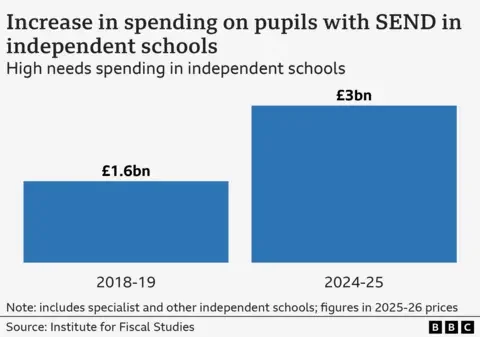
Some independent special schools are reportedly making significant profits, capitalizing on shortages in state provision, with average costs per place substantially higher than in state special schools. (Institute for Government, November 2025)
Expert Perspectives and Calls for Change
Education leaders and experts are emphasizing the urgent need for systemic reform, advocating for more inclusive practices and a strategic reallocation of resources to ensure better outcomes for children with SEND.
Read More: Manchester United favored to win against Everton at Goodison Park on February 26, 2025
Education leaders and experts have described the system as being in crisis, with responsibilities and costs disproportionately placed on councils, schools, and families. (Guardian, October 2024)
Calls have been made for the government to prioritize SEND reform, focusing on building capacity within mainstream schools to better meet children's needs. (County Councils Network, July 2025)
The National Education Union has described current funding for SEND support and pastoral care as "totally inadequate," asserting that children's education has been "seriously compromised." (Sky News, January 2025)
Conclusion
The evidence indicates a special educational needs system in England facing severe financial and operational challenges. While the government has signaled an intent to reform and assured that spending will not decline, the current trajectory points to a system at a breaking point. Record costs, increasing demand, and doubts about the efficacy of current approaches necessitate a fundamental reassessment of resource allocation and service delivery. The proposed reforms aim to shift support into mainstream schools and enhance children's rights, but their success will hinge on effective implementation and a sustained commitment to addressing the systemic issues identified by various reports and expert bodies. The financial sustainability of local authorities and the capacity of schools to provide adequate support remain critical areas requiring immediate and strategic attention.
Sources
Financial Times: Article 1 ("Special needs education spending in England will not fall for nearly a decade") published 40 minutes ago. Link: https://www.ft.com/content/a131f6ca-c51e-46de-9c98-681787ca26c4 (Summary primarily concerns subscription details, offering limited specific information on the subject.)
The Guardian: Article 2 ("Special educational needs bill in England hits record £10bn a year") published February 7, 2025. Link: https://www.theguardian.com/education/2024/oct/24/special-educational-needs-bill-england-10bn-school-council-funding
County Councils Network: Article 3 ("Educational outcomes for SEND pupils have failed to improve over the last decade despite costs of these services trebling, new independent report reveals") published July 25, 2024. Link: https://www.countycouncilsnetwork.org.uk/educational-outcomes-for-send-pupils-have-failed-to-improve-over-the-last-decade-despite-costs-of-these-services-trebling-new-independent-report-reveals/
The Guardian: Article 4 ("Schools in England to get budget for children with special needs as part of Send overhaul") published 3 days ago. Link: https://www.theguardian.com/education/2026/feb/19/schools-in-england-to-get-budget-for-children-with-special-needs-as-part-of-send-overhaul
BBC News: Article 5 ("What is SEND and how many children get support?") published 2 hours ago. Link: https://www.bbc.com/news/articles/cwy18y5jpw1o
Sky News: Article 6 ("School budgets squeezed by 'spiralling costs' of special educational needs provision") published January 8, 2025. Link: https://news.sky.com/story/school-budgets-squeezed-by-spiralling-costs-of-special-educational-needs-provision-13285347
The Guardian: Article 7 ("Special needs services in England face ‘total collapse’ from increasing demand") published November 24, 2025. Link: https://www.theguardian.com/education/2025/nov/14/special-educational-needs-services-schools-england-collapse
National Audit Office (NAO): Article 8 ("Special Educational Needs system is financially ‘unsustainable’ - NAO press release") published October 23, 2024. Link: https://www.nao.org.uk/press-releases/special-educational-needs-system-is-financially-unsustainable/
The Guardian: Article 9 ("Children with special educational needs have been let down again and again. That ends right now | Bridget Phillipson") published 5 hours ago. Link: https://www.theguardian.com/commentisfree/2026/feb/23/special-educational-needs-send-reform-bridget-phillipson
Institute for Government: Article 10 ("Performance Tracker 2025: Schools") published November 6, 2025. Link: https://www.instituteforgovernment.org.uk/publication/performance-tracker-2025/schools