

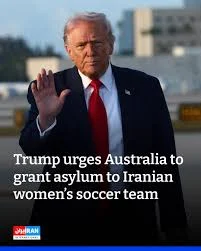
A federal jury in Brooklyn has convicted Asif Merchant, a 47-year-old Pakistani national, for his role in an Iranian-backed plot to liquidate Donald Trump and other high-ranking American officials including Joe Biden and Nikki Haley. The conviction coincides with a statement from Defense Secretary Pete Hegseth confirming that the United States military has hunted and killed the leader of the specific Iranian unit tasked with these assassinations. While the state apparatus in Tehran denies these activities, the trial revealed a clumsy but well-funded recruitment machine operating across borders.

The Mechanic of the Hit: Testimony and Friction
The trial of Asif Merchant peeled back the skin on how the Islamic Revolutionary Guard Corps (IRGC) attempts to outsource its violence to civilian proxies. Merchant claimed his cooperation was a byproduct of leveraged fear, suggesting his wife and daughter in Tehran were being used as collateral.

"He told jurors he went along with the plot only out of fear for his wife and adopted daughter… Merchant told jurors he knew the game was up almost immediately after landing in the US."
| Actor | Role | Outcome |
|---|---|---|
| Asif Merchant | Recruiter/Logistics | Convicted; faces life in prison |
| Farhad Shakeri | Asset/Informant | Remaining in Iran; talked to FBI via phone |
| Unnamed Unit Leader | IRGC Coordinator | Killed by U.S./Israeli strike |
| IRGC Handler | Puppet Master | Unidentified; provided 'countersurveillance' training |
Merchant’s narrative of being a victim of Iranian pressure was complicated by his own actions. He had visited the U.S. for his garment business, but during these trips, he sought out residents to form "kill teams." Despite claiming he was being watched, prosecutors noted he never approached law enforcement until after his arrest. His tradecraft was described as thin; he was searched by immigration agents in Houston and his devices were sifted through, yet he continued the operation.
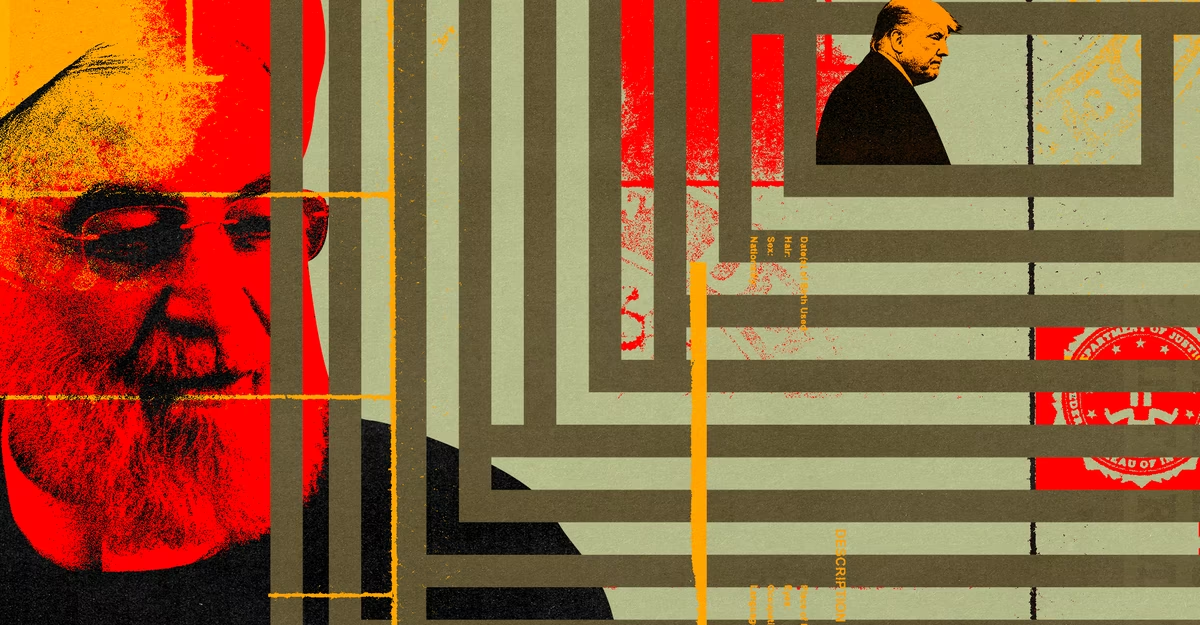
The Shakeri Paradox and the Budget of Blood
The IRGC's strategy appears to rely on high-spending, low-quality assets. Farhad Shakeri, another figure in the web, allegedly spoke to the FBI directly from Iran on his cellphone. This friction in logic—where a state military entity allows its asset to brief the enemy's federal police—suggests either extreme arrogance or a breakdown in the Iranian chain of command.
Money is no object: When Shakeri told his handler that killing a former president would be expensive, the reply was that the state had already spent a lot of money and was willing to spend more.
Artificial Deadlines: On October 7, Shakeri was reportedly asked to produce an assassination plan within seven days.
Target Saturation: The list was not limited to Trump; it was a wide-net Assassination Plot targeting the leadership of the American political machine.
State Retaliation and the "Last Laugh"
The U.S. response has shifted from the courtroom to the kinetic. Pete Hegseth characterized the recent killing of the Iranian unit leader as a "hunt" rather than an accidental byproduct of war. Trump himself, speaking in the wake of the strike that also killed Iranian Supreme Leader Ali Khamenei, remarked that he "got the last laugh."
This cycle of eye-for-an-eye violence has moved beyond the shadows of espionage into the open theater of war. The War Against Tehran now frames these legal proceedings, turning a criminal trial into a footnote of a larger military confrontation.
Background: A Pattern of Uneven Tradecraft
Since late 2024, the IRGC has been linked to multiple, often-stunted attempts to recruit "lone wolf" or "small cell" operatives within the U.S. These plots often involve middle-aged men with business ties or criminal backgrounds rather than trained spies.
June 2025: Trump continues to live under high-security protocols as threats remain persistent.
Nov 2024: First reports of the Shakeri phone calls emerge, detailing the IRGC’s "huge" budget for the operation.
Feb 2026: Another individual was sentenced to life for a separate attempt on Trump's life, though links to Iran in that specific case were part of a broader, cluttered landscape of threats.
The current atmosphere is one of asymmetrical friction, where clumsy recruitment efforts by Iran are met with high-tech, lethal strikes by the U.S., while the domestic legal system attempts to process the human leftovers of these state-level games.