A Wave of Unsettling Communications
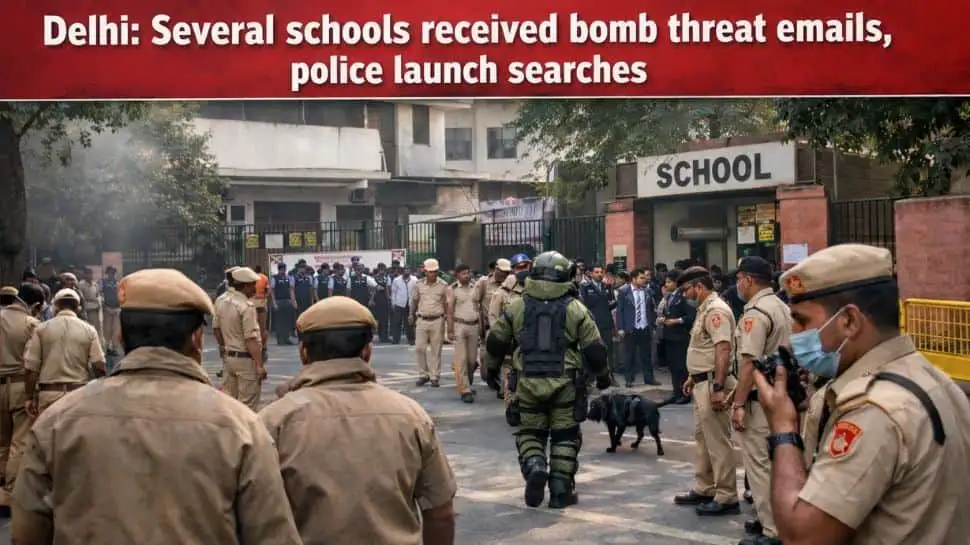
Recent days have seen a series of schools across Delhi receive electronic messages containing threats of explosive devices. These communications have triggered widespread concern among students, parents, and educators, prompting significant responses from law enforcement and emergency services. The nature of these threats has necessitated immediate security measures, including searches and, in some instances, the temporary evacuation of school premises to ensure the safety of all involved.
Timeline of Events and Involved Parties
Reports indicate that multiple bomb threat emails were sent to schools in Delhi on Monday, February 12, 2024, and again on Friday, February 16, 2024. The specific timing of the emails on Friday morning generally fell between 9:12 am and 9:59 am.
The schools targeted include a diverse range across the national capital, with specific mentions of:
Loreto Convent School, Delhi Cantt
Cambridge School, Srinivaspuri and New Friends Colony (NFC)
Venkateshwar School, Rohini
The Indian School, Sadiq Nagar
CM School, Rohini
DTA School / Delhi Tamil Education Association (DTEA), INA and Pusa Road
Bal Bharati School, Rohini
Air Force School, Lodhi Road
KR Mangalam School
BT Tamil School, Jhandewalan
Sardar Patel Vidyalaya, Lodi Estate
The British School, Chanakyapuri
Kendriya Vidyalaya, Gole Market
Alcon School, East Delhi
Jaspal Kaur School, Ashok Vihar
Mata Jai Kaur School, Ashok Vihar
Delhi Public School, Rohini
In response, the Delhi Police, Delhi Fire Services (DFS), and specialized units including Bomb Detection and Disposal Squads (BDDS) and K9 units were dispatched to the affected institutions.
Read More: Delhi Students Protest Education System Flaws on July 6

Nature of the Threats and Responses
The electronic communications, often described as "hoax bomb threats," have varied in their content. Some emails reportedly included political slogans, such as "Delhi will become Khalistan," and references to specific timings for explosions, like "1:11 pm." In at least one instance, Parliament was also cited as a potential target.
Precautionary Measures: Upon receiving the threats, schools initiated immediate security protocols.
Searches: Law enforcement and bomb disposal units conducted thorough sweeps of school grounds.
Evacuations: In several cases, students and staff were safely evacuated from the buildings as a precautionary measure.
Findings: Across all reported incidents, no suspicious objects or explosive devices were discovered.
Recurring Incidents and Investigative Challenges
These recent threats are not isolated events. The reports highlight that this is at least the second such scare within a week, following a similar incident on Monday, February 12, 2024, where approximately 12 to 13 schools received bomb threat emails, also declared a hoax. This pattern suggests a deliberate effort to disrupt educational institutions and strain emergency resources.

Police investigations into the origin of these emails have encountered difficulties. Officials have noted that many of the previous hoax emails were routed through Virtual Private Networks (VPNs) and overseas servers, which serve to mask the senders' identities. This makes tracing the source and apprehending the individuals responsible a complex undertaking.
Read More: India IVF Costs And Social Barriers Limit Access In April 2026
Expert Perspectives on Hoax Threats
The increasing frequency of such threats is a cause for concern for authorities.

"Our training is that every call must be taken seriously," stated an official, underscoring the dilemma faced by emergency services. While the majority of threats are ultimately found to be hoaxes, the potential for a genuine threat necessitates a full-scale response. This continuous activation of resources and the resulting panic create significant logistical and emotional burdens.
The use of technology like VPNs is a key element in the investigative challenges.
Delhi Police indicated that most unsolved hoax bomb threat emails were routed through VPNs and overseas servers, masking the senders’ identities. This technological obfuscation poses a significant hurdle for investigators attempting to identify and prosecute the perpetrators.
Conclusion and Next Steps
The series of bomb threat emails sent to Delhi schools represents a deliberate and recurring attempt to cause panic and disrupt public order. While all threats to date have been classified as hoaxes and no devices have been found, the sustained response from emergency services and the anxiety generated among the public are significant consequences.
The investigation is ongoing, with police actively working to trace the origins of these electronic communications. The challenge lies in overcoming the anonymity provided by VPNs and international servers. Authorities are expected to continue their thorough security checks at educational institutions and to pursue leads to identify and hold accountable those responsible for sending these disruptive and alarming messages. The recurring nature of these incidents points towards a need for ongoing vigilance and potentially enhanced cyber-security measures to counter such threats in the future.
Read More: Delhi Police Block Protest Due to No Permit for Cockroach Janta Party