

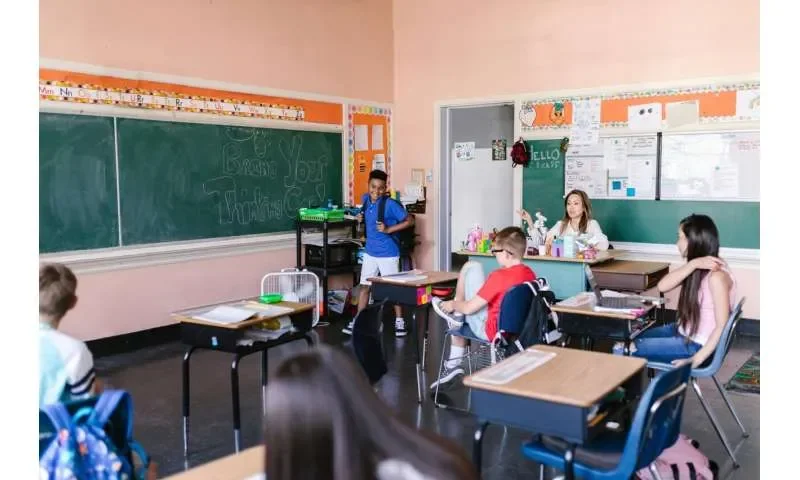
New Research Suggests Longer Wait Before Primary School Could Boost Learning in Poorer Nations
A recent investigation proposes that children in low-income settings might gain more from starting primary school a little later. The findings, released on April 15, 2026, point towards improved educational results if youngsters aren't rushed into formal schooling too soon. This notion challenges conventional timelines, suggesting that an extra year or so of readiness could be beneficial.
The study’s core assertion is that this delay allows children more time to develop critical cognitive and social skills essential for academic success. This development period appears to be particularly impactful in environments where resources for early childhood education might be scarce. It’s not about hindering education, but rather about optimizing the learning curve.
This line of inquiry opens up a different perspective on how educational systems in resource-constrained regions are structured. It hints at a potential re-evaluation of age-based entry policies.
Read More: Andhra Pradesh Intermediate Exams 2026: Girls Pass Rates Higher Than Boys
A Look at the Evidence
While the report details potential gains, specifics regarding the exact age of entry and the nature of the observed improvements require further unpacking. The research appears to be grounded in comparative analyses, though the precise methodologies and geographical scope of the study are not immediately detailed in the provided abstract.
The Bigger Picture
The prevailing model in many parts of the world pushes for earlier entry into primary education, often driven by accessibility goals and standardized curriculum rollouts. This new study offers a counterpoint, suggesting that context matters and that a one-size-fits-all approach may not be the most effective for all children, especially those in countries grappling with fewer educational supports.


