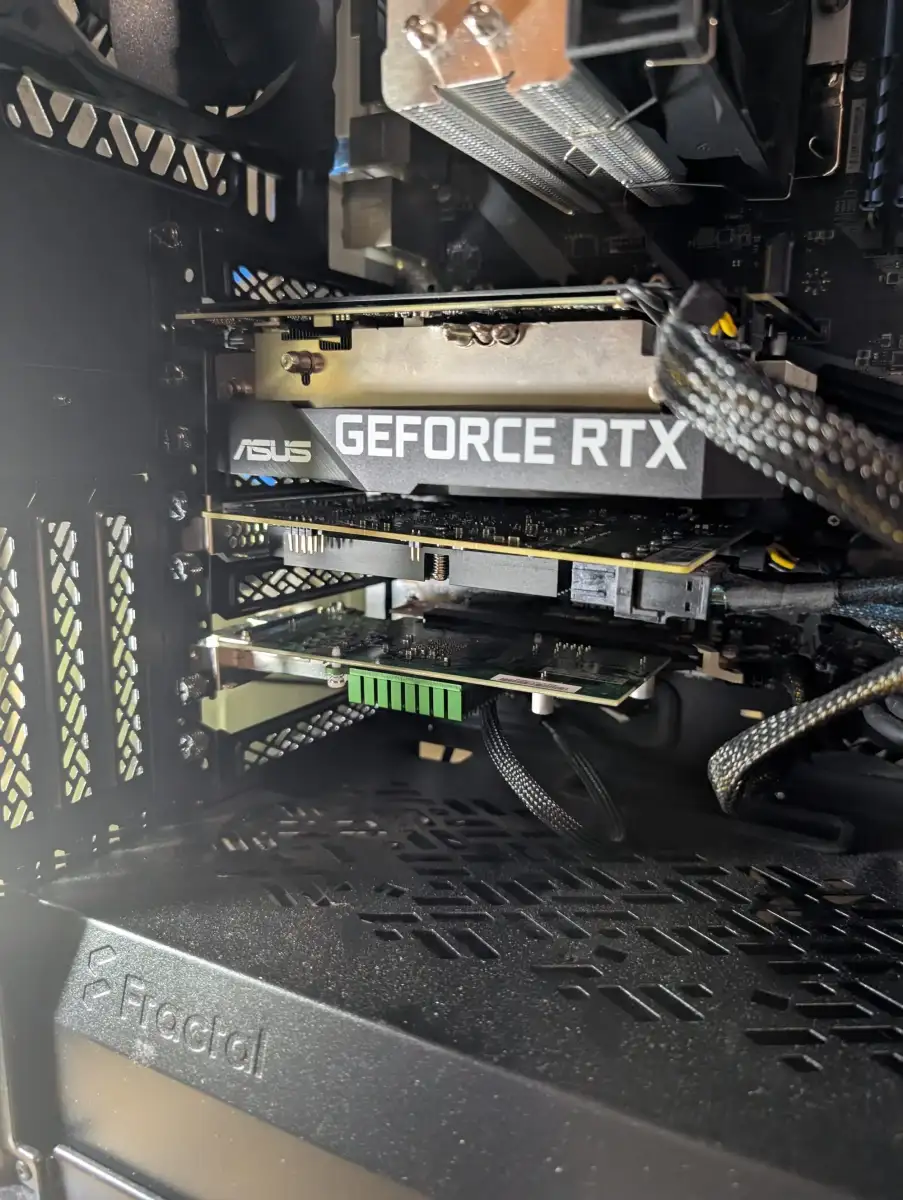
The wall between private compute and central servers is cracking as users migrate large language models like DeepSeek and Doubao onto home-office hardware. This shift relies on quantization, a mathematical squeezing process that reduces a model's weight until it fits into the cramped memory of a standard graphics card. By stripping a DeepSeek-7B model down to 4-bit precision, the memory demand drops from a heavy 14GB to a mere 6GB of VRAM. This allows the machine to function without a tether to external data centers, turning a global cloud entity into a private, local file.
The migration involves pulling specific GGUF files—a format designed for fragmented hardware—from online repositories.
Software like LM Studio and text-generation-webui serve as the new interfaces, replacing the browser-based chat portals owned by corporations.
Users with limited video memory are resorting to CPU-only inference, which trades processing speed for the ability to run the code at all.
Success depends on
bitsandbyteslibraries andCUDAsupport to keep the math-crunching efficient enough to be usable.
The Weight of Logic
To make these models sit still on a personal desk, the data must be degraded or "quantized." While the original FP16 precision offers the most accurate outputs, it is too bulky for non-industrial computers. The 4-bit variant is the current standard for the basement-tier operator; it retains most of the model's logic while shedding the massive digital footprint.
Read More: MIT Boron-Oxygen Molecule Acts as Builder in Chemical Reactions
| Precision Level | Memory Needed (7B Model) | Performance Trade-off |
|---|---|---|
| FP16 (Original) | ~14GB | Highest accuracy, requires pro-grade GPU |
| 8-bit | ~8GB | Moderate speed, slight logic decay |
| 4-bit (Recommended) | ~6GB | Fits on home PCs, negligible loss for basic tasks |
| GGUF | Variable | Can run on system RAM (CPU), very slow |
Tools for the Disconnected
Deployment is no longer a task solely for the engineer, though the process remains clunky and prone to error. LM Studio acts as a simplified wrapper for those who want the machine to "just work," while text-generation-webui (the oobabooga project) allows for deeper tinkering with the model’s internal dials.
"Even consumption-grade hardware can now run 7B-level models fluently if the user knows how to prune the weights correctly."
For those building their own setups, the command line remains the primary gate. Commands like pip install torch transformers and python server.py --load-in-4bit are the manual levers used to force the model into the local silicon.
The Infrastructure of Privacy
The move to local hosting is a reaction to the volatility of DeepSeek APIs and the general desire to keep data off the wires. By downloading the model weights directly, the user ends their reliance on "leasing" intelligence. This creates a fragmented landscape where the "smart" machine is no longer a singular, distant god, but a messy, localized collection of GGUF files and Python scripts running on hot, loud boxes in private rooms.
Read More: Anthropic Refuses China Access to Latest AI Models
The requirement for flash_attention and CUDA acceleration reminds the user that while the software is becoming "free" and local, the physical hardware remains a bottleneck controlled by a few silicon manufacturers. This is not a total escape, but a change in who owns the immediate gate to the logic.