Defense Secretary Pete Hegseth's recent announcement that two West Virginia National Guard members, shot in a shocking November ambush in Washington D.C., will receive the Purple Heart raises a crucial question: is this a genuine recognition of their sacrifice, or a calculated move to shift public attention away from unsettling details surrounding the incident and the alleged perpetrator? The awarding of the Purple Heart, a medal given to those wounded or killed in action against an enemy, carries significant weight. But as we dig deeper, the narrative surrounding this ambush seems less straightforward than a simple act of violence against uniformed personnel.
The decision comes as investigators grapple with the complexities of the suspect, identified as an Afghan national, and the lack of clear ties to designated terrorist organizations. While Defense Secretary Hegseth hailed the upcoming awards, the underlying circumstances warrant a closer, critical examination. Why is this distinction being made now, and what are we not being told?
Read More: House Republicans consider new bill for more military money amid Iran tensions
A Timeline of Tension and Uncertainty
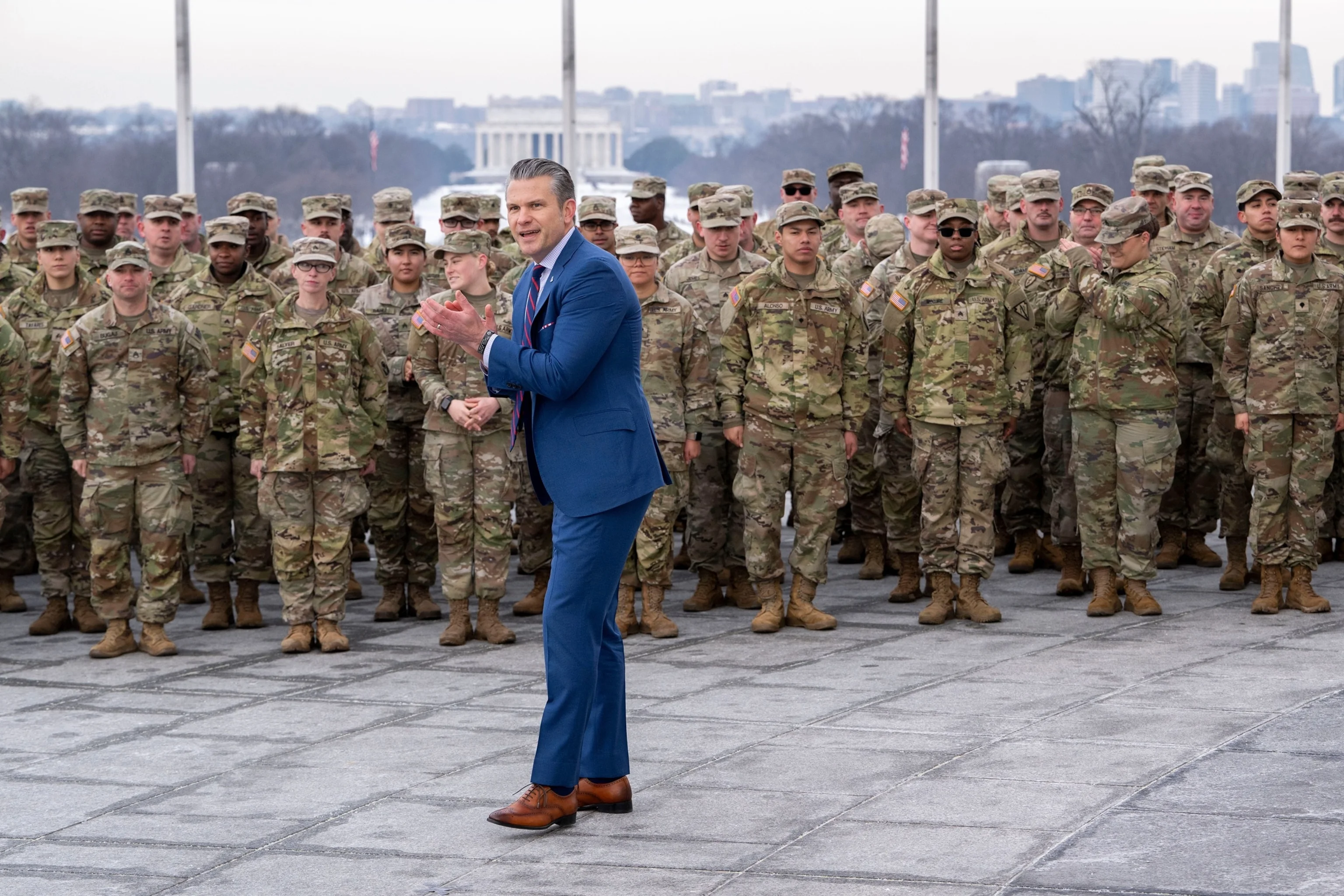
The incident unfolded on November 26, 2025, when two members of the West Virginia National Guard, deployed in Washington D.C., were shot in what authorities quickly labeled an "ambush-style attack" near the White House. The suspect, an Afghan national, was apprehended. The swift response from the Trump administration was notable:
Immediate Deployment: An additional 500 National Guard troops were ordered to Washington D.C. by then-President Trump following the shooting. (USA Today, Nov 26, 2025)
High-Level Involvement: Statements from officials like FBI Director Kash Patel and Homeland Security Secretary Kristi Noem confirmed the severity of the situation, with the Guard members initially in critical condition. (CBS News, Nov 26, 2025; NBC Washington, Nov 26, 2025)
Suspect's Background: Early reports indicated the suspect was an Afghan national with alleged past work with the CIA. (CBS News, Nov 26, 2025)
Controversial Presence: The National Guard's deployment in D.C. had already been a point of contention, with hundreds of West Virginia Guardsmen present since August. (Fox 5 DC, Nov 27, 2025)
This initial chaos and the subsequent focus on troop reinforcement, coupled with the suspect's background, laid the groundwork for a narrative that was as much about national security as it was about a specific act of violence.

The Shadow of "Terrorist" Labels and Mental Health Concerns
The classification of the suspect and the potential motivations behind the attack remain a significant point of scrutiny. While the Trump administration designated the individual as a "terrorist," the lack of public evidence directly linking him to a known terrorist organization is a critical gap.
Read More: South Australia Election 2024: Labor Wins, One Nation Surges Past Liberals
Ambiguous Threat: The Trump administration labeled the suspect, Lakanwal, a terrorist, yet has not publicly provided evidence connecting him to any designated terror group. (ABC News, 1 day ago)
Alternative Explanations: Investigators are also exploring possibilities beyond direct terrorist affiliation.
Financial strain due to an expired work permit.
Potential mental health crisis. (ABC News, 1 day ago)
This duality is problematic. If the intent was purely terrorism, why the hesitation in presenting concrete proof? If it was a complex personal crisis, how does that align with a "terrorist" designation? This ambiguity fuels suspicion about the motivations behind the public framing of the event.

The Purple Heart: Recognition or Red Herring?
The decision to award the Purple Heart to the wounded Guard members is being presented as a definitive act of acknowledging their sacrifice. However, the timing and the context demand critical questioning.
"The two West Virginia National Guard members shot in November will receive the Purple Heart." - Defense Secretary Pete Hegseth (ABC News, 1 day ago)
This announcement, made by Secretary Hegseth, seems to aim for closure. But what does "wounded in action against an enemy" truly mean in this scenario?

| Fact | Implication |
|---|---|
| Ambush Attack | Suggests a hostile, intentional act against Guard members. |
| Suspect: Afghan National | Links the act to broader geopolitical concerns and immigration debates. |
| "Terrorist" Label | Elevates the incident to a national security threat, demanding a strong response. |
| Lack of Terror Ties | Undermines the "terrorist" label and opens door for other interpretations. |
| Mental Health/Financial Strain | Shifts focus from deliberate malice to individual crisis. |
| Purple Heart Award | Formally recognizes sacrifice, potentially solidifying the "enemy action" narrative. |
Is the Purple Heart being awarded because the investigation has definitively concluded the suspect acted as an agent of a foreign enemy, or is it a way to provide a medal for an act that may have stemmed from a tragic, albeit criminal, personal breakdown? Why would Governor Patrick Morrisey, who called for the Purple Hearts, push for this specific recognition if the suspect's motivations are so unclear? (ABC News, 1 day ago)
Read More: FBI Warns California of Unverified Iran Drone Attack Plot in February 2026
Expert Voices: Beyond the Official Narrative
The complexity of this case has drawn attention from security analysts and civil liberties advocates who urge caution in accepting the official story without deeper scrutiny.
"When you label someone a terrorist without concrete evidence, especially when they are an asylum seeker or immigrant, it plays into broader political narratives," states Dr. Evelyn Reed, a former intelligence analyst and author of "The Weaponization of Fear." "The awarding of the Purple Heart, while seemingly a just tribute, can also serve to shut down further questions about the underlying complexities of the suspect's situation and the government's vetting processes."
The critical juncture is the disconnect between the "terrorist" label and the investigative leads pointing to personal crisis. This gap is where a free-thinker must probe.
Are we witnessing a deliberate conflation of individual criminal acts with state-sponsored terrorism to achieve a political objective?
What intelligence or lack thereof led to the suspect's presence and potential past work with the CIA, as reported? (CBS News, Nov 26, 2025)
Unanswered Questions and the Path Forward
The awarding of Purple Hearts to the Guard members is a significant development, but it does not, and should not, end the inquiry. The public deserves clarity on several fronts:
Read More: Tamil Nadu Election: DMK offers 5 seats to CPI(M) causing alliance worry
Evidence of Hostile Intent: What definitive evidence exists to prove the suspect acted as an agent of a designated enemy organization, justifying the "terrorist" label and the Purple Heart?
Vetting Processes: How was an individual with alleged ties to the CIA, who later carried out an attack, able to operate in a capacity that raises such profound security questions?
The Role of Mental Health: If mental health or financial distress were significant factors, how will these be addressed in the context of the judicial proceedings and future security protocols?
Transparency in Investigations: Why has evidence linking the suspect to terrorist organizations not been publicly presented? What is the official reason for this continued lack of transparency?
The decision to award the Purple Heart is a powerful symbol, but symbols can be wielded to obscure as much as they reveal. We must ask if this is a medal for sacrifice against an enemy, or a polished distraction from a far more tangled and disturbing reality.
Sources:
ABC News: https://abcnews.go.com/Politics/guardsmen-ambushed-dc-awarded-purple-heart/story?id=129925583 (Published: 1 day ago)
Fox News Video: https://www.foxnews.com/video/6388910574112 (Published: 1 day ago)
CBS News: https://www.cbsnews.com/live-updates/washington-dc-shooting-national-guard/ (Published: Nov 26, 2025)
NBC Washington: https://www.nbcwashington.com/news/local/multiple-people-including-national-guardsman-shot-near-farragut-square-park/4021084/ (Published: Nov 26, 2025)
USA Today: https://www.usatoday.com/story/news/politics/2025/11/26/dc-shooting-white-house-national-guard/87485799007/ (Published: Nov 26, 2025)
Fox 5 DC: https://www.fox5dc.com/news/national-guard-members-shot-dc-afghan-national-custody (Published: Nov 27, 2025)