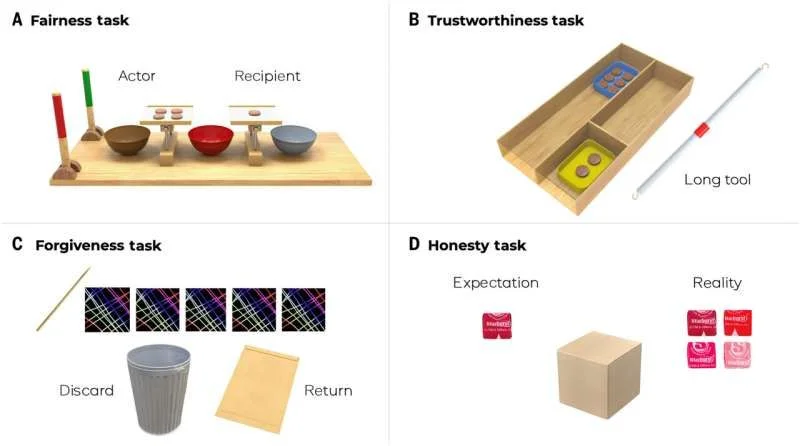
A recent study involving 400 children across five distinct societies offers a compelling glimpse into how culture deeply influences the way young minds learn to work together. While younger children globally tend to put their own needs first, the environments they grow up in appear to shape their willingness to share, accept fairness, and collaborate with others, even strangers. The findings suggest that societal structures and resource availability play a key role in fostering different cooperative behaviors.
The Roots of Cooperation: A Cross-Cultural Lens
Understanding how children develop the ability to cooperate is a central question in developmental psychology. This investigation sought to address this by observing children in various cultural settings.
The study observed 400 children across five different societies.
A common thread was noted: younger children generally prioritized their own interests.
However, variations in cooperative behavior emerged based on societal characteristics.
Societal Structures and Behavioral Outcomes
The research highlights a clear link between a society's structure and the cooperative tendencies observed in its children.

Societies emphasizing close relationships and facing resource scarcity showed children more focused on efficient use of available resources. This suggests an adaptation to environmental and social pressures.
In certain cultural contexts, children demonstrated a stronger inclination to reject unfairness or share resources with individuals they didn't know.
Conversely, children in more industrialized societies appeared more inclined to cooperate with strangers. Researchers propose this may stem from daily life experiences that reward such interactions.
Methodological Considerations in Cross-Cultural Research
Studying child development across different cultures presents unique challenges. Ensuring that research methods accurately capture culturally nuanced behaviors is crucial for drawing valid conclusions.
Read More: Why the New Atheism movement lost public influence by April 2026
Cross-cultural studies are increasingly vital for understanding the breadth of human behavior.
However, there's a need to be mindful of the risk of isolating cognitive abilities without fully accounting for cultural contexts.
The integrity of cross-cultural research hinges on a deep understanding of the specific cultural environments being studied.
Expert Perspectives on Cultural Influence
Developmental scientists underscore the importance of considering cultural backgrounds when examining child development.
"To fully understand and support child development, we need to study and compare children’s behaviors and experiences across diverse cultural communities." - Roman Stengelin, developmental scientist.
This research aligns with the work of scientists like Roman Stengelin, who focus on building culturally sensitive understandings of childhood growth.
His approach combines experimental and cross-cultural psychology to explore how children in different communities develop social and cognitive skills.
Conclusion: A Culturally Informed Blueprint for Cooperation
The study across five societies provides strong evidence that cultural environments significantly shape how children learn to cooperate. The research suggests that resource availability, social structures, and everyday experiences within a society are key factors influencing children's tendencies towards fairness, sharing, and collaboration.
The findings underscore that cooperative behaviors are not uniform but are instead learned responses adapted to specific cultural and environmental contexts.
Further investigation may be warranted to explore the long-term implications of these culturally shaped cooperative strategies on societal functioning.
Sources:
Phys.org: Study of 400 children in five societies finds culture shapes how kids cooperate
Link: https://phys.org/news/2026-02-children-societies-culture-kids-cooperate.html
Context: This is the primary source reporting on the study's findings.
Duke University (Trinity): How Cultural Norms Shape Childhood Development
Link: https://trinity.duke.edu/news/how-cultural-norms-shape-childhood-development
Context: This article reiterates the core findings of the study, providing additional context on the role of cultural norms.
BoldScience: How does culture influence children?
Link: https://boldscience.org/the-developmental-scientist-showing-how-culture-influences-children/
Context: This article discusses the broader field of cross-cultural developmental psychology and the importance of such research, referencing the work of scientists in this area.
Cambridge University Press Blog: Are we really measuring what matters? The hidden challenges of studying children across cultures
Link: https://www.cambridge.org/core/blog/2025/02/28/are-we-really-measuring-what-matters-the-hidden-challenges-of-studying-children-across-cultures/
Context: This source provides critical insights into the methodological considerations and challenges inherent in cross-cultural research, ensuring a balanced perspective on the study's execution.