A new type of clean energy facility, Britain's first geothermal power plant, has started producing electricity in Cornwall. The plant, called United Downs, aims to power approximately 10,000 homes by using hot water from deep underground. This marks a significant step for renewable energy in the UK, as it's the first time electricity is being generated from the Earth's heat on a commercial scale. The project has been in development for nearly 20 years, involving deep drilling to access the necessary heat. Alongside electricity, the plant will also extract lithium carbonate, a key material for electric car batteries. While celebrated as a renewable energy first, some have voiced concerns about the potential for small earthquakes in the region due to the drilling and underground operations.
Project Details and Timeline
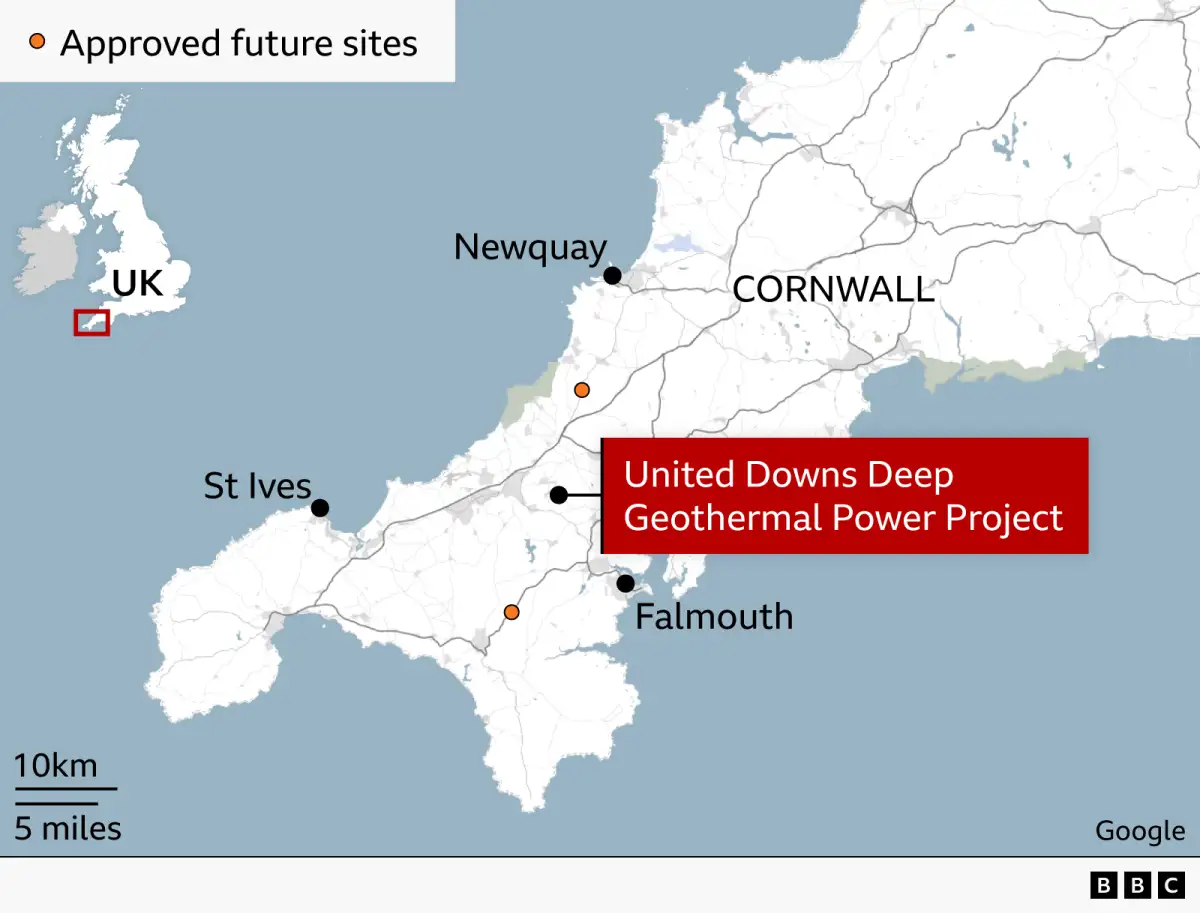
The United Downs deep geothermal plant is located near Redruth in Cornwall. The project's development has spanned almost two decades. Key milestones include:
Read More: UK Energy Bills To Be Cut Significantly From July 2026 Due To Lower Wholesale Costs
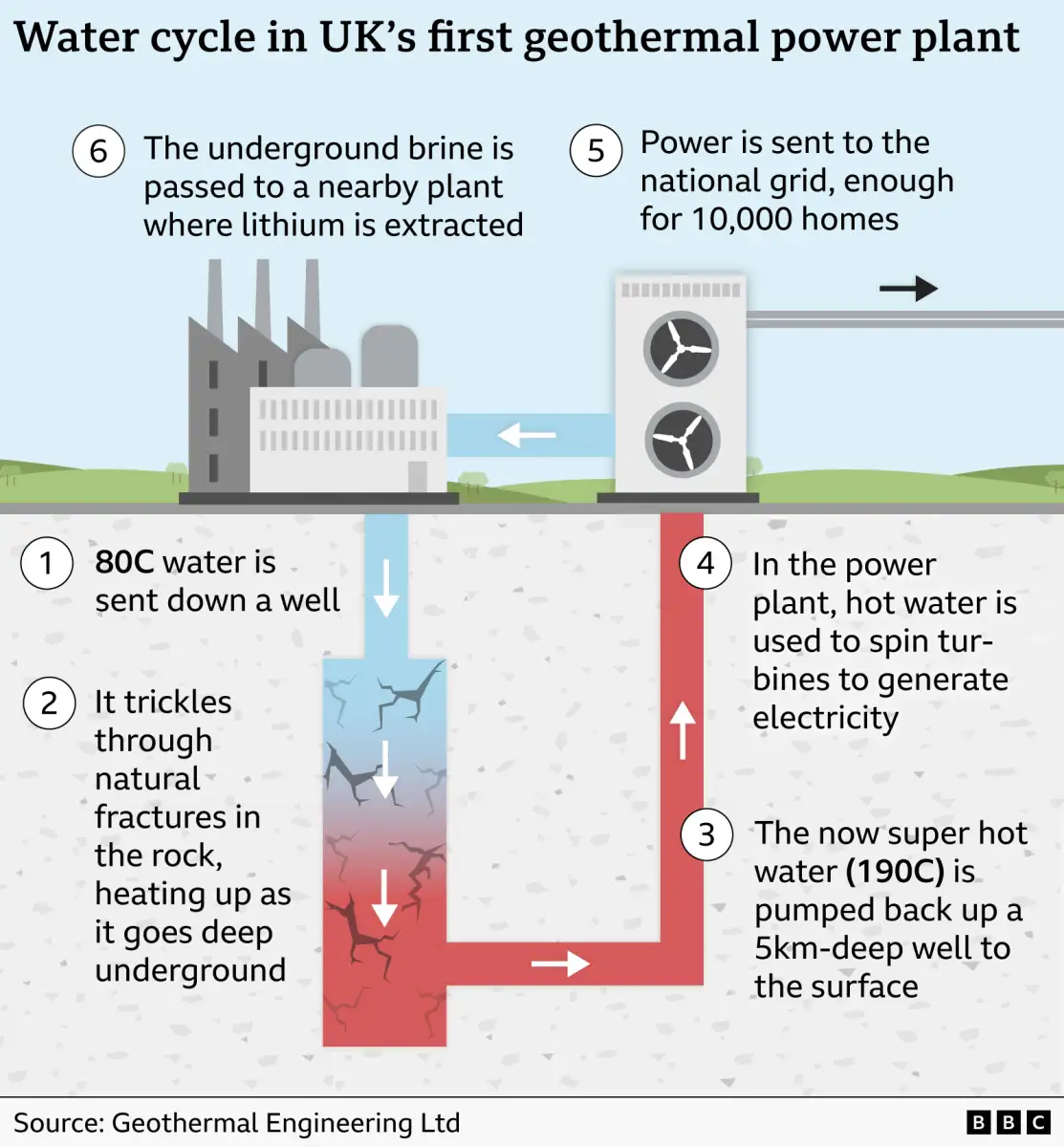
Deepest On-shore Well: Geothermal Engineering Ltd (GEL), the company behind the project, drilled what is described as the deepest on-shore well in the UK, exceeding 5 kilometers in depth, to reach the geothermal fluid.
Continuous Power Generation: Unlike wind or solar power, geothermal energy can produce electricity 24 hours a day, providing a steady supply to the grid.
Dual Output: The plant is designed to generate both electricity and extract lithium carbonate from the mineral-rich hot water.
Energy Output and Economic Impact
The United Downs plant is set to generate a consistent amount of power.
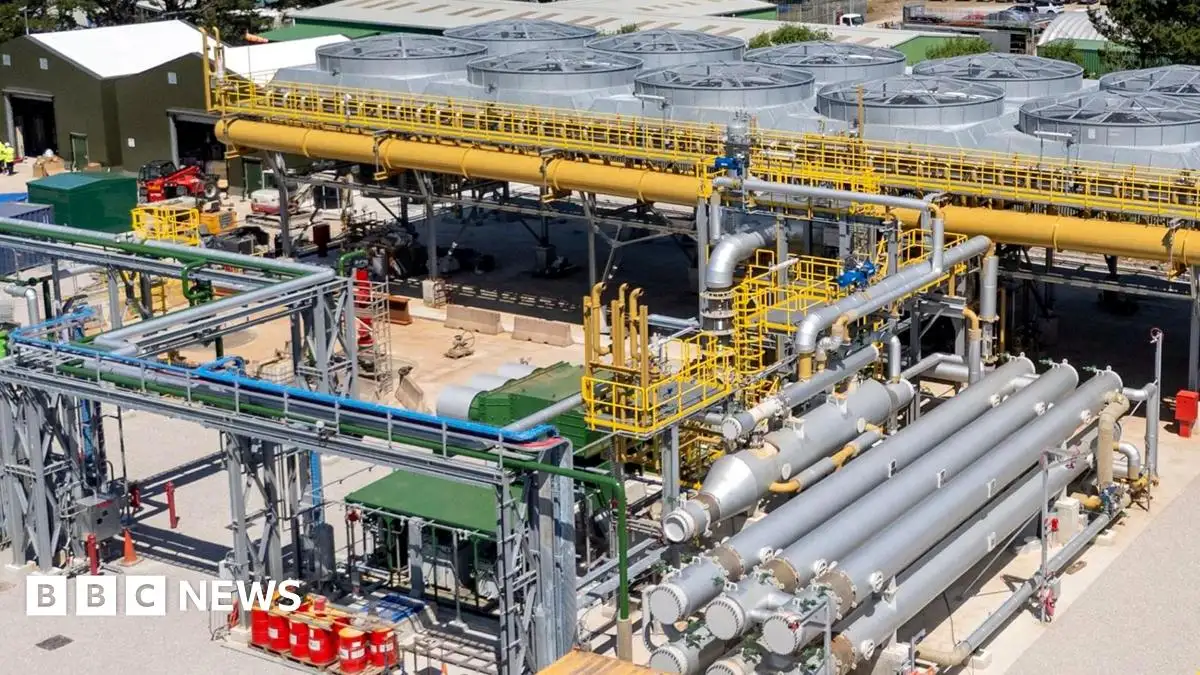
Electricity Production: The first stage is producing three megawatts (MW) of power. GEL has stated that three such projects could generate up to 10 MW. This output is sufficient to supply electricity to approximately 10,000 homes. Octopus Energy has secured a long-term deal to purchase at least three megawatts of this electricity.
Lithium Extraction: The plant is expected to become the UK's first commercially operating lithium production facility. It aims to produce 100 tonnes of lithium carbonate annually, enough for roughly 2,500 car batteries. This domestic source of lithium is seen as crucial for the UK's electric vehicle supply chain.
Broader Potential: Experts suggest that the UK has significant geothermal heat potential, estimated at over 200 gigawatts (GW) from on-shore sources. This is considerably more than the planned output of the Hinkley Point C nuclear power plant.
Technological Approach
The process involves harnessing the Earth's natural heat.

Hot Water Extraction: Extremely hot water is brought up from deep underground wells.
Turbine Operation: The steam generated from this heated water drives a turbine, which in turn powers a generator to produce electricity.
Water Reinjection: After passing through the turbine and cooling, the water is reinjected back underground to maintain the reservoir's heat and volume.
Lithium Separation: The mineral-rich water is processed to extract lithium carbonate.
Skepticism and Concerns
Despite the project's innovative nature, some have raised concerns.
Seismicity Fears: The main concern voiced by sceptics is the potential for induced seismicity, often referred to as 'seismicity'. This relates to the possibility of minor earth tremors or earthquakes being triggered by the drilling and the injection of fluid into the earth.
Geographical Spread: There are fears that these seismic events could spread across the south-west of England as geothermal energy use becomes more widespread.
Official and Industry Reactions
The launch has been met with a generally positive response from government and industry figures.
"The production one is far too hot." - Charlotte Wilkins, referring to the high temperatures of the extracted geothermal fluid.
"We were overjoyed at the launch, which has been almost 20 years in the making." - Ryan Law, chief executive of GEL.
"It’s a huge opportunity for Cornwall to unlock investment, drive economic growth, support jobs, and establish the region as a vital player in Britain’s energy security." - Rachel Reeves, Chancellor.
"With zero-carbon lithium now being produced here in the UK, British businesses are leading the way in securing the materials needed to power the next generation of electric cars." - Dr Alan Whitehead, Minister of State for Energy Security and Net Zero.
"This marks a major milestone for UK geothermal and a strong validation of our investment strategy." - Jason Cheng, CEO of Kerogen-CX, a backer of GEL.
Industry bodies like Geothermal UK see the project as a crucial step, highlighting that deep geothermal energy offers continuous, 24-hour electricity, unlike more intermittent renewable sources. However, the high initial cost of drilling is acknowledged as a significant barrier to broader adoption.
Conclusion and Implications
The United Downs geothermal plant represents a significant advancement for the UK's renewable energy landscape. It demonstrates the feasibility of generating clean electricity from the Earth's heat and simultaneously provides a domestic source of critical materials for the electric vehicle industry. This project serves as a proof of concept, confirming that geothermal power generation is viable in Britain.
Read More: Mojave Desert Judge Closes 2,200 Miles of Trails to Protect Tortoises
The success of this pilot plant could pave the way for wider deployment across the UK, tapping into the nation's substantial geothermal resources. However, the concerns regarding potential seismic activity need to be carefully monitored and understood as the technology develops. Further research and transparent communication regarding these risks will be essential for public acceptance and regulatory approval as this sector grows. The project's ability to provide consistent power and extract valuable resources like lithium suggests a promising, albeit complex, future for geothermal energy in the UK.
Sources
BBC News: Earth's heat to produce electricity for homes in UK clean energy first
Daily Mail: UK first geothermal plant opens in Cornwall sparking earthquakes fears
The Guardian: ‘Magic beneath the surface’: pioneering geothermal plant launched in Cornwall
E&T (Institution of Engineering and Technology): UK’s first geothermal power plant switches on in Cornwall
Sky News: UK's first deep geothermal electricity plant switches on
EIBI: Cornwall geothermal plant begins generating power and lithium
Climate Solutions: The UK's First Geothermal Power Plant Goes Live