Chinese large language models, particularly those released as open-weight, are now setting the pace in coding performance, outperforming leading Western models on key benchmarks and offering a significant cost advantage for enterprises. This development marks a strategic shift, with China increasingly influencing the trajectory of enterprise AI development through its contributions to the open-source ecosystem.
Performance Leap in Coding
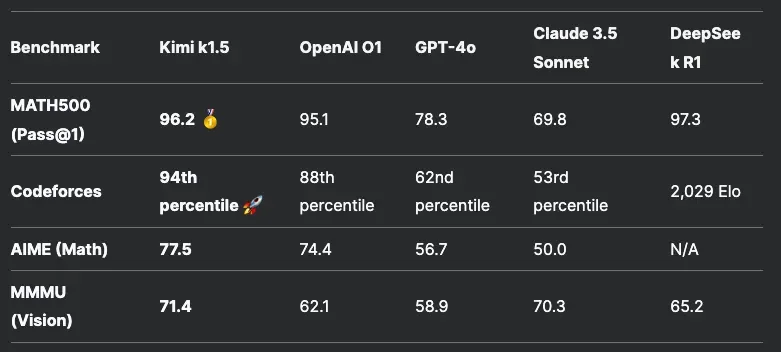
Recent evaluations highlight models like Kimi K2.6 surpassing GPT-5.4 on the SWE-Bench Pro benchmark. This is not an isolated incident; earlier reports indicated Kimi K1.5 had already demonstrated superiority over GPT-4 in coding, alongside math and vision tasks. Another notable player, DeepSeek R1, is described as a "coding powerhouse," though it reportedly lacks the multimodal versatility of Kimi.

The rapid advancement of these Chinese models is tied to their release as open-weight, a strategy that fosters broader adoption and adaptation within the global AI community. This open-weight approach is seen as a direct advantage for Chinese and the wider AI ecosystem, providing a foundation for how most enterprise AI is constructed.
Shifting Default Models and Accelerated Release Cadence
The landscape of widely accessible AI tools is also in flux. OpenAI has updated its default model for ChatGPT to GPT-5.5 Instant, replacing the previous GPT-5.3 Instant as of May 5. This acceleration in model release cycles appears to be a common theme, with multiple Chinese research labs introducing new open-weight coding models that challenge established benchmarks.

Enterprise Adoption and Ecosystem Influence
The strategic significance of China's lead in open-weight models lies in their potential to shape the future of enterprise AI. These models, often released under commercially permissive licenses, allow businesses to deploy high-performance AI solutions without prohibitive infrastructure costs. Companies like Zhipu AI, with models such as GLM-4-9B, are contributing to this trend, offering compact yet potent language models.
The preference for open-weight models by enterprises is a key driver. It offers flexibility and control, enabling developers to build upon and customize AI capabilities more readily than proprietary, closed-source alternatives. This open approach democratizes access to advanced AI, fostering innovation across various sectors.
Read More: AI Agent Testing Changes: New Tools Needed for Complex AI
Broader AI Developments
Beyond coding prowess, the AI news cycle includes developments in model evaluation and comparisons. Platforms are emerging to track and analyze the performance of hundreds of AI models across diverse benchmarks, including reasoning and mathematical capabilities. This allows users to identify the best-suited models for specific applications, a critical step in navigating the rapidly evolving AI landscape. While the focus here has been on coding, the broader competition extends to a range of AI functionalities.