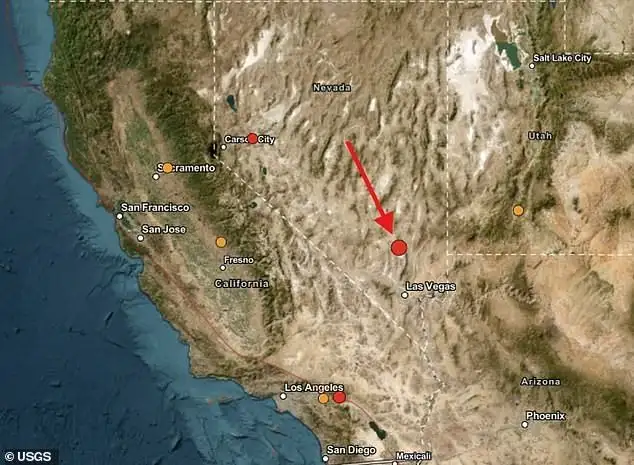
Recent geological modeling indicates that a high-magnitude rupture in the Cascadia Subduction Zone could act as a mechanical trigger for a secondary, major seismic event along the San Andreas Fault. Researchers suggest this sequence, previously viewed as distinct phenomena, may operate in a tethered timeline, threatening vast population centers across the Pacific Northwest and California.
Data Points on Seismic Synchronization
The potential for back-to-back catastrophes rests on current findings regarding stress transfer between major tectonic boundaries.
Trigger Mechanism: A magnitude 9 event in the north may impart sufficient tectonic strain to induce a magnitude 7.9 event in northern California.
Recurrence Intervals: Large-scale ruptures along these segments occur roughly every 200 years.
Historical Precedent: Archaeological data from Vancouver Island confirms previous cataclysms leveled indigenous settlements, providing a geologic roadmap of past destruction.
| Fault Zone | Risk Type | Observed Impact History |
|---|---|---|
| Cascadia Subduction | Megathrust | Magnitude 9.0; subsidence; landslides |
| San Andreas | Strike-slip | Magnitude 7.9 potential; secondary trigger |
| New Madrid | Intraplate | Active; localized seismic risk |
Regional Vulnerabilities
While the U.S. Tsunami Warning Centers currently report no active threats as of today, 28/04/2026, the underlying structural risks remain. Other regions, such as the Eastern Tennessee Seismic Zone and the urban infrastructure of Salt Lake City, face localized seismic hazards distinct from the West Coast's tectonic coupling.
"Large earthquakes on these faults occur roughly every 200 years… the researchers have now found that a second quake—up to a magnitude 7.9—probably affected northern California shortly after the first struck."
Investigative Context: The Architecture of Failure
The shift in scientific understanding—moving away from viewing faults as isolated systems—revises the disaster preparedness calculus. The 'Cascadia-San Andreas' link implies that localized mitigation efforts may be insufficient if the earth's crust exhibits a 'domino' behavior during major releases of stored potential energy.
Read More: Mars Shalbatana Vallis Images Show Ancient Giant Flood Evidence
This model challenges the standard approach to ' Earthquake Readiness ' which historically focused on individual fault zones. By mapping how stress propagates through the North American plate, geologists are essentially identifying a new class of multi-state emergency that lacks modern bureaucratic precedent. The timing of such events remains stochastic; the presence of an 'overdue' window serves only to heighten the tension between statistical likelihood and current civil engineering standards.