


Sudden shifts in global oil markets, fueled by unpredictable geopolitical events in the Persian Gulf, are presenting Canada with a significant opportunity for increased revenue. This potential windfall, however, is not a universal boon across the country, as the benefits are largely concentrated in provinces with established oil industries. The situation echoes the drastic economic contraction seen at the start of the COVID-19 pandemic, driven by widespread travel cessation.

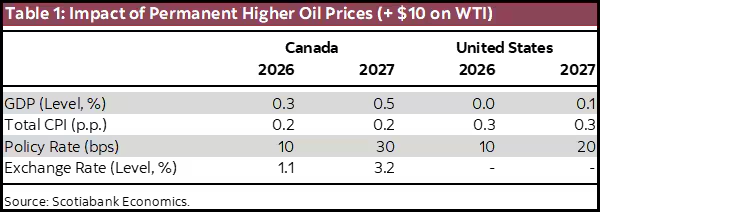
The precise impact on Canada hinges on global crude prices, which remain volatile. Experts suggest that a sustained price of around $90 per barrel could transform Alberta's projected $10 billion deficit into a surplus. Each $10 increase in oil prices is estimated to generate approximately $2 billion in additional revenue for the federal government.

Global Turmoil Fuels Price Hikes
Ongoing military actions in Iran are intensifying the risk of a wider regional conflict, a scenario that elevates the probability of significant oil supply disruptions. Such events have already pushed oil prices higher in early trading. The blockade of a crucial oil artery near Iran raises questions about Canada's capacity to fill any resulting supply gaps in the global market.
Read More: SZA's 'SOS' Album Beats Label Doubts, Tops Charts for 10 Weeks

"You're going to see a boost in royalty revenues."
While higher oil prices can stimulate capital spending within the energy sector, supporting employment and household income, this benefit is partially counteracted by the erosion of household purchasing power due to increased energy costs. This dual effect suggests a complex economic ripple, with both positive and negative pressures on consumers and the broader economy.
Uneven Distribution of Gains
The economic uplift from higher oil prices will not be evenly distributed across Canada. The oil sector is geographically concentrated, primarily impacting Alberta, Saskatchewan, and Newfoundland and Labrador. This concentration means that regions without significant oil production may not experience the same level of economic benefit.
Canada has indicated it will contribute to efforts aimed at stabilizing oil prices, though the specific details of its contribution are expected by the end of the week.
Market Readjustment
Recent market trends have seen oil prices retreating, prompting Canadian investors to reassess their exposure to the energy sector. This recalibration occurs alongside major acquisition activities within the mining industry, suggesting a broader shift in resource-related investment strategies. The stock market has reacted to escalating crude prices and Middle Eastern conflict, with major indices experiencing sell-offs, signaling investor apprehension about inflation.
Read More: Trump demands Iran surrender, causing stock market drops and oil price rise