
As of today, 18/05/2026, the discovery of an experimental Bun repository branch labeled claude/phase-a-port has triggered significant tension within the runtime’s contributor base. The branch contains an automated port of roughly 770,000 lines of code—moving the project from its native Zig architecture to Rust, executed primarily by Claude 4.5 Opus.
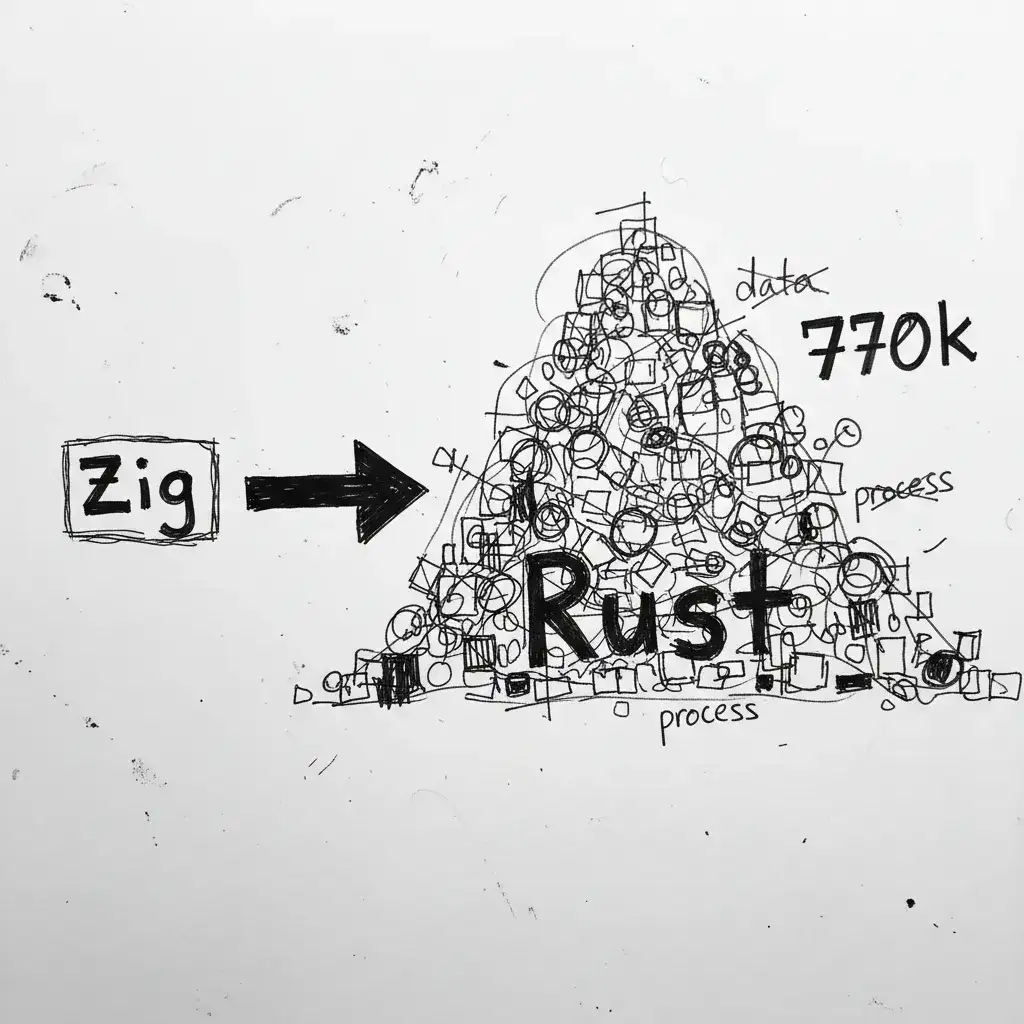
The core friction lies in the shift from human-managed, performance-focused memory safety to automated, machine-generated abstraction layers. While the repository remains a "non-committal" draft, the sheer scale of the conversion has raised alarms regarding technical debt, code provenance, and the long-term maintainability of core infrastructure generated via large language models.
Comparative Infrastructure Shift
| Feature | Current State (Zig) | Experimental State (Rust) |
|---|---|---|
| Language | Zig | Rust |
| Generation | Manual / Hand-optimized | Claude 4.5 Opus (Automated) |
| Priority | Execution speed / Efficiency | Safety / AI-native alignment |
| Status | Stable Production | Corporate Science Experiment |
Developer & Industry Implications
The project, spearheaded by Jarred Sumner, currently functions as an investigation into aligning the runtime with Anthropic workflows. Observers note that while the intent appears to be leveraging Rust’s memory safety guarantees, the method of execution—wholesale translation without manual oversight—invites criticism from those who value transparent, auditable code.
Read More: Chrome mimeHandler API lets extensions handle file types
Risk Profile: Engineering teams relying on Bun for production pipelines face potential instability if this experimental branch signals a long-term roadmap.
Architectural Schism: The move represents a departure from the "performance-at-all-costs" philosophy that defined the project’s early adoption.
Corporate Influence: Analysts suggest this indicates an integration push between Bun and Anthropic, prioritizing feature parity with AI-native ecosystems over traditional runtime development.
"A draft Rust port branch does not mean your deploy pipeline changes tomorrow. Anthropic did not acquire Bun in a vacuum." — Industry observer on the potential integration landscape.
Context: The Cost of Automation
The Bun runtime has historically been defined by its aggressive use of Zig, a language that provides low-level control and predictable performance. By pivoting toward an automated Rust translation, the project risks obscuring the nuances of its own foundation.
Historically, massive refactors—especially those involving millions of lines of machine-translated code—create "black box" sections where bugs are harder to trace because the original logic is detached from the synthetic implementation. While the Claude 4.5 Opus model offers advanced logic, it lacks the context of the initial architectural constraints established by the human maintainers. As of 13/05/2026, the technical community remains skeptical, emphasizing that until these changes prove to be more than a "corporate science experiment," production stability relies entirely on the existing Zig codebase.
Read More: Why Manual Prompt Editing Is Better For AI Apps In April 2026