


Vienna, Austria – Bulgaria has clinched its first-ever Eurovision Song Contest victory, taking the 70th iteration of the televised event with an energetic performance. The culmination of the week-long competition, however, was shadowed by significant political demonstrations protesting Israel's inclusion in the contest. Hundreds marched near the Wiener Stadthalle arena before the grand final, some brandishing signs with the slogan "Block Eurovision."

Pro-Palestinian groups organized an outdoor concert on Friday, under the banner "No stage for genocide," articulating their opposition to Israel's participation. Congolese-Austrian artist Patrick Bongola, cited as an organizer of these protests, stated, "Inviting Israel on such a beautiful stage as the Eurovision Song Contest stage is an affront to all the people who believe in humanity, who believe in love and togetherness."
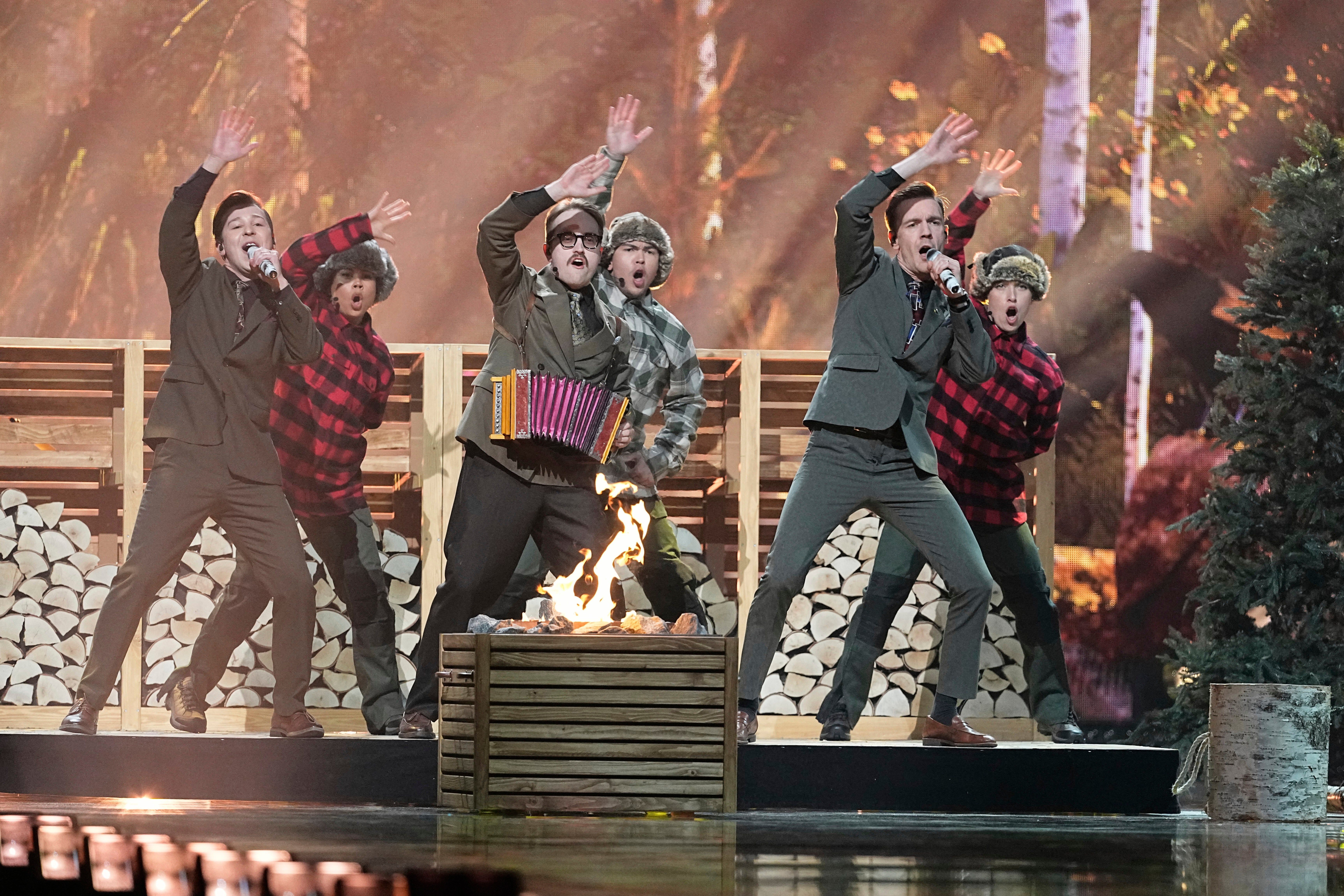
Despite these tensions, millions worldwide tuned in to witness a diverse array of acts, including a "fiery Finnish violinist, a Moldovan folk rapper, and a Serbian metal band," competing for the continent's pop crown. The contest, which is eyeing expansion with a planned Eurovision Song Contest Asia in Bangkok this November, continues to grapple with its role as a platform where popular music intersects with political sentiment.
Read More: Taylor Swift and Travis Kelce Marry at Madison Square Garden

A Contest of Contrasts
The final saw acts from 25 countries vying for the title. The scoring, described as a "convoluted voting system," ultimately awarded Bulgaria 516 points, while Israel secured 343 points. The backdrop to the glitz and performances was marked by a "tight security" presence, reportedly in response to the anticipated protests.
Historical Context and Future Outlook
Eurovision historian Dean Vuletic noted that the competition has historically been subject to surprises and has seen an increase in musical and linguistic diversity over the years. Even with a potential "blow to Eurovision’s finances and viewership from the boycott," the organization appears focused on future growth. The event, broadcast internationally on national broadcasters, the Eurovision YouTube channel, and on Peacock in the United States, remains a significant global spectacle. The underlying tension between the escapist nature of a pop contest and the unavoidable realities of global politics appears to be a persistent theme, acknowledged even by performers like Axel Åhman of the favored Swedish group KAJ, who conceded that "it’s tough to keep Eurovision an unpolitical event."
Read More: Sony stops making PS5 game discs in Austria by January 2028




:max_bytes(150000):strip_icc():focal(799x0:801x2)/nyc-sky-taylor-swift-travis-kelce-wedding-070326-2dc0d912004b400eac2c8c8b5adeff2a.jpg)
