The private credit market is seeing new signs of stress after Blue Owl Capital decided to stop investors from taking their money out of a specific debt fund. This fund, known as Blue Owl Capital Corporation II (OBDC II), is mostly used by regular people rather than large banks. The decision has made many investors worry that the fast-growing private credit world may be in trouble. When a large company stops people from withdrawing money, it often suggests there is not enough cash on hand to meet everyone's requests at once.
"The fundamental problem private market deals have is multi-year commitments that don't line up with quarterly redemptions." — Michael Shum, CEO of Cascade Debt.
A Shift in How Investors Get Their Money
For several years, private credit firms have told small investors they could get their money back every few months. However, the loans these funds make to businesses usually last for many years.

September 2025: The collapse of First Brands Group showed how risky these loans could be when business is bad.
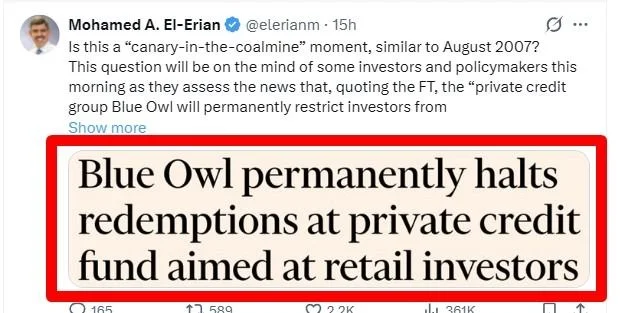
Recent Days: Blue Owl announced it would permanently stop regular withdrawal options for the OBDC II fund.
The Market Response: Shares of Blue Owl fell quickly. This also caused the stock prices of other big firms like Apollo Global Management, Blackstone, and Ares Management to drop.
The Asset Sale: To pay some investors and reduce its own debt, Blue Owl sold off a large group of assets.
Data Comparison: Private Credit vs. Public Bonds
Investors chose private credit because it promised higher returns. However, the recent news shows the hidden costs of those higher returns.
Read More: Solaris Energy SEI Stock Price Forecast Reaches $91.98 by July 2027
| Feature | Private Credit Funds | Public High-Yield Bonds |
|---|---|---|
| Withdrawal Speed | Limited/Slow (Often blocked) | Fast (Traded on exchanges) |
| Risk Level | Higher (Debt for smaller firms) | Moderate (Standard corporate debt) |
| Price Updates | Less frequent (Internal models) | Every day (Market prices) |
| Recent Trend | Restricting access to cash | Trading normally |
The core issue is a "liquidity mismatch." This happens when a fund promises to give money back quickly but keeps that money in long-term loans that are hard to sell.
The Conflict Between Short-Term Payouts and Long-Term Loans
The main reason for the current worry is how these funds are built. Blue Owl and its competitors lent money to mid-sized companies. These companies pay high interest, but they cannot pay back the full loan on short notice. When many small investors asked for their money back at the same time, the fund could not provide it without selling its assets.
Could this indicate that the loans are worth less than the company previously stated?
Are other large firms seeing the same number of investors trying to leave?
Impact on the Wider Financial Market
When Blue Owl restricted withdrawals, it did not just affect its own investors. Because the company sold assets to raise cash, it provided a rare look at the real price of these private loans.
Other major firms saw their stock prices go down because investors fear the same problems might exist at Blackstone or Ares.
Some analysts suggest this move is a "stress test" for the whole industry. It shows how managers must choose between keeping their promises to investors and protecting the safety of the fund.
The Role of Retail Investors
For a long time, only very wealthy groups or big banks could invest in private credit. Recently, firms began selling these investments to regular people (retail investors).
Read More: BMO Raises Brookfield Infrastructure Price Target to $44 Amid Mixed Signals
These investors often expect to get their money back whenever they need it.
Institutional investors (like pension funds) are used to waiting years for their money, but retail investors may panic if they cannot access their cash.
This creates a situation where the behavior of small investors can force a large fund to stop operations.
Expert Analysis
Economic experts are looking at this event as a warning sign for the broader economy. Mohamed El-Erian described the situation as a "canary in the coal mine," a phrase used to describe a small sign of a much bigger danger.

"The episode underscores a structural tension in private credit: offering retail-style liquidity in vehicles holding inherently illiquid middle-market loans." — Mohamed El-Erian, via investingLive.
Experts from Cascade Debt point out that aggressive debt deals made during years of low interest rates are now being tested by higher rates and slower growth. They suggest that the "easy money" era is over, and funds must now deal with the reality of their long-term commitments.
Findings and Next Steps
The decision by Blue Owl to halt withdrawals marks a change in how private credit operates. It confirms that the "liquidity" promised to small investors was not as solid as many believed.
Immediate Impact: Investors in OBDC II cannot withdraw their money as they expected. The firm is using cash from asset sales to lower its debt instead of just paying out all requests.
Industry Watch: Observers are now looking at Apollo, Blackstone, and Ares to see if they will also limit withdrawals or sell assets to raise cash.
Valuation Questions: Because Blue Owl had to sell assets, the prices they received will likely be used to judge the value of similar loans held by other companies.
Regulation: There may be more questions from government officials about whether it is safe to sell "illiquid" private loans to the general public.
The next few months will show if this is an isolated problem for one company or if the "private credit bubble" is starting to lose air.
Read More: Rocket Companies brand update in April 2026 changes logos and names
Sources Used
CNBC: 'Canary in the coal mine': Blue Owl liquidity curbs fuel fears about private credit bubble - Report on the permanent withdrawal restrictions and the First Brands Group collapse.
InvestmentNews: Blue Owl asset sale sends shockwaves through private credit - Details on stock price drops for Apollo, Blackstone, and Ares.
InvestingLive: El-Erian flags private credit ‘canary in the coal mine’ - Analysis of structural tensions in retail-focused debt funds.
CapWolf: Blue Owl Liquidity Curbs Spark Private Credit Fears - Comparison of yields and risks between private and public debt.
Financial Times: Private credit stocks slide after Blue Owl halts redemptions - Coverage of the market reaction to the redemption halt.