Bengaluru's sprawling urban landscape is once again grappling with the persistent blight of garbage black spots. Newly formed city corporations have formally requested the Bengaluru Solid Waste Management Limited (BSWML) to provide additional waste collection vehicles. The stated aim is to intensify efforts in clearing these persistent accumulation points for refuse, particularly during daylight hours. This development signals a deepening concern over irregular waste collection, a problem that has seen refuse reappearing in areas previously declared cleared.

The immediate catalyst for these demands appears to be the ongoing struggle with timely waste collection and the subsequent resurgence of garbage black spots across various parts of the city, including southeast Bengaluru. Discussions are reportedly underway within the Greater Bengaluru Authority (GBA) regarding a potential shift in responsibility for door-to-door waste collection, possibly returning it to the corporations from the BSWML.
Read More: Amazon Land Use Changes Cause Disease Clusters in Brazil
Vehicles Late, Spots Multiply
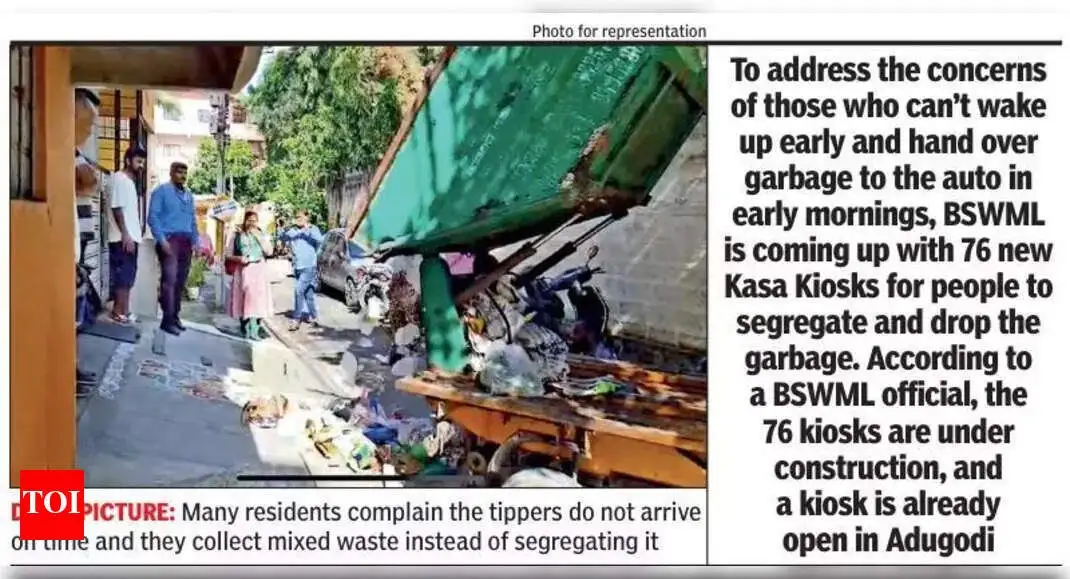
Reports indicate that waste collection vehicles are frequently arriving hours behind schedule in areas like Adugodi, Ejipura, and Koramangala. This tardiness directly contributes to the formation and expansion of these unsightly and unsanitary black spots. Despite these ongoing collection issues, civic officials continue to levy fines on residents for littering, a practice that has drawn criticism from locals who observe that fines are being collected even in areas where the fundamental service of waste collection is faltering.

Failed Initiatives and Systemic Gaps
The BSWML has identified a substantial number of 'garbage black spots' across the city, with officials tasked with daily clearance. While a significant portion of these identified sites are reportedly being attended to, previous proposals for early morning or twice-daily collection cycles have seemingly failed to materialize. This ongoing cycle of clearance and subsequent re-accumulation points to deeper systemic issues within the waste management framework.
Read More: New Bengaluru Green Line Metro Trains Arriving by August 2026

Segregation Woes and Infrastructure Hurdles
Underlying the visible problem of black spots are persistent challenges with waste segregation. Complaints highlight that garbage collection trucks often transport mixed waste, undermining efforts towards effective processing. Furthermore, the BSWML faces considerable difficulty in acquiring large land parcels necessary for establishing secondary transfer stations, a crucial component for managing and mitigating the spread of garbage and its associated odors and leachate.
"Finding land parcels for these transfer stations has become a herculean task." - The Hindu
Localized Efforts and Broader Concerns
In parallel, some localized initiatives are being undertaken. For instance, waste kiosks have been introduced in specific areas to facilitate localized collection. Additionally, the Bengaluru North corporation has tightened its waste segregation rules, emphasizing the diversion of wet waste for composting and dry waste for recycling. Massive clean-up drives have also been conducted in various constituencies. However, the overarching challenge remains: despite acknowledging the problems and identifying solutions, a consistent and effective implementation across the city appears elusive.
Read More: Kanyakumari Atomic Mining Permit Extended for 1144 Hectares in 2026
Background of Persistent Waste Woes
Bengaluru, a metropolis generating approximately 6,000 tonnes of solid waste daily, has a long-standing and complex relationship with waste management. Decades after directives for decentralized waste management were issued, the city continues to grapple with foundational issues like timely collection, effective segregation, and adequate infrastructure. Past incidents, such as blockades at waste management units due to unfulfilled infrastructure promises, have underscored the fragility of the system and its susceptibility to wider gridlock, impacting sanitation and public health across neighborhoods. Initiatives like the 'Trash Back' campaign, which returns improperly dumped garbage to offenders' doorsteps, highlight a desperate attempt to curb the persistent problem of new black spots emerging across the city.

/newsfirstprime/media/media_files/2026/02/18/green-line-metro-2026-02-18-14-46-47.jpg)