Fearless Balloting, Unimaginable Past: A Shift in Bengal's Electoral Landscape
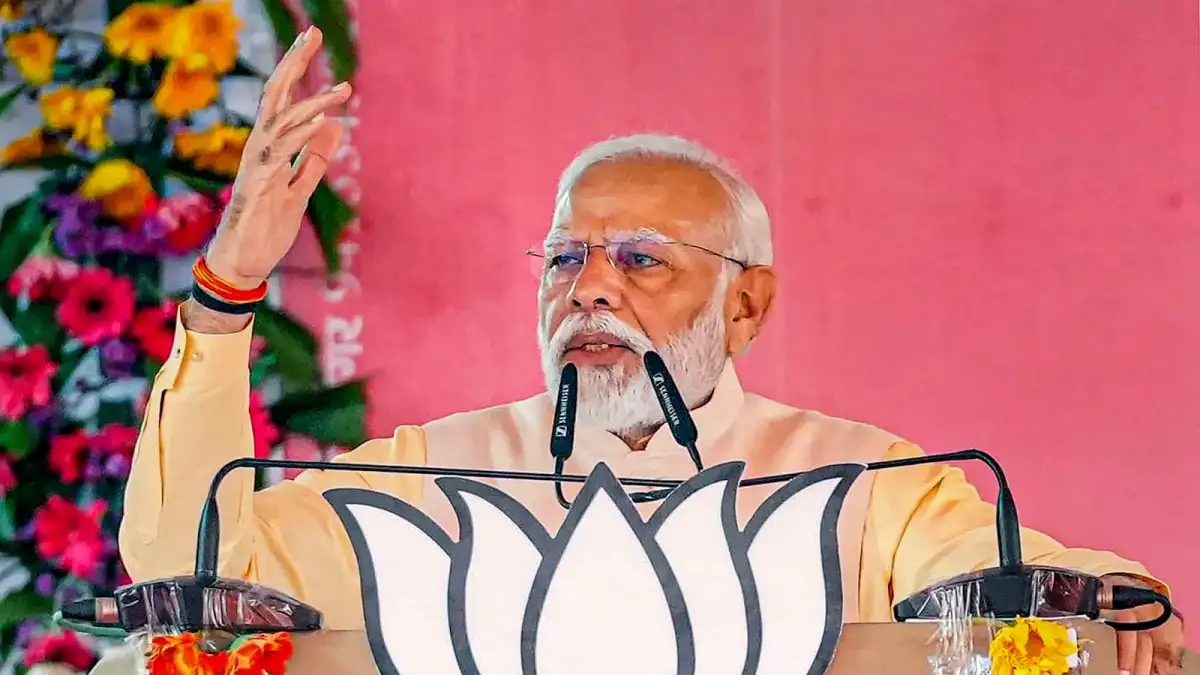
Prime Minister Narendra Modi, speaking today (April 29, 2026), stated that voters in West Bengal are participating in the ongoing elections in a "fearless atmosphere," a scenario he described as "unimaginable" over the past six to seven decades. He linked the high voter turnout in both the first and second phases of polling to a public desire to remove the incumbent Trinamool Congress (TMC) government. Images circulating on social media depict long queues at polling stations, signaling a robust engagement with the democratic process.
Election Observations and Inferences
Modi's remarks, made during an event to inaugurate the Ganga Expressway in Uttar Pradesh, emphasized the scale of participation. He asserted that this increased turnout, particularly in the second phase of polling which concludes today, indicates a decisive victory for the Bharatiya Janata Party (BJP).
Reports suggest substantial voter engagement, mirroring the enthusiasm seen in the first phase.
The Prime Minister drew a parallel between the current "fearless" voting and a historical absence of such conditions for over half a century.
He also alluded to recent electoral successes for the BJP in Bihar and local body elections in Gujarat, suggesting a broader political trend.
Developmental Discourse and Opposition Critique
The Prime Minister's public address also touched upon infrastructure development, specifically the newly inaugurated Ganga Expressway. He highlighted the project's swift completion and its potential to serve as a new "lifeline" for Uttar Pradesh, connecting regions and facilitating economic activity. Modi contrasted this with what he termed past governmental inaction on infrastructure projects.
Read More: Taiwan Holds Nantou County Drills to Prepare for State Collapse
Concurrently, he launched a pointed critique of opposition parties, including the Samajwadi Party (SP) and the Congress. He accused these parties of being "anti-women," citing their alleged opposition to the women's reservation bill. Furthermore, he alleged that the SP prioritizes "parivarwad" (dynastic politics) and "jatiwad" (caste politics), and that their actions in Parliament do not reflect the interests of Uttar Pradesh.
Electoral Context and Turnout Data
The first phase of polling in West Bengal, held on April 23, recorded a high turnout, with NDTV reporting nearly 92% of eligible voters participating. The Telegraph India noted average turnouts around 90% across several districts during the first phase, with Dakshin Dinajpur district leading at 93.12%. The ongoing second and final phase of polling today covers 142 constituencies. Vote counting for the West Bengal Assembly elections, alongside those in Kerala, Puducherry, Assam, and Tamil Nadu, is scheduled for May 4, 2026.
Read More: Om Birla asks West Bengal MLAs for solutions, not just criticism