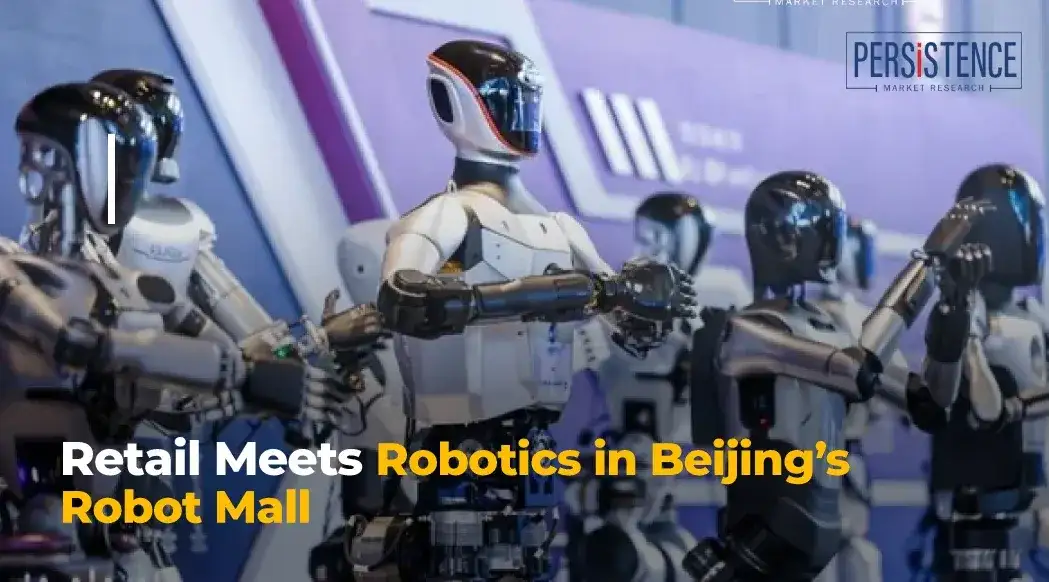
Beijing has established a 4,000-square-meter retail complex in the E-Town district, dedicated entirely to the transaction and maintenance of humanoid and service robotics. Labeled as the world's first "4S" store for embodied artificial intelligence, the venue centralizes over 50 brands from 40 manufacturers, including Unitree Robotics, UBTech, and the Beijing Humanoid Robot Innovation Center. The facility operates on the automotive retail model—Sales, Service, Spare-parts, and Surveys—attempting to normalize the presence of high-cost machinery in civil and commercial life.
The Mechanics of the Market
While the aesthetics of the Robot Mall lean toward a curated spectacle, the underlying data suggests a state-driven push to liquefy a complex inventory. During an inaugural shopping festival, the venue reportedly facilitated 330 million yuan ($46 million) in transactions.

| Category | Representative Models | Primary Function |
|---|---|---|
| Bipedal Humanoid | Tiangong, Unitree G1, Walker S | General labor, research |
| Medical/Pharma | Galbot G1 | 24-hour pharmacy sorting |
| Bionic/Companion | Robot Dogs, Hands | Reconnaissance, domestic aid |
| Industrial/Service | Wheeled Humanoids | Cleaning, heavy sorting |
"Only those machines that proved to be practical, affordable, versatile and of effective use for consumers will make the leap from expo stars to everyday essentials." — Industry Observer via Global Times
Subsidized Interaction
The mall is less a traditional market and more a subsidized ecosystem. Enterprises purchasing units can claim subsidies up to 250,000 yuan ($35,039), while individual consumer robots—like the Unitree G1—are priced near 680,000 yuan with festival discounts of 50,000 yuan.
Read More: Chrome mimeHandler API lets extensions handle file types
The Automated Canteen: An adjacent restaurant features robot cooks, multilingual bartenders, and a robotic rock band, serving as a lived demonstration of ' Service Automation ' rather than just a retail floor.
Physical Feedback: Visitors on the second floor engage in ' Tactile Testing ' of robot hands and compete against ' AI Athletes ' in soccer and chess to gauge dexterity before purchase.
Logistics Integration: JD.com has listed over 680 robot products online to complement the physical store, offering smaller subsidies for ' Exoskeletons ' and educational kits.
Structural Intent
The ' Beijing E-Town ' (Yizhuang) development area functions as a laboratory for ' Industrial Commercialization '. By housing 30 companies from outside the capital alongside local giants, the state is attempting to force a supply chain into existence. The move seeks to bridge the gap between high-tech World Robot Conference displays and actual ' Service-Sector Growth '.
The presence of the Galbot G1 in ten Beijing pharmacies indicates a move toward ' Everyday Infrastructure ' where the machine is no longer a curiosity but a functional layer of the city. This shift suggests that the existential weight of living with humanoids is being traded for the convenience of 24-hour automated service.