Recent reports, notably from Reuters, have reignited speculation surrounding the identity of the elusive street artist known as Banksy, with the name Robin Gunningham frequently surfacing. This renewed focus on the artist's presumed real identity raises pertinent questions about the necessity and impact of such revelations, particularly concerning the nature of art, public perception, and the artist's long-maintained anonymity.
The debate centers on whether revealing an artist's identity, especially one whose work is intrinsically linked to its clandestine nature, fundamentally alters the reception and value of their art. Many observers argue that Banksy's subterfuge was a practical necessity for illegal street art, evolving into a core element of his brand. This anonymity, for some, was crucial in allowing the audience to engage with the work itself, unburdened by the persona or perceived flaws of the creator.
Read More: Matt Davidson's June 2023 Art Shows Australian Economy Problems
Unpacking the 'Unmasking'
The persistent efforts to "unmask" Banksy, some of which date back nearly two decades, have drawn criticism from various quarters. Art enthusiasts and commentators alike question the value in such revelations, arguing that the artist's name neither enhances nor detracts from the enjoyment of his pieces.
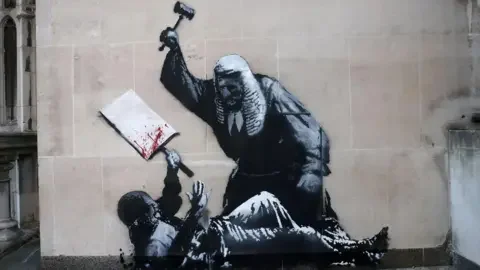
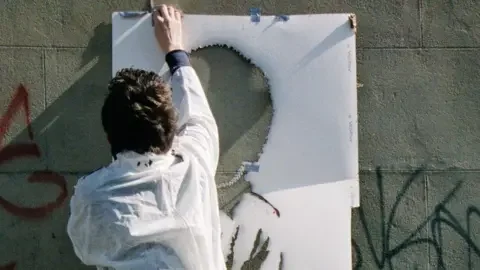
The artist, who gained prominence for stenciled designs in Bristol in the early 1990s, has long challenged authority and critiqued consumer culture through his public installations.
His identity, shielded for decades, has contributed to a "mythical status" that has driven international recognition for his brand.
Legal records, including arrest documents, have previously hinted at his true name.
Some reports suggest that after a previous tabloid story, Banksy legally changed his name to David Jones.
The Role of Anonymity and Public Figures
The discourse around Banksy’s identity is mirrored in discussions about other famously anonymous artists, such as author Elena Ferrante. A central argument is that while artists deserve privacy, famous creators also occupy a public role.
"We have no right to violate anyone’s privacy, even if they are famous artists. However, we shouldn’t forget that famous writers or artists are, in any case, public figures."
For Banksy, the "practical necessity" of anonymity due to the illegal nature of street art is frequently cited. This secrecy, whether a protective measure or a publicity tactic, has become inseparable from the "iconoclastic Banksy brand."
Economic and Artistic Implications
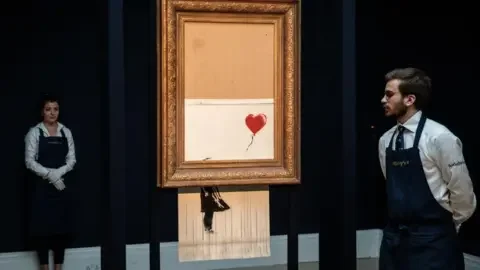
The "unmasking" prompts contemplation of potential economic shifts. Questions arise whether the perceived value of Banksy's works—known for pieces like 'Love is in the Air (Flower Thrower)' and 'Napalm'—would change with the knowledge that the artist is a "middle-aged White man."
Read More: Famous People From Comics, Movies, Music, and Royalty Have Died
Some argue that the mystery inherent in anonymity is a significant component of art's power, and its dissolution diminishes this.
Conversely, proponents of revealing identity suggest it could lead to greater authenticity, context, accountability, and transparency regarding intentions.
A Cycle of Revelation
The current media flurry, amplified by Reuters' investigation, appears to be another iteration in a long-standing journalistic endeavor to identify the artist. Previous theories had pointed to figures like Robert Del Naja of Massive Attack.
"Whether as a protection from prosecution or a highly successful publicity stunt, his anonymity has become integral to the iconoclastic Banksy brand."
Despite these repeated revelations, the artist himself has not officially confirmed or denied the recurring reports. His work, often created on others' property, continues to spark global conversation, irrespective of whether the artist remains in the shadows or steps into the light.