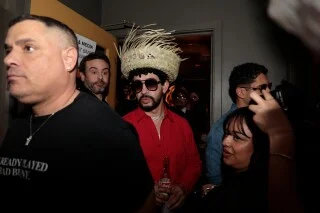
SAN FRANCISCO – Hundreds of fans, a packed restaurant, and a street buzzing with music – the recent Bad Bunny look-alike contest in San Francisco’s Mission District was undeniably a spectacle. But beneath the surface of declared fandom and spirited competition, a deeper narrative might be unfolding. As Bad Bunny is set to make history as the first Spanish-language artist to headline the Super Bowl halftime show, this event, ostensibly a celebration of a beloved artist, raises questions about cultural representation, community building, and the underlying currents of identity in a rapidly changing America.
The sheer turnout, with hundreds eager to see doppelgangers of the Puerto Rican superstar, speaks volumes. This wasn't just a casual gathering; it was a testament to Bad Bunny's colossal reach, transcending language barriers and drawing in a diverse crowd united by their admiration. While ostensibly a fun event celebrating an artist, it occurred against a backdrop of significant cultural and political discourse, particularly concerning Latino identity and representation in mainstream American culture.
Read More: Ryan Gosling chosen for Project Hail Mary movie adaptation
The Genesis of a Super Bowl Spectacle
The excitement surrounding Bad Bunny’s Super Bowl halftime performance has been palpable, marking a monumental moment for Latin music and culture on a global stage. This historical significance set the perfect stage for a unique fan-driven event in San Francisco.
The Spark: The buzz began weeks before the Super Bowl, with news of Bad Bunny’s halftime show headline slot igniting widespread anticipation.
The Venue: Tacolicious, a Mexican restaurant in San Francisco’s vibrant Mission District, stepped up to host.
The Event: A "Bad Bunny Lookalike Contest" was announced, promising a night of music, costumes, and a celebration of the artist.
The articles consistently mention the event taking place just days before the Super Bowl, highlighting the direct link between the local celebration and the national sporting event. This strategic timing amplified the significance of the contest, turning it into a pre-game party for a cultural moment.

A Crowd United: More Than Just Admiration
The scene at Tacolicious painted a vivid picture of collective joy and shared identity. Long lines snaked down the street, with estimated crowds of around 500 people eager to get inside, even before the official start time. This overwhelming response begs the question: what truly drove this turnout?
Read More: Narungga 'Guuranda' play in Chennai shares South Australia stories with India
The Music: Live DJs spun Bad Bunny’s hits, prompting enthusiastic singalongs, with the crowd passionately echoing lyrics like "Puerto Rico está bien cabrón!"
The Vibe: The atmosphere was described as a "street party," a spontaneous eruption of collective energy.
The Participants: Attendees ranged from devoted fans, like Adam Fox and Alejandro Kurt, who traveled from Belmont, to aspiring impersonators like Abdul Ramirez Arroyave, a professional Bad Bunny impersonator from Colombia, who ultimately took home the grand prize. Even individuals like Vanessa Karel, who graced the stage in a pink power suit, showcased a deep engagement with the artist's persona.
“We’re not savage, we’re not animals, we’re not aliens. We are humans, and we are Americans.”
This powerful quote from one of the articles, attributed to the sentiments of the young attendees, suggests that the event transcended a mere celebrity impersonation. It became a platform for asserting identity and belonging, especially in the face of divisive political rhetoric.
Who is "Bad Bunny" to this Community?
Beyond the superficial resemblance, what does Bad Bunny represent to these fans? Is it simply his music, or is it a broader symbol of cultural pride and artistic achievement?
| Aspect of Representation | Observed Fan Engagement | Underlying Significance |
|---|---|---|
| Musical Icon | Singing along, dancing | Connection through shared taste and rhythm |
| Cultural Ambassador | Shouting "Puerto Rico está bien cabrón!" | Pride in heritage and defiance of stereotypes |
| Language Champion | Engagement with Spanish lyrics | Validation of Spanish as a mainstream, powerful language |
| Style Icon | Costumes and impersonations | Emulation of an admired persona and aesthetic |
The event was a powerful manifestation of how cultural figures can become rallying points for identity and community, especially for minority groups.

The Spectacle of Impersonation: Art or Aspiration?
The contest itself, with its declared winners and various contenders, was a focal point. Professional impersonators like Abdul Ramirez Arroyave showcased their craft, highlighting the commercial and artistic aspects of celebrity mimicry. But the event also featured everyday fans who simply "look like" Bad Bunny.
Read More: Buffy Actor Nicholas Brendon Dies Aged 54 From Natural Causes
The Grand Prize Winner: Abdul Ramirez Arroyave, a Colombian singer, embodied the artist with a traditional straw hat, red shirt, and wig, demonstrating a meticulous approach to impersonation.
The Aspiring Actor: Adam Fox, traveling from Belmont, saw the resemblance as an opportunity, hinting at the potential for look-alike roles in acting.
The Dedicated Fan: Guo, who even traveled to Mexico City to see Bad Bunny in concert, participated, demonstrating a deep level of fandom that extends beyond mere physical similarity.
This blend of professional impersonators and enthusiastic amateurs raises intriguing questions:
What differentiates a "fan" from an "impersonator" in this context?
How does the commodification of celebrity likeness impact artistic expression and fan culture?
Are these impersonators merely replicating an image, or are they embodying the spirit and cultural impact of Bad Bunny?
Contextualizing the Celebration: A Time of Turmoil
The San Francisco gathering didn't occur in a vacuum. It happened during a period of heightened political tension and public discourse surrounding immigration and national identity. The mention of "times so politically trying that it is difficult to even keep track of each successive outrage" and "outrage from President Donald Trump and his supporters" is crucial context.
Political Undercurrents: The timing of Bad Bunny's Super Bowl performance, a significant moment for Latino representation, occurred amidst a backdrop of divisive political rhetoric.
Cultural Resilience: The event at Tacolicious, with its diverse and young crowd, can be seen as an act of cultural defiance and affirmation.
Mission District Identity: The Mission District, with its rich Latino heritage, provided a fitting backdrop for this celebration of a global Latin superstar.
"Despite sparking outrage from President Donald Trump and his supporters in the lead-up to the big game, a diverse, young crowd showed up outside Tacolicious to demonstrate both their admiration for the singer, and pride in their roots."
This suggests that the look-alike contest, while appearing lighthearted on the surface, also served as a quiet but powerful statement of cultural pride and belonging for a community that felt it was under scrutiny. It begs the question:
How much of this fan fervor is a direct response to perceived societal marginalization?
To what extent does Bad Bunny's success act as a source of empowerment for the Latino community in the US?
The Enduring Echo of a Superstar
The Bad Bunny look-alike contest in San Francisco was more than just a fun night out; it was a microcosm of a larger cultural phenomenon. It highlighted the immense power of music and celebrity to unite people, foster community, and serve as a powerful symbol of identity.
Read More: Why people call some movies 'perfect' online
As Bad Bunny continues to break barriers on the global stage, events like these underscore his impact, not just as a musician, but as a cultural icon. The hundreds who gathered were not just celebrating a look-alike; they were celebrating what Bad Bunny represents: a vibrant, powerful, and unapologetically Latin voice resonating across the world. The lingering question is, as this cultural wave grows, how will mainstream America continue to engage with and represent voices that are fundamentally changing the cultural landscape? The echoes of this San Francisco street party suggest a deep and growing connection that cannot be ignored.
Sources:
The Independent: Bad Bunny look-alike contest in San Francisco draws hundreds of fans - https://www.independent.co.uk/news/bad-bunny-san-francisco-bay-area-mexican-spanish-b2915142.html
Mission Local: A Bad Bunny look-alike is crowned in S.F., and the crowd goes wild - https://missionlocal.org/2026/02/sf-super-bowl-bad-bunny-lookalike-contest/
El Tecolote: Photos: Bad Bunny look-alike contest in SF’s Mission District - https://eltecolote.org/content/en/bad-bunny-sf-look-alike-contest/
NBC Bay Area: San Francisco to host Bad Bunny look-alike contest ahead of Super Bowl LX - https://www.nbcbayarea.com/news/local/bay-bunny-look-alike-contest-sf/4027648/