FARMERS WARN OF SUPPLY DISRUPTIONS AS CONFLICT LOOMS
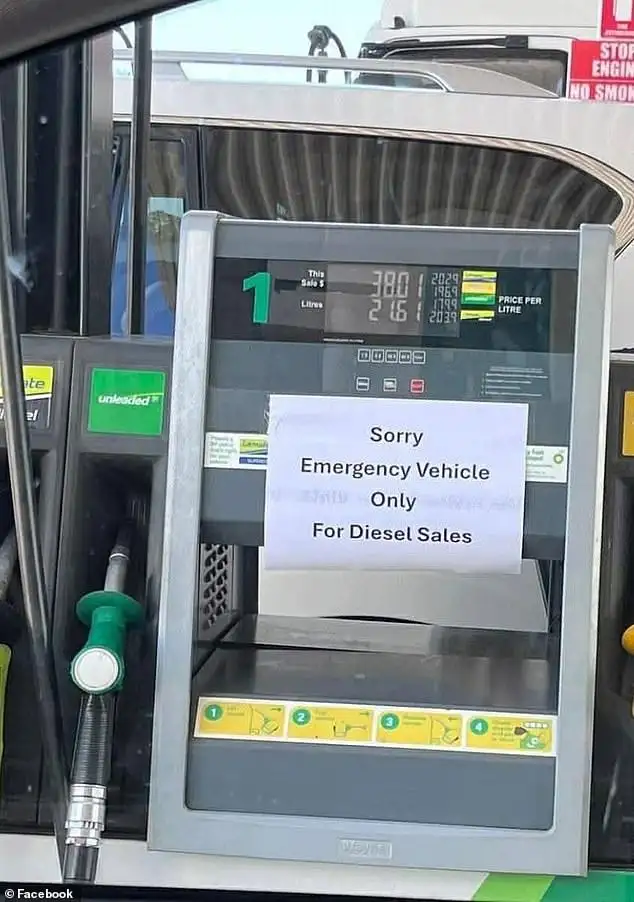
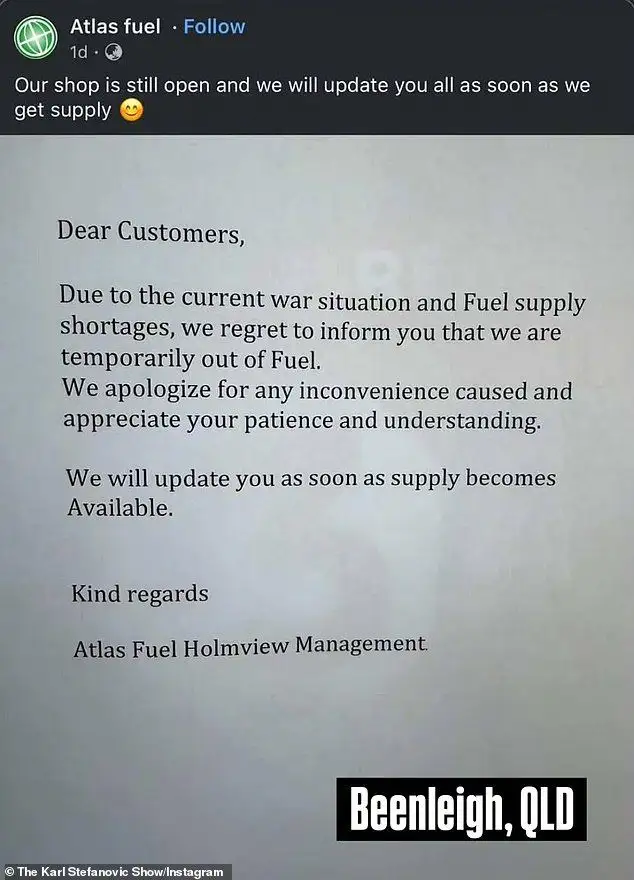
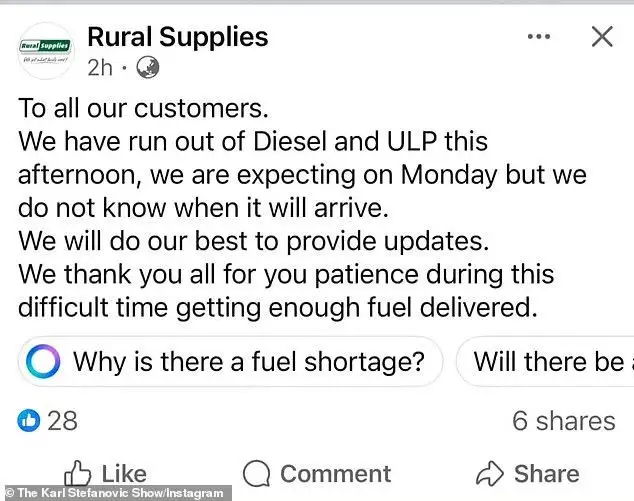
Australian farmers report imminent fuel shortages, claiming some rural areas could face empty tanks within days. This predicament, directly linked to Middle East tensions and potential fuel supply disruptions, is expected to ripple outwards, affecting prices at the supermarket checkout and threatening agricultural operations. Reports indicate that some regional petrol stations have already run dry, exacerbating concerns among agricultural producers who rely on consistent and predictable fuel deliveries.
The core of the issue lies in Australia's significant reliance on overseas fuel sources, a vulnerability now laid bare by the ongoing conflict. Current national reserves are estimated to cover roughly 25-26 days of demand for petrol and diesel, with jet fuel reserves at about 20 days. Refiners hold a minimum of 20 days' supply for diesel, while importers have a 32-day buffer. However, in a global climate prioritizing economic security, these reserves are seen as precarious.
Read More: New Wheat Makes Bigger Starch for Food and Industry
GOVERNMENT RESPONSE AND INDUSTRY CONCERNS
Energy Minister Chris Bowen has convened an urgent meeting of a new fuel taskforce, bringing together government officials and industry representatives from farming and transport sectors. Bowen has sought to temper public anxiety, stating there is "no need for panic" and assuring that current fuel stocks and incoming volumes do not indicate an immediate shortage.
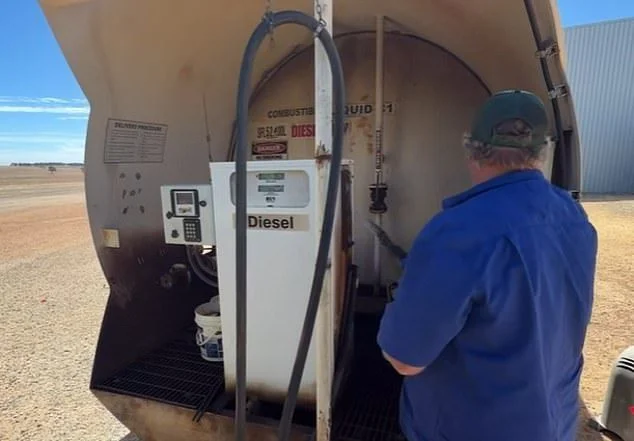
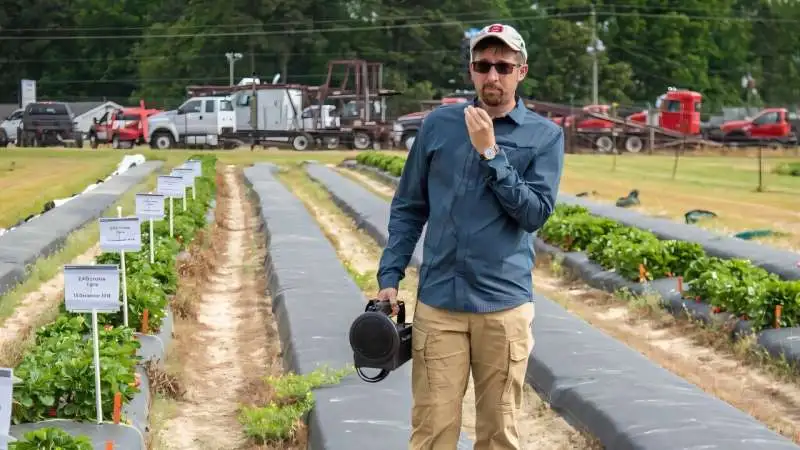
Despite these assurances, groups like the Victorian Farmers Federation, represented by president Brett Hosking, voice significant apprehension. Grain growers, in particular, are concerned about fuel and fertiliser supplies as they approach the crucial winter planting season for crops such as wheat and barley. The reliance on ad hoc deliveries, rather than long-term contracts, is cited as a key factor in farmers' difficulty securing fuel at stable prices.
WIDER ECONOMIC IMPLICATIONS
The potential for agricultural disruption carries direct implications for consumers. Reports suggest that the fuel supply anxieties could translate into higher grocery prices for families. Concerns extend to the critical Easter food supply, with fears that supply chains could be impacted if fuel shortages persist. Some regional businesses have reportedly begun rationing fuel, a stark indicator of the perceived severity of the situation. Petrol prices have already seen surges in some areas, with regular unleaded retailing at approximately 219.9 cents per litre in major cities.
Read More: Hunter Region Gets $12 Billion Train Factory
BACKGROUND: MIDDLE EAST UNCERTAINTIES
The anxieties are fueled by escalating geopolitical events in the Middle East, a region critical to global energy markets. While specific details of the "Middle East fuel blockade" were not explicitly detailed in the provided materials, the general sentiment points to conflict impacting oil and fuel transportation routes, thereby influencing international supply chains and contributing to price volatility. Australia's limited domestic refining capacity and substantial dependence on imported fuels mean that global energy market disturbances are felt keenly at home. This situation highlights a persistent vulnerability in the nation's energy security infrastructure.