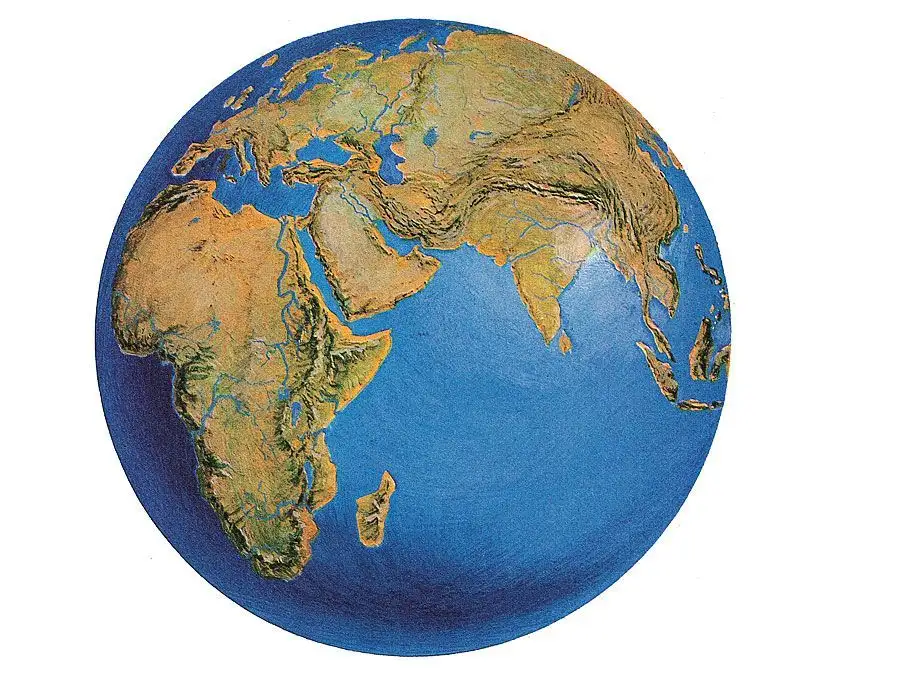
Canberra finds itself in a precarious position, balancing the need for strong alliances with the imperative to forge an independent path in the volatile Indo-Pacific. The nation's identity as a 'middle power' – a status defined by economic clout despite a smaller population – necessitates a nuanced foreign policy, one that walks a tightrope between its close ties with the United States and its significant economic entanglement with the region.

The core challenge lies in China's escalating influence, its military expansion, and its efforts to reshape the regional order. This reality forces Australia to make complex strategic calculations, as its pursuit of democratic ideals and standards becomes more difficult.
ASTRIDE TWO WORLDS: ALLIANCES AND ECONOMIC REALITIES
Australia's foreign policy has long been anchored to the United States. This alliance, while providing a perceived security blanket, also presents a strategic dilemma. Agreements like AUKUS, intended to bolster defence, have been described as potentially "painting more targets" on Australia's back. Yet, the nation's economic future is inextricably linked to its trading relationships within the Indo-Pacific. This dual dependence creates a push and pull, where security interests are intertwined with economic survival.
Read More: Rubio Invites Modi to US: India Key to Indo-Pacific Plan

The government under Prime Minister Anthony Albanese continues to grapple with these dynamics, with middle power principles still appearing to guide its foreign policy decisions. The nation is positioned not as a distant observer, but as a frontline player in the shifting Indo-Pacific landscape.

BALANCING ACT: MULTILATERALISM AND REGIONAL ENGAGEMENT
Australia's approach to multilateralism appears to be narrowing, focusing on more strategic, regional initiatives. A key question is whether pacts like AUKUS complement, rather than overshadow, broader regional strategies. This includes existing efforts in capacity building through organizations like ASEAN and the "Pacific Step-Up" initiatives. Maintaining credibility as an "independent, principled, and trusted partner" hinges on this balance.
Canada and Australia are noted as possessing "rare convening power," suggesting a capacity to bring nations together for dialogue and action. This capacity could be instrumental in leading multi-state efforts to bolster democratic resilience within the region.
Read More: Asia Pacific Leads Semi-Solid Drug Market with Topical Treatment Demand
POPULATION VERSUS POWER: THE MIDDLE POWER DEFINITION
The label "middle power" itself highlights a key paradox for Australia. While ranking 54th globally in population, it holds the 14th position in terms of Gross Domestic Product (GDP). This contrasts sharply with nations like Norway, which, despite a smaller population (116th), ranks 31st in GDP and 3rd in GDP per capita. This disparity underscores the economic weight Australia wields relative to its demographic size, a factor that shapes its diplomatic leverage and responsibilities.
HISTORICAL ECHOES AND FUTURE PROJECTIONS
Historically, Australia has sought to maintain a balance through a combination of security alliances, climate change leadership, and economic engagement. The nation has also been recognised for its efforts in addressing climate change, a critical global issue. The persistence of China's influence and its attempts to "rewrite the rules" in the immediate neighbourhood continue to shape Australia's strategic calculations. Policymakers are confronted with the enduring question of whether to lean heavily on the United States, or to chart a more independent course, a dilemma that has preoccupied the nation since its post-World War II foreign policy adjustments.