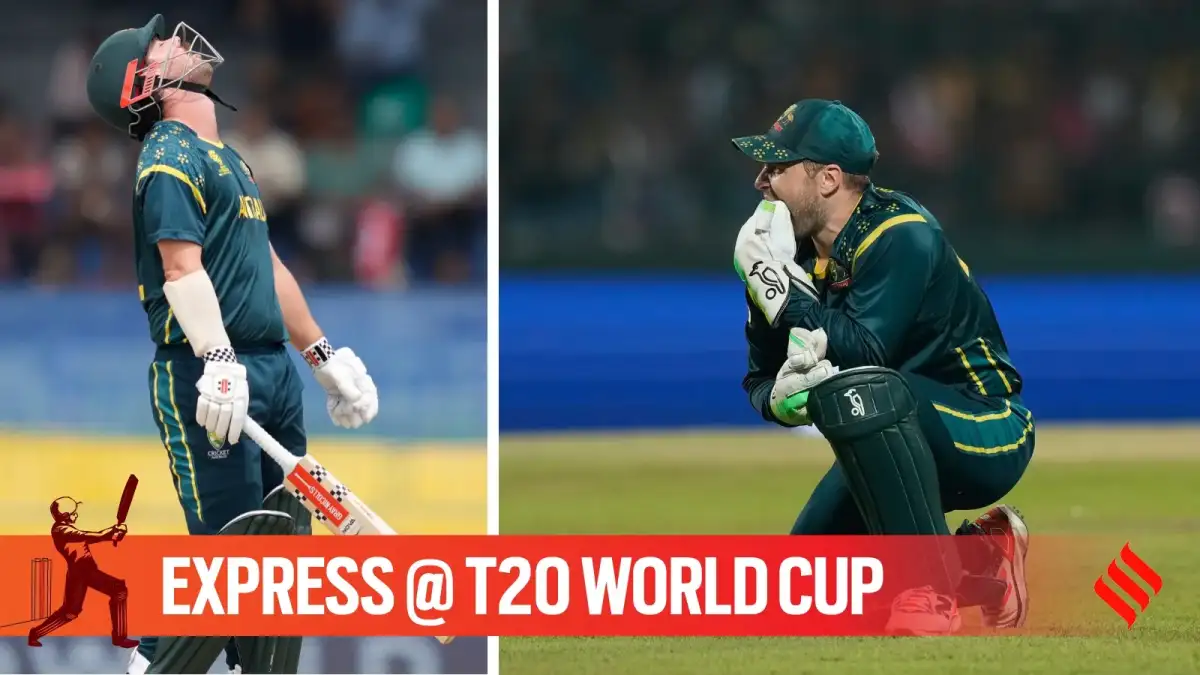
Australia's participation in the T20 World Cup has culminated in a swift and unexpected exit, leaving a trail of questions regarding selection decisions, player form, and strategic direction. The team's premature departure, sealed by a rain-affected match involving Zimbabwe and Ireland, has ignited sharp criticism from former players and commentators, who point to a campaign "doomed from the get-go."
The fundamental issue appears to be a failure to secure necessary victories in crucial matches, compounded by controversies surrounding player selection and inconsistent on-field execution. Reports highlight a recurring problem of batting line-ups failing to deliver under pressure, leading to repeated collapses and an inability to forge strong partnerships. Similarly, the bowling attack is described as lacking experience and consistency, hindering their ability to control games and defend totals.
Captaincy and Squad Selections Under Scrutiny
Leading into the tournament, Australia faced its own internal selection puzzles. Sophie Molineux was ultimately chosen as captain, a decision that came despite an injury-affected start to her tenure as Alyssa Healy's successor. Molineux, 28, reportedly battled back issues during a recent tour, impacting her ability to contribute as a bowler. Ash Gardner, widely considered a strong contender for the captaincy, was named co-vice-captain alongside Tahlia McGrath. McGrath herself was a leadership candidate until a dip in form saw her spend time out of the team.
Read More: Jason Collins, 47, Dies After Brain Cancer Battle
The squad selection itself has drawn considerable ire. The exclusion of experienced batter Steve Smith from key matches has been a particular point of contention, as has the decision to drop Matt Renshaw, who was in form, for a crucial game against Sri Lanka while the team was still mathematically in contention. Critics have also questioned the selectors' continued faith in all-rounders Cameron Green and Cooper Connolly, who have been perceived as underperforming.
Read More: SRH Loses Big by 82 Runs After Bowling Gamble Fails vs GT
Darcie Brown, a fast bowler with 77 appearances and 79 wickets for Australia across formats, was notably dropped from the Women's T20 World Cup squad, a decision described as a "bombshell call." Her place was reportedly given to Lucy Hamilton, a left-arm quick offering a different skillset. Leg-spinner Alana King also earned a recall after being controversially overlooked for a recent series against India.
Performance Fallout and Future Repercussions
The team's on-field results failed to meet expectations, with former players like Mark Waugh publicly lambasting the selectors' calls. Waugh asserted that Australia's campaign was essentially lost before it began due to these decisions. The team's fate was sealed when Zimbabwe secured a crucial point via a rain-affected draw, which mathematically eliminated Australia from the tournament.
This early exit necessitates what is being termed a "genuine rebuild" for Australian T20 cricket, extending beyond just the playing squad to encompass a broader strategic reassessment for the shortest format of the game. With several key players nearing or past 30, the focus is already shifting towards planning for the next T20 World Cup, with a need to integrate younger talent and refine their approach.
Read More: NBA Closes Giannis Injury Probe, No Action Against Bucks
Background and Context
Australia's T20 World Cup campaign was further hampered by the absence of key pace bowlers like Pat Cummins, Mitchell Starc, and Josh Hazlewood, who were sidelined due to injuries. Captain Mitchell Marsh also faced fitness challenges, missing early matches due to a testicular injury. This confluence of injuries, controversial selection decisions, and underperformance has contributed to one of Australia's most disappointing T20 World Cup showings. The team's inability to win "the games that mattered" proved to be their undoing, despite early optimism based on pre-tournament odds.