


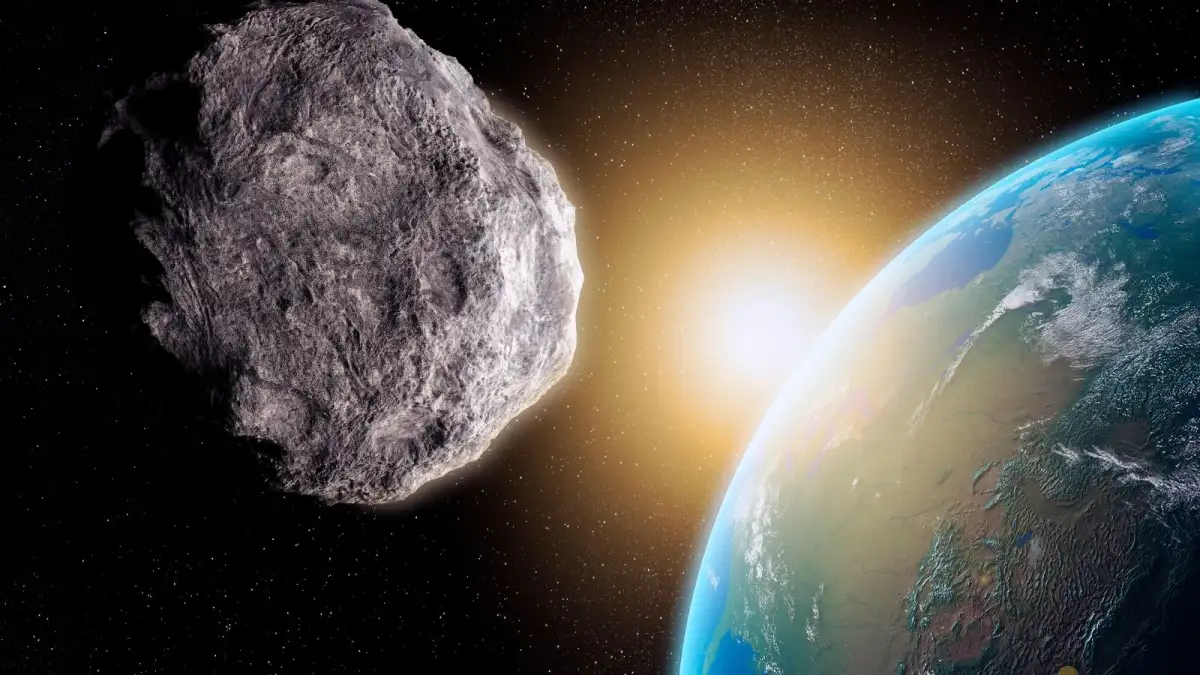
The chunk of stone labeled 2024 YR4 will not strike the moon in December 2032. Revised math from NASA and the European Space Agency (ESA) confirms the 60-meter rock is now projected to pass through empty space. Earlier fears of a lunar impact rested on thin data points that have been replaced by fresh infrared imagery from the James Webb Space Telescope (JWST).
"We think this is certainly the faintest solar system object that has ever been observed," notes Andy Rivkin of the Johns Hopkins Applied Physics Laboratory.
The change in trajectory is not a physical shift of the rock itself but a correction of human error born from blurry sightings. Initial tracking lacked the sharp focus needed to plot a decade-long arc through the dark. By capturing the asteroid's faint heat while it was buried near bright stars, the James Webb glass provided enough clarity to shrink the "risk zone" to zero.

The Measuring Tools and the Gap
| Agency | Role in Observation | Tool Used | Status |
|---|---|---|---|
| NASA CNEOS | Path Math | JWST | Impact Ruled Out |
| ESA | Tracking Coordination | Ground/Space Grid | Monitoring |
| Johns Hopkins | Project Lead | Data Analysis | Confirmed Miss |
Scientists found the rock was roughly 200 to 300 feet long.
The asteroid was initially tagged as a ' potential threat ' because of its "city-wrecking" mass.
Current data suggests it is roughly 174 to 220 feet across, a size that remains heavy but harmless as long as it stays in the void.
Tracking the Faint Drift
The problem with deep-space rocks is they often look like nothing until they are too close. To fix the ' trajectory uncertainty ', the JWST had to stop looking at ancient galaxies and point at a moving speck of cold gravel. In February, the team caught two blurs of light that other telescopes could not see. These dots allowed for a more rigid map of where the rock would be in seven years.
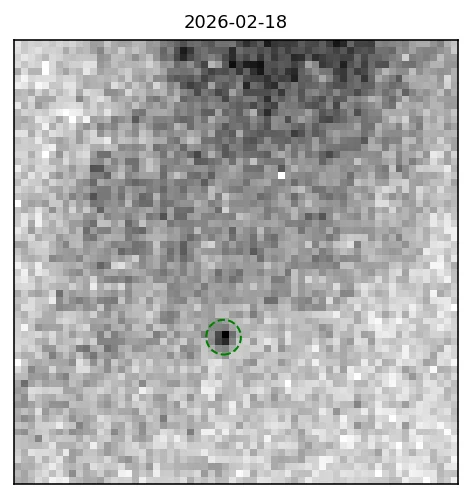
Without this high-end lens, the asteroid would have vanished into the sun's glare for several years, leaving the 2032 date as a source of guesswork. The ' planetary defense ' teams now claim they have a "better understanding" of the orbital path, though this understanding is only as good as the last batch of pixels.

Residual Risks and Background
While the moon is safe, some researchers had worried about satellite damage. A lunar strike would have sprayed dust and glass shards into the space around Earth, potentially sandblasting expensive machinery in orbit.
The History: 2024 YR4 was briefly considered a threat to Earth before that was debunked last year. The moon remained a target in the models until this week.
The Scale: A 60-meter rock is often called a "city killer" by ' media departments ' because of its potential to flatten a metro area if it hit the ground.
The Window: Eight years of lead time is considered "insufficient" by some for a mission to move the rock, but enough for telescopes to watch it.
The ' Scientific American ' report suggests that the moon taking the hit would have been a rare "real-time" science show. Instead, the event will be another silent pass. The rock remains a faint ghost on the digital charts, significant only because of the math that almost put it in the wrong place.