The clock is ticking on crucial art exhibitions across major cities, leaving many questioning if fleeting cultural moments are becoming a luxury only the privileged can afford. As summer's warmth fades, so too do vibrant displays of artistic expression in beloved institutions like the Louvre and the Frick Collection. This isn't just about missing a few paintings; it's about the potential erosion of accessible cultural experiences for the masses.
A WHIRLWIND OF CLOSURES: WHAT'S DISAPPEARING FROM VIEW?
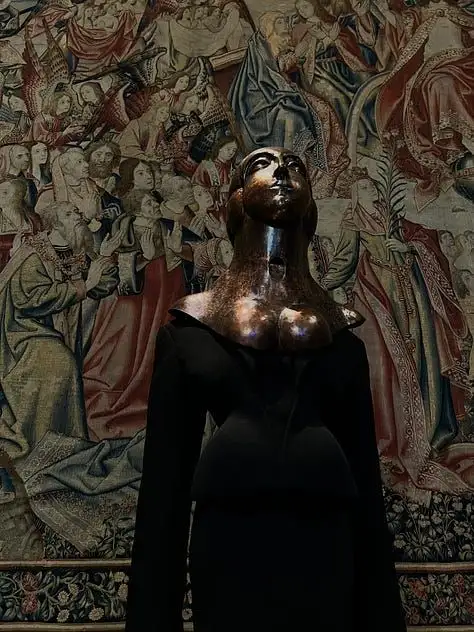
Before the leaves turn, a wave of significant art exhibitions are set to shutter their doors. In Paris, patrons have until August 17th to catch the "Disco, I'm coming out" show at the Philarmonie de Paris, and until August 24th for "Le Paris d'Agnès Varda, de-ci, de-là" at the Musée Carnavalet. The ever-popular David Hockney retrospective at the Fondation Louis Vuitton wraps up on August 31st, while the Louvre's "LOUVRE COUTURE - Objets d'art, objets de mode" exhibition, extended from its original July 21st closure, finally closes on August 24th. For those with a taste for the past, the Artemisia exhibition at Musée Jacquemart André concludes on August 3rd.
Read More: Billy West Memoir Reveals How He Created Fry's Voice
Meanwhile, New York City is facing its own imminent cultural losses. The Frick Madison exhibit, which has hosted the Frick Collection for three years, closes on March 3rd as the collection prepares to return to its home. El Museo del Barrio's insightful "Something Beautiful: Reframing La Colección" is only on view until March 10th, offering a vital perspective on diverse cultural curation. MoMA's "Picasso in Fontainebleau" exhibition, one of several Picasso shows in the city recently, ends on February 17th. And the timely "Environmental Crisis Posters" at Poster House, a museum dedicated to the art of the poster, closes on February 25th, showcasing crucial environmental messages.
Read More: Why the New Atheism movement lost public influence by April 2026
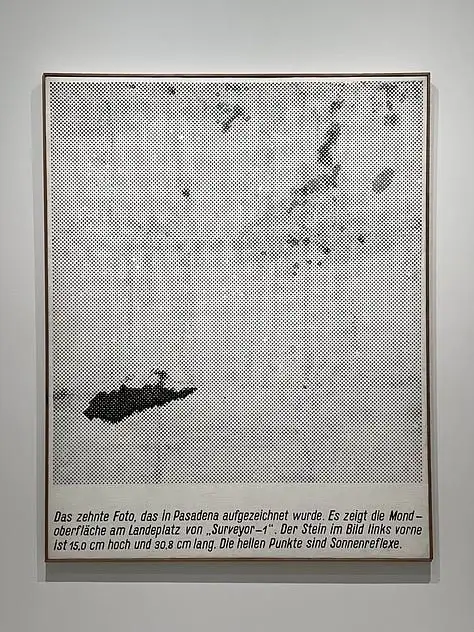
The rapid succession of exhibition closings across different cities and genres highlights a potential pattern of ephemeral cultural access.
PAST CLOSURES, ECHOING CONCERNS: A HISTORY OF DISAPPEARING ART
This isn't the first time that major art exhibitions have faced abrupt endings or limited runs. Remember the buzz around Judy Chicago's fiercely feminist exhibitions, which often garner significant attention but may not always have extended runs? Or the frequent Picasso retrospectives that pop up in major cities – are these truly expanding access, or just catering to existing demand before vanishing?
The Frick Collection's move back home from Frick Madison is a logistical necessity, but it underscores how even established institutions can temporarily disappear from public view. The question remains: what is the long-term impact of these "limited engagement" art experiences?
Read More: Hildur Guðnadóttir Misses ACO Debut Due to Hollywood Work
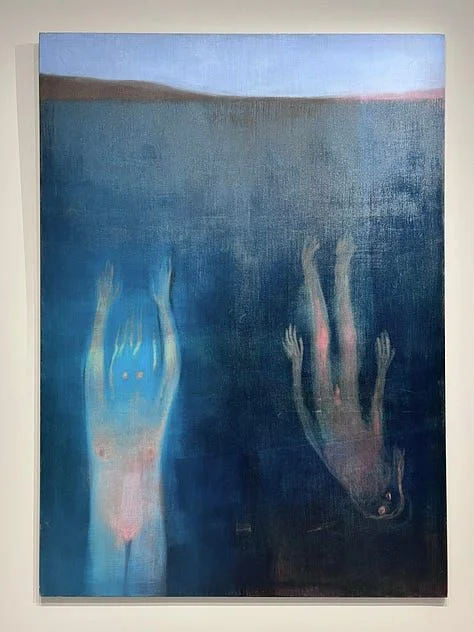
Are institutions prioritizing blockbuster shows with shorter exhibition periods?
Does this trend inadvertently create an "if you don't see it now, you never will" mentality?
What happens to the cultural discourse when key exhibitions are here today and gone tomorrow?
THE PRICE OF ADMISSION: IS CULTURE BECOMING A LUXURY GOOD?
While the articles highlight which shows are closing, they don't delve into the practicalities of access. For many, the cost of travel, accommodation, and entry fees can make attending these exhibitions a significant financial undertaking.
| Exhibition Location | Museum/Gallery | Potential Ticket Price Range (Estimate) | Associated Travel/Living Costs (Estimate) |
|---|---|---|---|
| Paris | Fondation Louis Vuitton | €14 - €16 | High (International/Inter-city) |
| Paris | Musée du Louvre | €17 (Permanent collections + temporary) | High (International/Inter-city) |
| New York City | Frick Madison (Temporary) | Free (with timed ticket) | Moderate to High (Domestic/International) |
| New York City | MoMA | $25 | Moderate to High (Domestic/International) |
Note: Ticket prices are based on general admission and may vary. Travel and living costs are highly subjective and dependent on origin.
This economic barrier means that while exhibitions might be "accessible" in theory, they are often out of reach for a large segment of the population. Are we implicitly deciding that experiencing these significant cultural moments is a privilege, rather than a right?
THE CURATORIAL CONUNDRUM: WHAT DRIVES EXHIBITION SCHEDULING?
What forces dictate the duration of these exhibitions? Is it purely financial, driven by visitor numbers and the need to generate revenue from temporary shows? Or are there other factors at play, such as the availability of loaned artworks, conservation requirements, or the logistical complexities of mounting large-scale exhibitions?
Read More: Why Makeup Choices Show Political Identity in the US on April 7 2026
The "Disco, I'm coming out" exhibition at the Philarmonie de Paris, for instance, deals with a specific cultural phenomenon. Its short run might be dictated by the need to secure specific artifacts or performance elements. Similarly, "Artemisia, Héroïne de l’art" at Musée Jacquemart André focuses on a specific period and artist. How much does the sheer difficulty of sourcing and transporting Renaissance masterpieces influence exhibition timelines?
Furthermore, the Louvre's decision to extend the "LOUVRE COUTURE" exhibition from July 21st to August 24th suggests that public demand can influence these decisions. If an exhibition proves popular, why aren't more given the chance for a longer run?

THE ROLE OF DIGITAL ACCESS: CAN TECHNOLOGY FILL THE VOID?
In an age of ubiquitous digital technology, one might expect a surge in virtual access to these exhibitions. However, the experience of walking through a gallery, engaging with art in person, is often described as fundamentally different from viewing it on a screen.
Read More: Helen Dallimore Rehearses Little Edie Role in New Grey Gardens Play
Does the proliferation of online content diminish the perceived urgency of in-person visits?
Are institutions adequately investing in high-quality virtual tours and digital archives that truly capture the essence of a physical exhibition?
If a show is too fleeting to see in person, is a curated online gallery or a recorded lecture a sufficient cultural offering?
The "Environmental Crisis Posters" at Poster House might seem like a prime candidate for robust digital engagement, given the nature of the medium. However, the tactile quality and impact of viewing a poster in person can be lost online.
EXPERT INSIGHTS: THE FRACTURING OF CULTURAL CONTINUITY
"The trend of short-run exhibitions, while understandable from a logistical and financial perspective, risks creating a fragmented cultural landscape," notes Dr. Evelyn Reed, a cultural historian at City University. "When significant artistic moments are confined to brief windows, it can alienate audiences who cannot easily access them, thereby reinforcing existing societal divides. We need to ask ourselves: are we curating for a select few or for the broader public?"
Marcus Bellweather, an art critic and commentator, adds, "The excitement around a 'last chance to see' exhibition can be a powerful marketing tool, but it also breeds a sense of FOMO – fear of missing out. This creates pressure rather than fostering genuine appreciation. Institutions should consider how to build longer-term engagement with their collections and temporary displays, perhaps through more integrated programming and extended runs for particularly impactful shows."
Read More: Start Bench Cut rules for Cleveland Browns players in April 2026
CONCLUSION: RECLAIMING ACCESSIBLE CULTURE FOR ALL
The dwindling time left to experience these exhibitions – from the glittering world of fashion at the Louvre to the critical environmental messages at Poster House, and the artistic journeys of David Hockney and Artemisia – begs a crucial question: Are we allowing culture to become an exclusive club? The financial barriers, the logistical constraints, and the potential for digital surrogates to fall short all point towards a system where experiencing the breadth of human creativity is becoming increasingly difficult for the average person.
The urgency of these impending closures should not be dismissed as mere seasonal scheduling. It's a signal that we must critically examine how art is presented, funded, and accessed. We need to push for longer exhibition runs where feasible, explore more equitable pricing models, and demand robust digital offerings that complement, rather than replace, the profound experience of encountering art in person. The conversation must move beyond simply what we can see, to who can see it, and for how long.
Read More: Eddie Izzard performs solo Hamlet with 23 characters on 7 April 2026
SOURCES:
Monica Seiceanu. (2025, July 27). 7 Exhibits to Catch in Paris Before the End of Summer. Monica Seiceanu. https://monicaseiceanu.substack.com/p/7-exhibits-to-catch-in-paris-before
Timeout New York. (2024, February 8). It’s your last chance to see these six amazing NYC art exhibitions. Timeout. https://www.timeout.com/newyork/news/its-your-last-chance-to-see-these-six-amazing-nyc-art-exhibitions-020824