Existing-home sales in April saw a marginal increase, falling short of expectations and painting a picture of a strained spring buying season. This follows a period of significant slowdowns, with April sales reaching their slowest pace for that month since 2009.
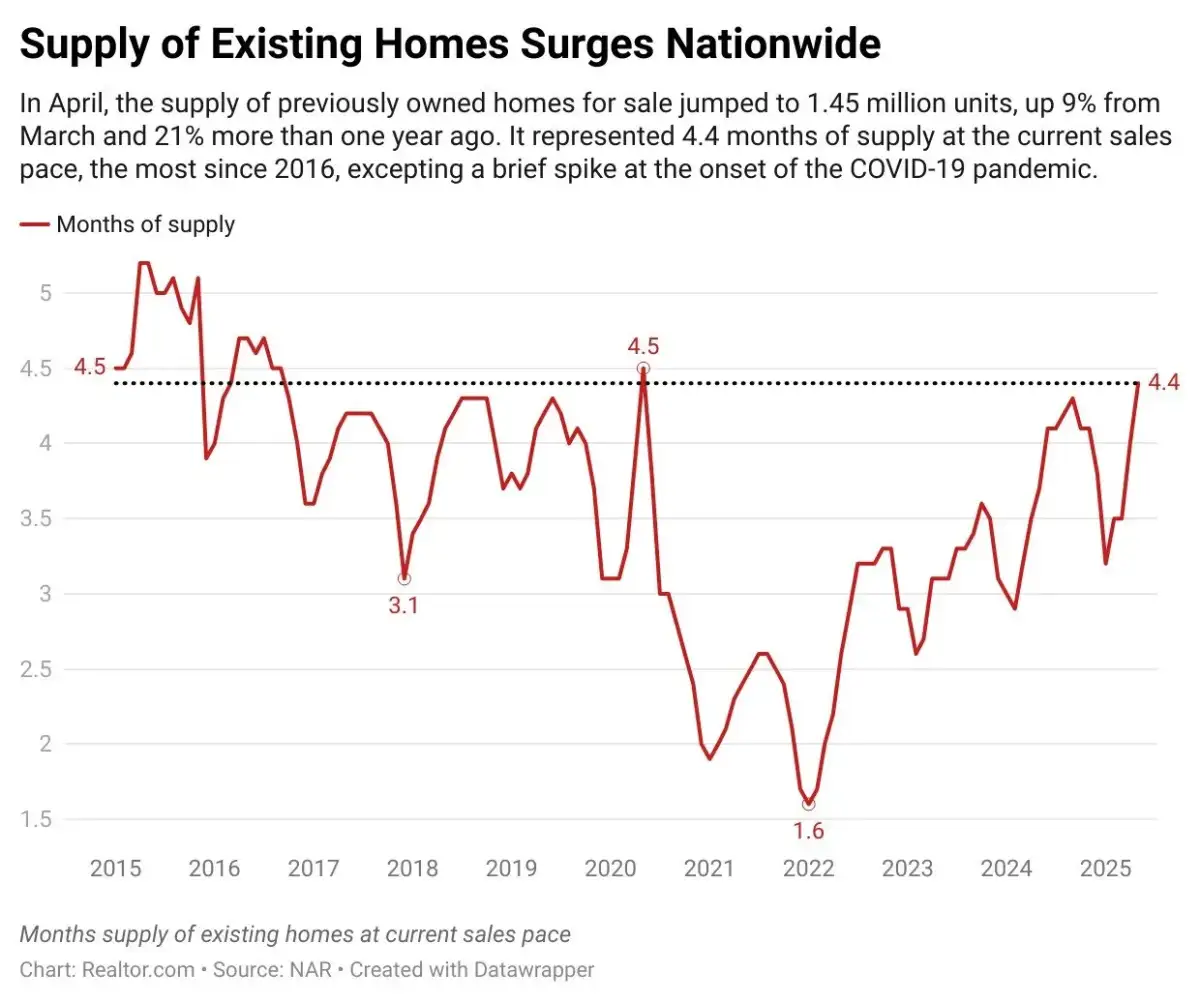
The supply of unsold homes climbed to a nearly five-year high, presenting a potential window for buyers to negotiate, while elevated mortgage rates and persistent price pressures continue to dampen overall activity.
Data from the National Association of REALTORS® (NAR) revealed a mere 0.2% month-over-month increase in existing-home sales, translating to a seasonally adjusted annual rate of 4.02 million units. This figure represents a no change from the previous year. Concurrently, the inventory of unsold homes jumped by 5.8% from March to 1.47 million units, equating to a 4.4-month supply. This is an increase from 4.2 months in March and 4.3 months a year prior.
Read More: North Epping house sells for $2.28 million on 6 April 2026
Regional Divergences and Price Trends
While national sales figures showed a slight uptick, regional performance was varied. Sales increased month-over-month in the Midwest and the South, remained unchanged in the Northeast, and experienced a decline in the West. Price trends mirrored this regional split, with the Northeast and Midwest seeing annual price gains, while the South and West observed price drops.
This regional divergence suggests that certain markets are showing more resilience than others, possibly influenced by local economic conditions and differing impacts of broader economic factors.
Market Dynamics and Buyer Behavior
The median existing-home sales price rose to $417,700, a 0.9% increase from the previous month. However, the overall market pace has slowed, with homes typically spending 32 days on the market, down from 41 days in March but up from 29 days in April of the previous year.
Read More: Goldman Sachs predicts 15 million US jobs lost to AI by 2036
First-time homebuyers accounted for 33% of sales, a slight increase from March but down from 34% a year ago.
25% of transactions were cash sales, remaining unchanged from the prior year.
Individual investors or second-home buyers represented 16% of sales, up slightly from 15% in April 2025.
Distressed sales, including foreclosures and short sales, remained at a low 2%, consistent with both the previous month and the prior year.
Underlying Economic Factors
The sluggishness in the spring buying season is attributed to a combination of high interest rates and wavering consumer confidence. Some reports suggest that recent economic uncertainties, potentially linked to policy shifts like tariffs, may have contributed to a chill in the market. The ongoing elevated mortgage rates are also suspected of discouraging homeowners from selling, as they would need to trade their existing, lower-rate mortgages for new ones at higher rates, thereby keeping supply tight.
This dynamic creates a peculiar environment where increased inventory is met with persistent affordability challenges, making it difficult for the market to regain momentum.