


The central government has enforced a hard pivot in fuel distribution, choking commercial LPG flows to protect household stoves as conflict in the Persian Gulf tangles global energy routes. In Andhra Pradesh, the Ministry of Petroleum and Natural Gas has ordered Hindustan Petroleum, Bharat Petroleum, and Indian Oil to divert gas to 1.7 crore domestic connections, leaving the hospitality sector to scavenge for remaining stock.
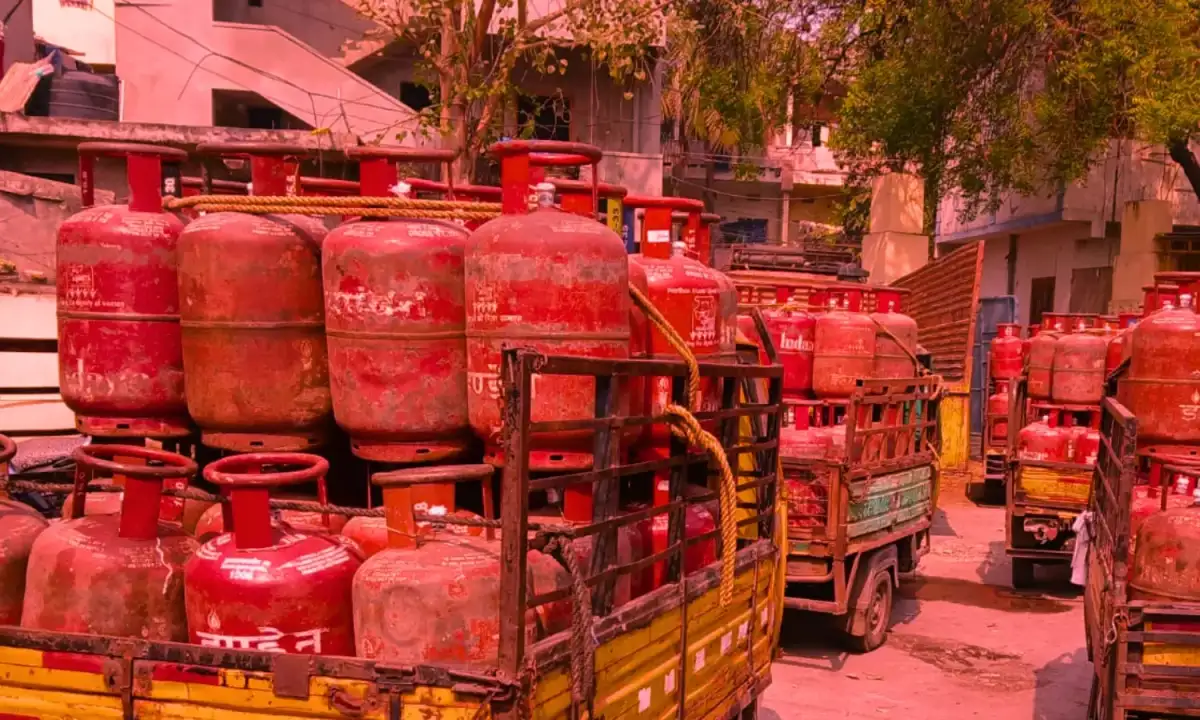
This directive, solidified in a March 6 order, threatens the daily operations of roughly 25,000 eateries across the state.
While household supplies remain stable for now, commercial LPG is being rationed, leading to warnings of price spikes and potential closures for hotels and catering services.
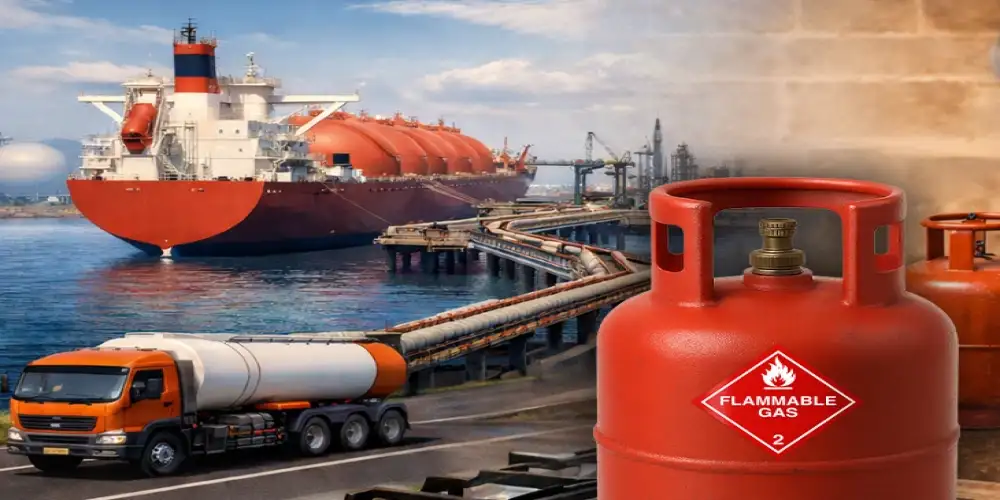
The state consumes approximately 3,500 tonnes of LPG daily, a flow now under threat by the maritime instability near the Strait of Hormuz.
The Math of Scarcity in Andhra Pradesh
The imbalance between private consumption and commercial necessity has created a lopsided marketplace. Large urban centers like Visakhapatnam are feeling the pinch most acutely due to their high density of service-based businesses.
| Category | Data Point |
|---|---|
| Total Population | 5.30 Crore |
| Domestic Connections | 1.47 - 1.7 Crore |
| Commercial Connections | 7 Lakh |
| Medium/Large Hotels | 5,000 |
| Small Eateries/Canteens | 20,000 |
| Highest Commercial Usage | Visakhapatnam (45,000 units) |
| Lowest Commercial Usage | ASR District (6,000 units) |
"The Centre has warned that strict action will be taken against violators of these directives… prioritising domestic LPG supply over commercial usage." — Ministry of Petroleum and Natural Gas framing.
Industry Panic and Strategic Re-routing
The hospitality industry, the primary casualty of this policy, reports that the supply crunch is no longer a theoretical threat. RV Swamy, president of the state’s hotel association, has sought intervention from the Civil Supplies Minister to prevent a total freeze in kitchen operations.
Read More: Andhra Pradesh LPG Gas Supply Is Safe On 22 October 2024 So Families Do Not Need To Worry

In major metros like Mumbai, reports suggest nearly 20% of establishments have already halted operations due to the gas drought.
The government has expanded "priority status" to include not just homes, but also hospitals and schools, further pushing restaurants to the back of the queue.
Reliance and other refiners are reportedly attempting to ramp up local production to fill the gap, though the immediate shortfall remains tied to imported tankers.
Geographic Fragility
The crisis is a direct result of India’s heavy reliance on the West Asian energy corridor. Because the region provides nearly two-thirds of India’s liquefied natural gas, any friction between Iran, Israel, and the US acts as a clog in the pipe.
Refineries are currently being pressured to maximize 'LPG recovery'—essentially scraping the bottom of the barrel to keep the cooking gas pool filled. While India maintains roughly eight weeks of strategic reserves, these are primarily crude oil, not the processed gas required for immediate burner use.
Background: The Hormuz Bottleneck
The current scarcity is an echo of the Hormuz Shock. India’s successful push to expand household gas access over the last decade has created a massive, rigid demand that the government cannot afford to ignore politically. Consequently, when the Persian Gulf becomes a combat zone, the state chooses to protect the voter’s kitchen at the expense of the merchant’s business. This systemic dependence on imported molecules ensures that any tremor in West Asian geopolitics results in a cold stove in an Andhra restaurant.
Read More: US Stock Market Prices Fall in March 2025 as Investors Buy Gold to Stay Safe