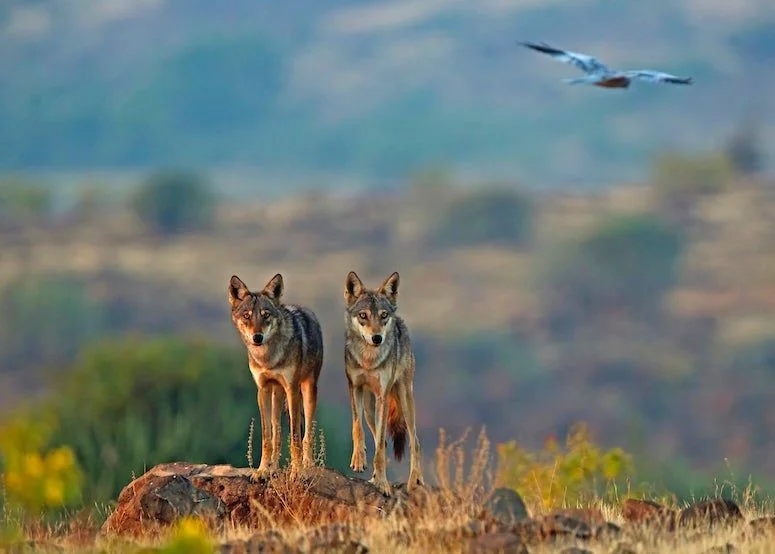
New genomic research indicates that wolves inhabiting the Indian subcontinent and the Tibetan Plateau represent remarkably ancient and genetically distinct lineages, isolated from other wolf populations for over 100,000 years. This discovery fundamentally alters our understanding of grey wolf evolution, positioning southern Asia as a crucial nexus of genetic diversity and highlighting the urgent need for targeted conservation efforts.
The study, published in Communications Biology, reveals that Tibetan wolves represent the earliest diverging lineage within the broader grey wolf species. Furthermore, the research suggests that when viewed independently of wolves from Pakistan and southwestern Asia, Indian wolves also form an early-diverging branch of the grey wolf phylogeny. This suggests that southern Asia, encompassing both the Tibetan Plateau and the Indian subcontinent, is a "hotbed" for grey wolf diversity, holding vital clues to the past and potential pathways for the future of these animals.
Read More: Indigenous Data Rights Now Key in Conservation Genomics
Deep Divergence and Unexpected Genetic Wealth
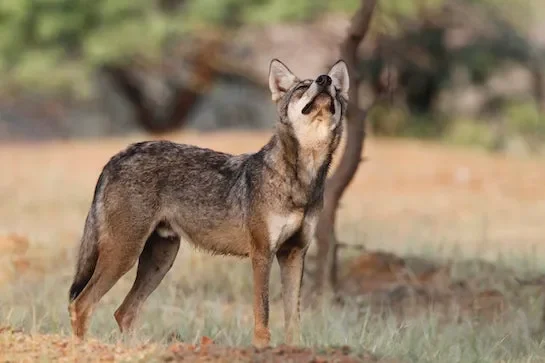
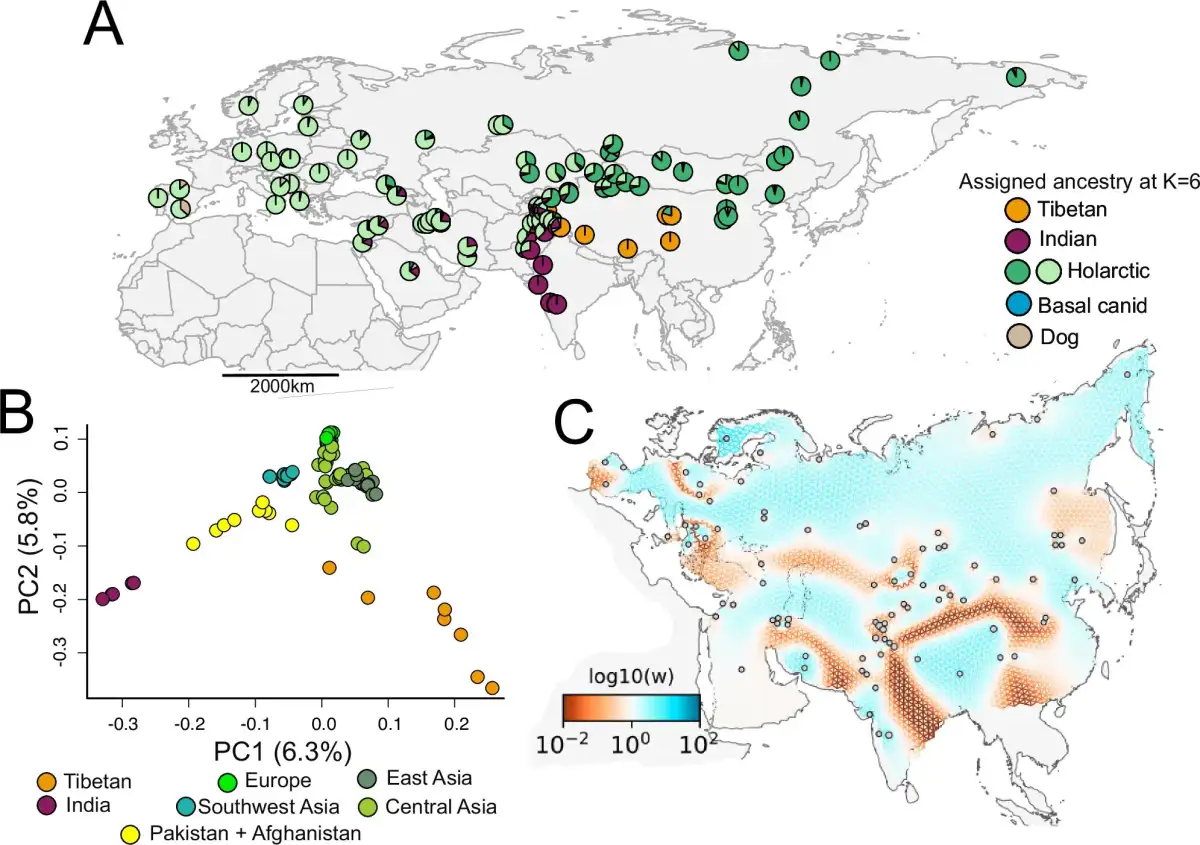
Analysis of wolf DNA from across Asia has identified three major genetic groups: the Indian, Tibetan, and Holarctic wolf lineages. Unlike wolves from historically larger populations in central and southwestern Asia, which exhibit higher genetic loads, the Indian and Tibetan wolves, stemming from historically smaller populations, possess unique genetic characteristics.
The DNA of wolves in southern regions of Asia contains a surprisingly large amount of unique genetic variation, establishing them as a significant reservoir of global wolf genetic diversity. This finding contradicts expectations, as these populations were previously thought to have low genetic diversity.
Implications for Conservation
The findings carry significant weight for conservation policies. The distinct genetic makeup of Indian and Tibetan wolves necessitates specialized protection measures, moving beyond generic wolf conservation strategies. These ancient lineages harbor irreplaceable genetic information critical to understanding the evolutionary history of grey wolves, making them evolutionarily important members of the global grey wolf family.
Read More: Orangutan Mothers Plan Playdates for Babies in Borneo
Evolutionary Roots in the Pleistocene
The expansion of the grey wolf (Canis lupus) across Holarctic regions during the late Pleistocene period typically resulted in recent maternal origins for most grey wolves, forming a widespread Holarctic clade. However, the Indian subcontinent and the Tibetan Plateau are home to two deeply divergent mitochondrial clades, estimated to be between 200,000 and 700,000 years old. These ancient clades are distinct from the more widely distributed Holarctic clade.
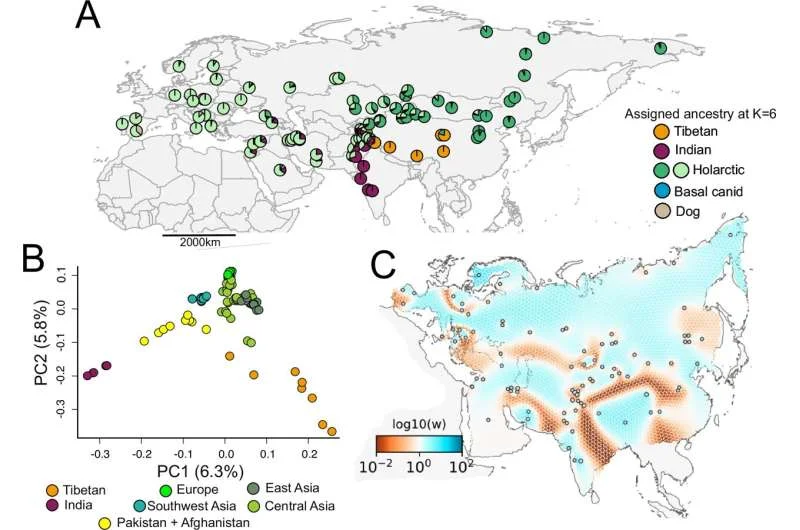
The genomic analyses confirm that Indian and Tibetan wolves are genetically separate from each other and from the broadly distributed wolf populations associated with the Holarctic mitochondrial clade. Sequencing of Indian and Tibetan wolves, alongside additional canid genomes, has been instrumental in resolving this phylogenomic history.
Southern Asia: A Cradle of Diversity
The convergence of the Indian, Tibetan, and Holarctic wolf lineages in southern Asia underscores the region's evolutionary significance. This geographical confluence is not only a point of intersection for these major groups but also a testament to the deep historical presence and unique evolutionary trajectories of wolf populations in this part of the world. The research challenges the traditional focus on northern wolf populations as the primary drivers of grey wolf evolution and diversity.
Read More: New Room Temperature Photon Source for Quantum Tech in Korea