Americans are leaving large cities and moving to smaller towns and rural areas. This trend is changing where people live in the United States. Data from recent years shows more people are moving out of big metropolitan areas and into nonmetropolitan counties. This shift affects population growth and where new residents settle.
Context
Migration patterns in the United States have been changing. For many years, large cities attracted young people who formed the workforce and cultural core of these areas. However, recent trends indicate a movement away from these urban centers.
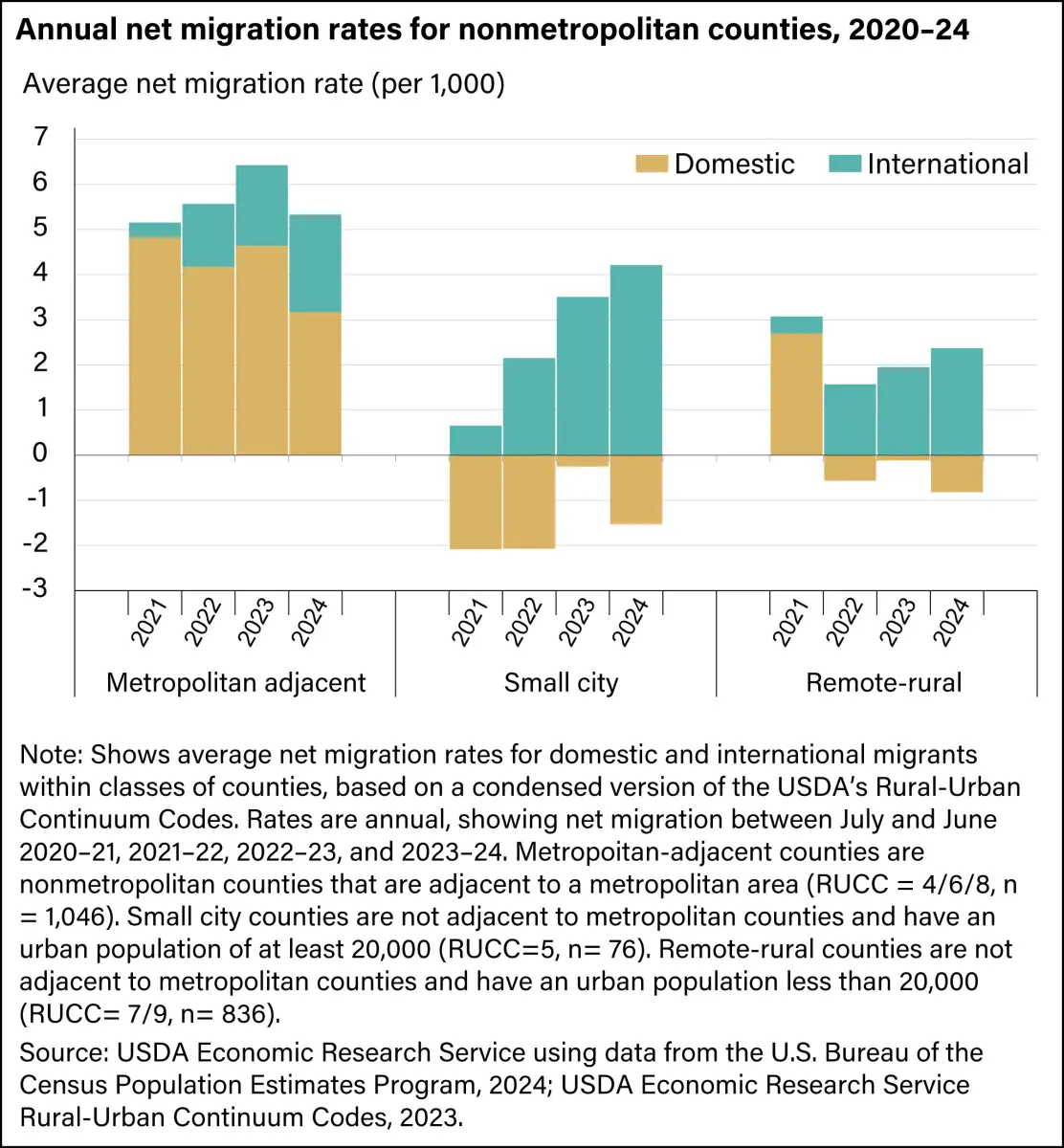
Recent Years: Data points to a significant outflow from large cities and an increase in domestic net migration towards nonmetropolitan counties.
Key Drivers: Factors such as the rising cost of living, including housing costs and inflation, are identified as primary reasons for this shift.
Remote Work: The continued prevalence of remote work arrangements has given people more flexibility to choose where they live, often leading them to seek more affordable or slower-paced environments in rural and suburban areas.
Demographic Trends: Large urban counties have experienced declines in population, particularly among young children, with birth rates falling faster than in rural counties.
Evidence
Multiple sources indicate a clear trend of Americans relocating from large cities to rural and smaller communities.
Urban Core Losses: Through the first four years of the 2020s, urban core counties of major metropolitan areas (over 1,000,000 population) lost 3,259,000 net domestic migrants. This rate of loss is three times higher than in the previous decade. (Article 7)
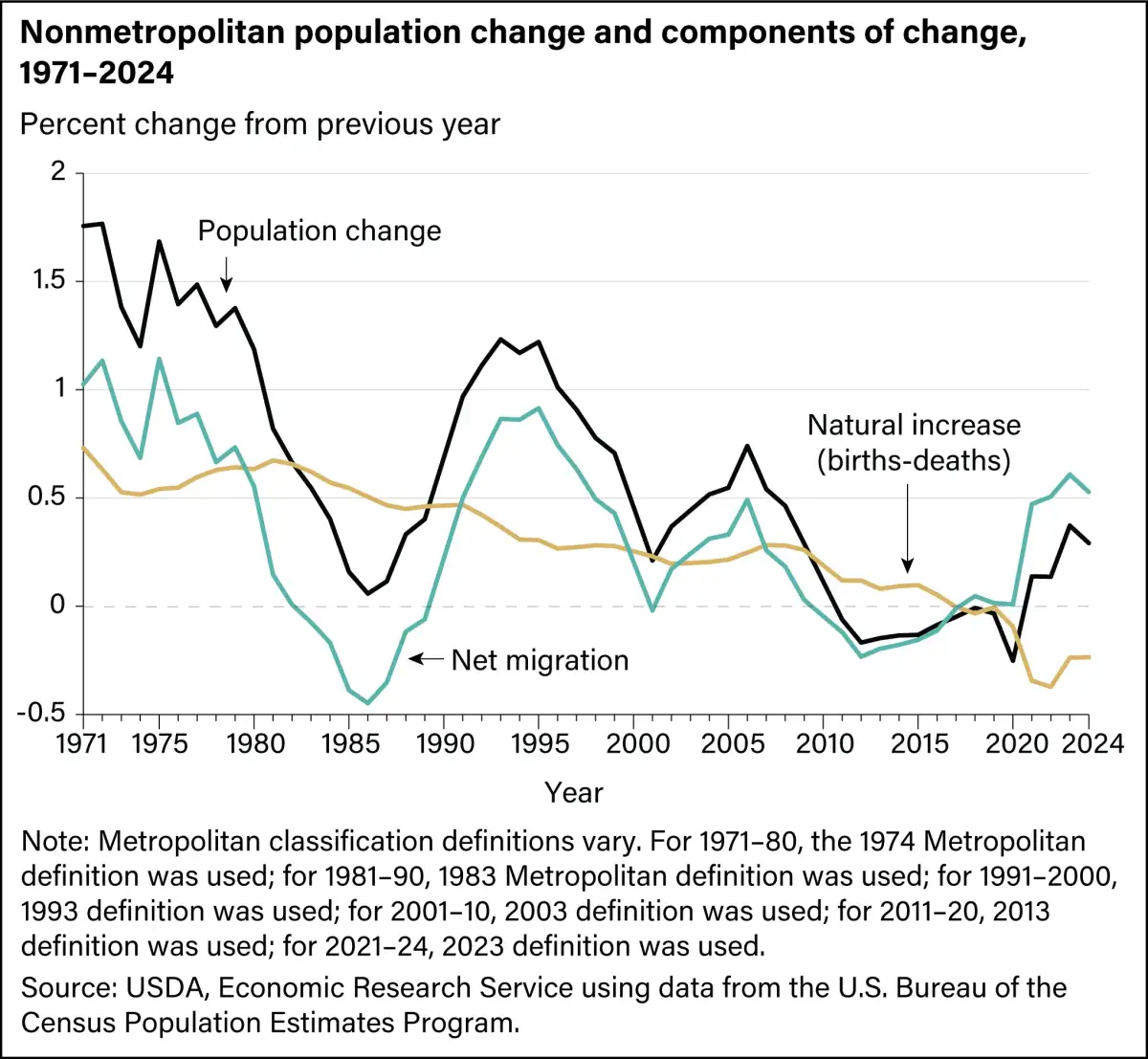
Rural Growth: Recent U.S. nonmetro population growth has been largely driven by migration, with more people moving into nonmetro counties than moving out. International migration also contributed to this growth, adding an estimated 300,424 people to nonmetro populations. (Article 1)
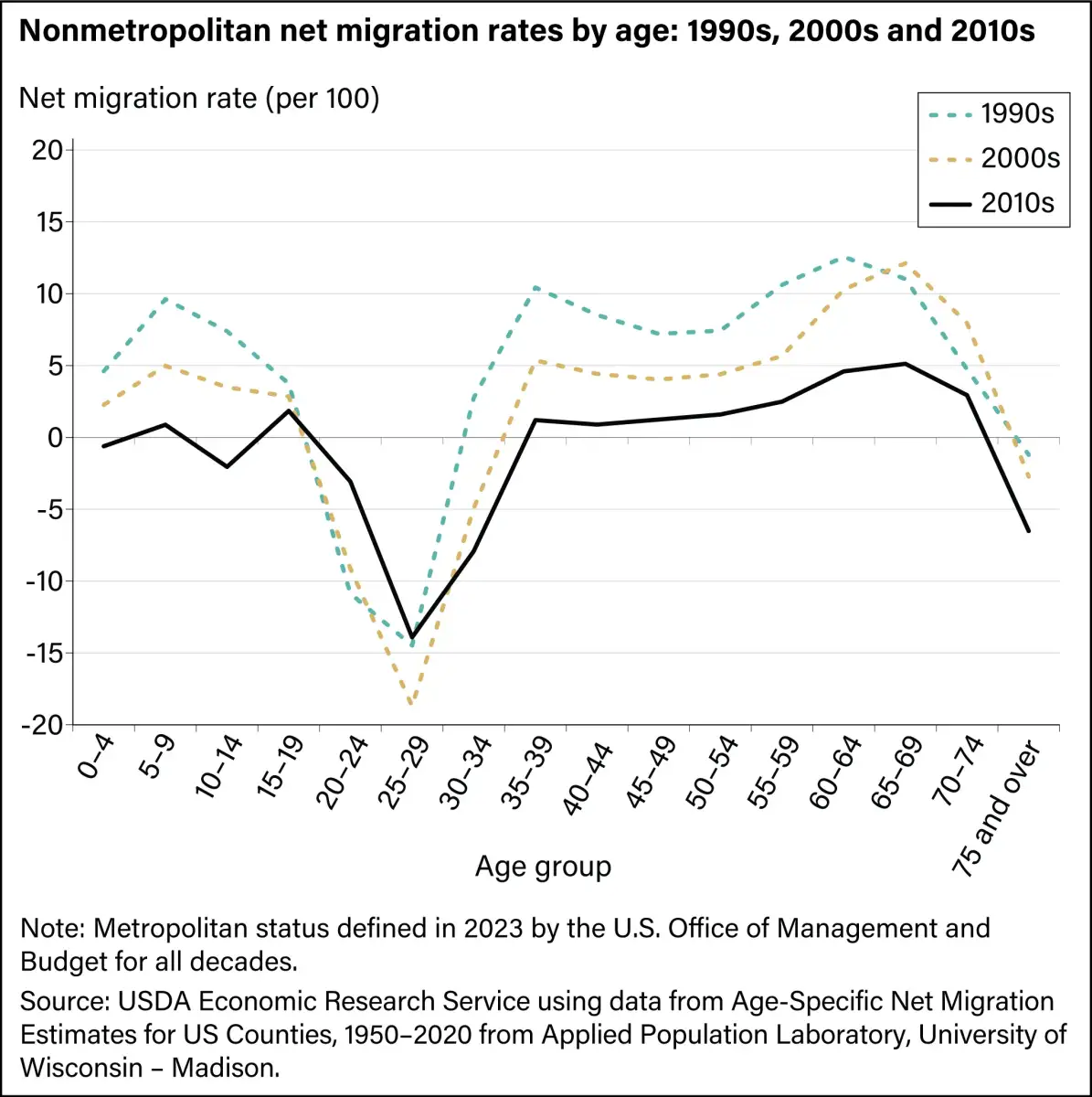
Young Adult Migration: Young Americans, who historically formed the base of large cities, are now leaving these areas in large numbers, contributing to growth in small towns and rural regions. (Article 2)
Destination States: In 2025, Oregon saw the highest percentage of inbound migration. California also experienced significant migration shifts, with a notable percentage of inbound movement. Top destination metropolitan areas included Eugene-Springfield, Oregon, Wilmington, North Carolina, and Dover, Delaware. (Article 3)
Cost of Living as a Driver: Rising housing costs and inflation are key factors pushing individuals to seek more affordable regions. Remote work flexibility further supports this trend, allowing people to move to areas with a lower cost of living without sacrificing quality of life. (Article 5)
Impact of Remote Work: Pandemic-related remote work and early retirements have given individuals more residential flexibility, accelerating migration gains in some rural areas. (Article 6)
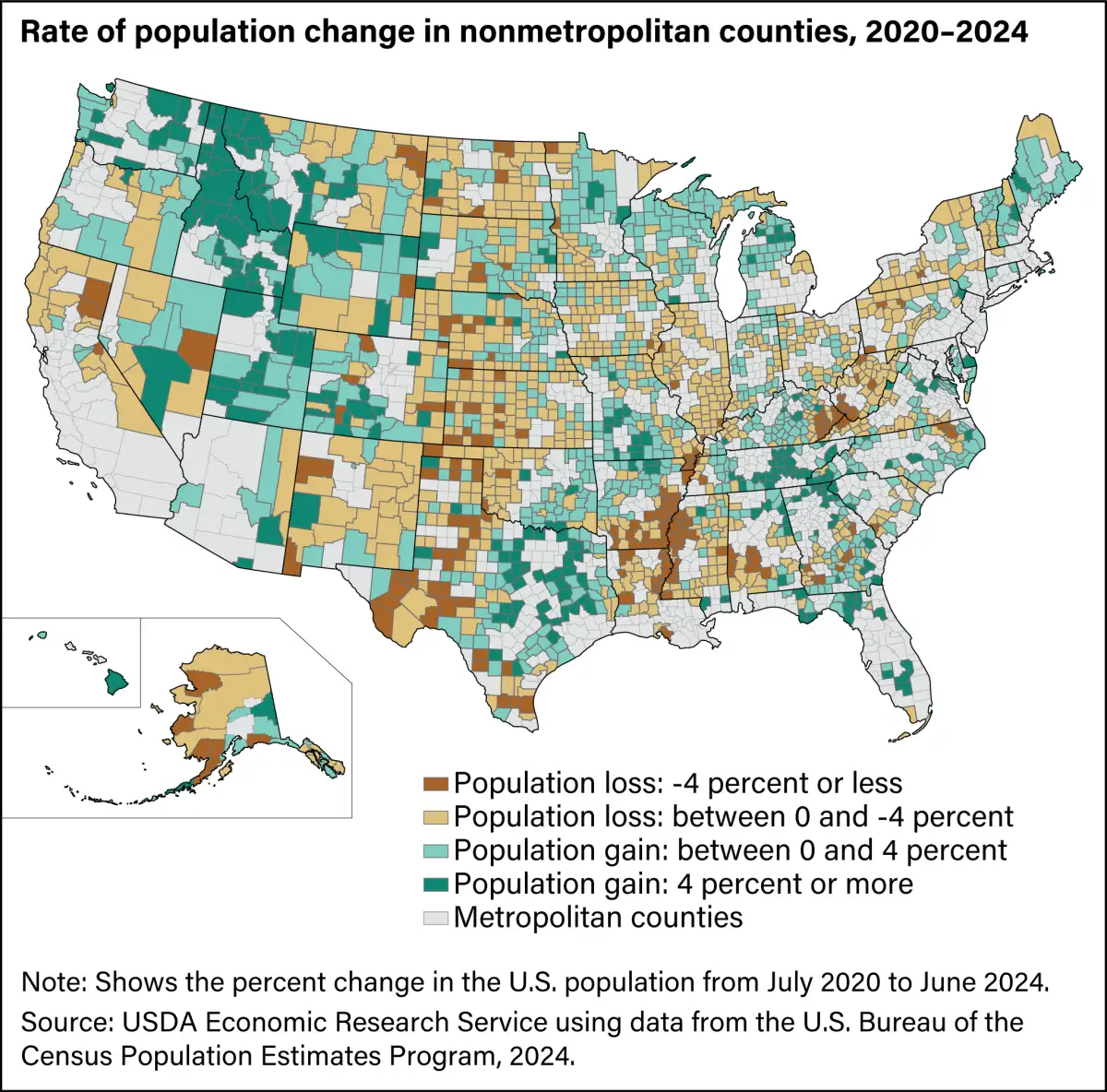
County-Level Dynamics: While a few counties are experiencing significant in-migration, many others see small out-migration. However, most places losing more residents than they gain are losing only a small fraction of their population. (Article 4)
Urban Decline vs. Rural Growth
Large urban areas are experiencing population decreases, particularly among their core populations, while nonmetropolitan counties are seeing growth.
Urban Core Losses: Urban core counties of large metropolitan areas have seen a substantial net loss of domestic migrants. (Article 7)
Rural Population Gains: Nonmetro counties are experiencing population increases primarily due to migration, both domestic and international. (Article 1)
Young Families Leaving Cities: Large urban counties have seen significant declines in their young child populations, with birth rates dropping faster than in rural areas. (Article 8)
Affordability and Remote Work as Catalysts
The desire for more affordable living and the opportunities presented by remote work are major factors influencing relocation decisions.
Cost of Living: Increasing housing costs and inflation are directly linked to people seeking more affordable locations. (Article 5)
Remote Work Flexibility: The ability to work remotely allows individuals to move to areas that offer a lower cost of living, a slower pace of life, or other amenities not found in expensive urban centers. (Articles 5, 6)
Quality of Life: Residents are looking for affordable living options while aiming to maintain a good quality of life. (Article 5)
Migration to Specific Regions
Certain states and metropolitan areas are experiencing higher rates of inbound migration.
Top Destination States: Oregon has been identified as a state with high inbound migration. (Article 3)
Key Metropolitan Areas: Specific metro areas like Eugene-Springfield, Oregon, Wilmington, North Carolina, and Dover, Delaware have attracted a significant share of inbound migration. (Article 3)
Adjacent Counties: Within nonmetro counties, those located near metropolitan areas have seen concentrated domestic net migration. (Article 1)
Expert Analysis
Researchers and analysts point to fundamental shifts in how and where Americans choose to live.
"Urban cores have started to shrink, losing first to the suburbs, then to ever further exurbs, and now to small towns and even rural areas." (Article 7)
This observation suggests a multi-stage migration pattern moving away from densely populated urban centers.
Read More: US 250th Anniversary on July 7, 2026, sees 20% not celebrating
"Recent U.S. nonmetro population growth has been due to migration, as more people moved into nonmetro counties than moved out." (Article 1)
This statement highlights migration as the primary driver of population change in rural areas.
"With remote work here to stay, people are moving to more affordable areas." (Article 5)
This insight directly connects the persistence of remote work to the increasing migration towards less expensive regions.
Conclusion
The evidence indicates a sustained and significant trend of Americans relocating from large urban centers to smaller towns and rural areas. This migration is driven by a combination of factors, most notably the increasing cost of living in major cities and the flexibility afforded by remote work. While some rural areas continue to experience population decline, others, particularly those with recreational amenities or adjacent to metropolitan areas, are benefiting from this influx of residents. The observed patterns suggest a long-term shift in demographic distribution, impacting urban planning, resource allocation, and the economic landscape of both departing and receiving communities. Whether these accelerated migration gains in nonmetropolitan areas will persist in the long term remains a subject for continued observation.
Read More: Tucker Carlson plans new US political party after leaving GOP
Sources
Economic Research Service, USDA: Provides data on rural economies and population trends, including migration patterns and factors influencing population change in nonmetro counties. https://www.ers.usda.gov/topics/rural-economy-population/population-migration
USA Today: Reports on the reasons behind young people leaving big cities, even as the pandemic's immediate impact fades, linking it to growth in smaller towns and rural areas. https://www.usaf.com/story/money/2024/10/14/young-adults-leaving-cities-for-rural/75616277007/
Newsweek: Features an analysis of states experiencing the highest rates of inbound migration, illustrating the scope of the ongoing "migration shift." https://www.newsweek.com/map-shows-states-most-americans-moving-to-amid-migration-shift-11319659
Marquette University Law School Faculty Blog: Examines domestic migration patterns from 2020 to 2024, detailing where Americans are moving and leaving, and the scale of population changes at the county level. https://law.marquette.edu/facultyblog/2026/01/where-americans-choose-to-move-and-where-they-leave-domestic-migration-from-2020-to-2024/
MyGoodMovers: Discusses regional migration trends and the underlying reasons, such as affordability and remote work flexibility, influencing Americans' moving choices. https://mygoodmovers.com/moving-resources/regional-migration-trends
Carsey School of Public Policy, University of New Hampshire: Publishes research on how migration continues to sustain population gains in rural America, noting the impact of remote work and early retirements. https://carsey.unh.edu/publication/migration-continues-sustain-population-gains-rural-america
Newgeography.com: Reports on the "exodus" from big cities driven by an affordability crisis, detailing the shrinking of urban cores and migration to exurbs, small towns, and rural areas. https://www.newgeography.com/content/008663-exodus-affordability-crisis-sends-americans-packing
Economic Insight Group (EIG): Analyzes the post-pandemic trend of young families leaving big cities, noting significant population declines in large urban counties and their birth rates. https://eig.org/families-exodus/