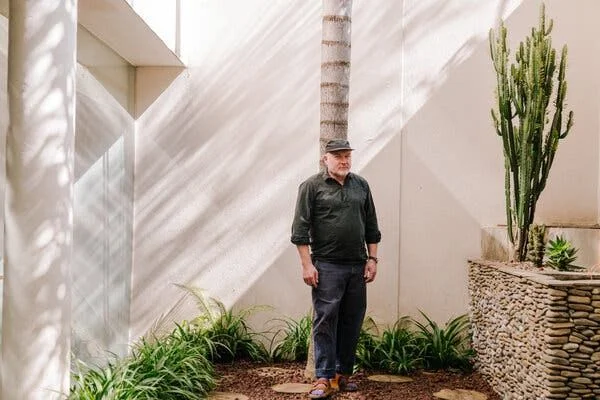
Alma Allen, the sculptor representing the United States at the 2026 Venice Biennale, has signed for representation with the global powerhouse Perrotin and Mendes Wood DM. This commercial realignment follows a rare public fracturing of his previous gallery relationships. Allen stated that his former representatives, Olney Gleason and Mendes Wood DM, severed ties with him in late 2025 after he accepted the invitation to headline the American Pavilion. While the latter has now returned to his roster alongside Perrotin, the initial abandonment underscores the volatile friction between Nationalistic branding and Commercial art markets.

“I am representing the United States and not the current administration.” — Alma Allen on the distinction between state duty and political endorsement.
The Mechanics of Selection
The path to the 2026 Pavilion deviated from traditional bureaucratic rhythms. The National Endowment for the Arts (NEA) did not participate in the selection, citing staffing gaps and scheduling knots. Instead, the selection was steered by the U.S. State Department and curator Jeffrey Uslip.
Read More: Banana Art Stolen From French Museum, Replaced Quickly

Artistic Control: Allen claims he maintains total sovereignty over the exhibition’s content, despite the pavilion's partial reliance on federal coins.
Institutional Void: The absence of the NEA in the selection process removed a layer of peer-review usually present in such appointments.
The Mandate: The State Department framed the choice as a vehicle to "showcase American excellence" ahead of the nation’s 250th anniversary.
| Entity | Role / Impact | Status |
|---|---|---|
| Perrotin | New Global Representation | Active |
| Mendes Wood DM | Previous Fallout / Current Co-Rep | Reinstated |
| U.S. State Dept | Primary Funding & Selection | Direct Control |
| NEA | Historical Selection Body | Excluded |
The Friction of the "Safe" Choice
Critiques within the art industry characterize Allen as a conservative or "safe" selection compared to previous representatives like Simone Leigh or Jeffrey Gibson. His work—heavy, abstract shapes of wood, bronze, and stone—is viewed by some as less politically jagged than his predecessors. This perceived neutrality arrived during a government shutdown and a directive to prioritize projects linked to the Semiquincentennial.

Materials: Allen utilizes iron, timber, and bronze, often aided by large-scale robotic milling.
Geography: Born in Utah, he operates largely out of a studio in Tepoztlán, Mexico, distancing him from the New York or Los Angeles epicenters.
Market Pressure: The initial gallery departures suggest a fear of "state-tainted" branding, though the subsequent Perrotin signing indicates the market has ultimately appraised the Venice platform as a net gain for his Valuation.
Background: The Venice Burden
The Venice Biennale remains the primary site where art and diplomacy collide in an uncomfortable pile. The U.S. Pavilion, a neoclassical building in the Giardini, often forces artists to act as unwilling diplomats.
Jeffrey Uslip, a board member of the conservancy, initiated the offer to Allen in October 2025.
Allen’s work has recently gained visibility through public installations, such as the series of large-scale shapes placed on Park Avenue in Manhattan.
The 2026 selection has been overshadowed by the Trump administration’s cuts to arts funding and a mandate for "excellence" that many critics interpret as a pivot toward traditional, less provocative aesthetics.