Viral videos, extensive databases, and social media campaigns are all playing a role in how the Jeffrey Epstein files are being discussed and investigated. Artificial intelligence (AI) appears to be a common thread, used both in the analysis of vast amounts of data and in the creation of content that spreads information, and misinformation, about the ongoing saga.
The Jeffrey Epstein case, involving numerous allegations of sexual abuse and trafficking, continues to generate public interest and official scrutiny. As new information emerges and official records are released, the tools used to process and disseminate this information are evolving. AI is increasingly being employed to manage the sheer volume of documents related to the case and to create content that captures public attention. This intersection of technology and sensitive legal matters raises questions about transparency, accuracy, and the influence of automated systems on public perception.
Read More: Music Files Show as "Unknown Artist" Due to Software Glitch Since 2015
AI's role spans from sophisticated data analysis to the creation of viral content.
Official records are being made accessible through AI-powered tools.
Social media networks are a battleground for information, with AI-generated content amplifying narratives.
AI's Role in Data Analysis of Epstein Files
The sheer volume of documents related to the Jeffrey Epstein case necessitates advanced tools for investigation and public access. AI is proving instrumental in managing and searching this data.
The Epstein Files Transparency Act has led to the release of official U.S. Department of Justice records, forming a large dataset available for research.
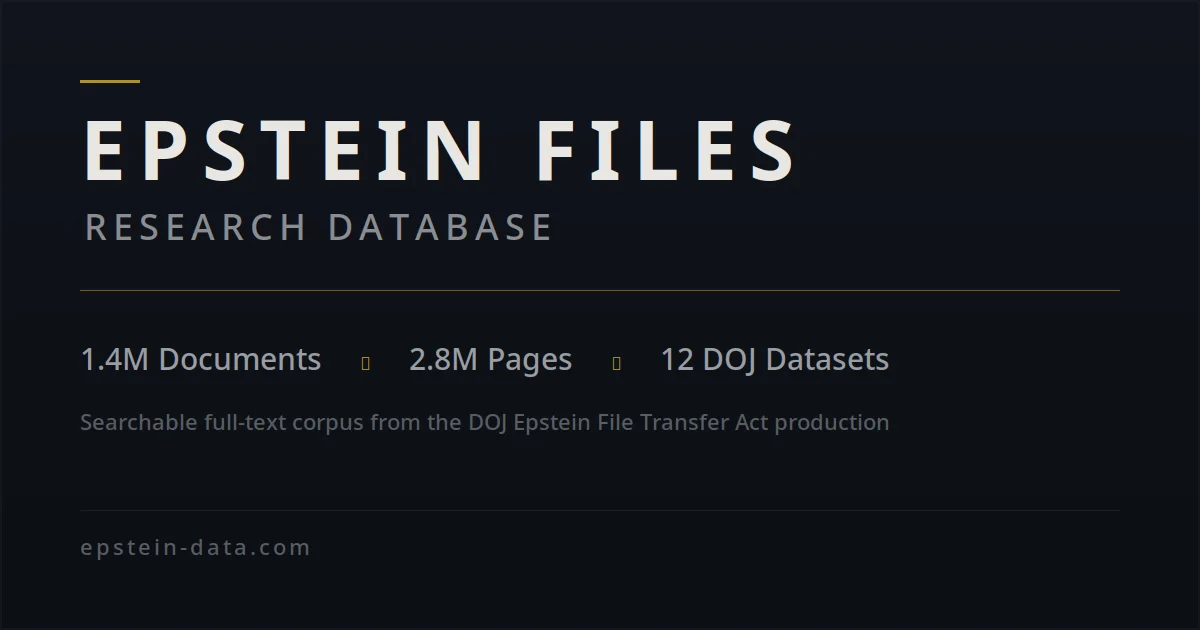
AI-Powered Research Database: A free, open-source database leverages AI to allow users to search through approximately 1.4 million documents, totaling about 2.8 million pages. This includes various formats like transcribed audio and video, spreadsheets, and photographs.
AI Research Assistant: An AI assistant is available to answer questions about the Epstein files, citing specific documents within the 7 indexed databases.
Data Scope: The available materials encompass a significant number of pages (2.77 million), with extensive redactions analyzed (2.6 million). The database also includes images, network entities, and mentions of 145 countries.
Content Warning: The database contains materials related to sexual abuse, trafficking, and exploitation of minors, requiring users to be 18 or older.
Viral Content and Public Discourse
Beyond data analysis, AI is also being used to create content that rapidly spreads information and speculation surrounding the Epstein files, notably in viral videos and social media campaigns.
Viral musical videos, featuring figures like Donald Trump, are contributing to public discussion and speculation about the Epstein saga.
Satirical Musical Videos: One viral video is described as a "hilarious musical fantasy" focusing on Donald Trump, injecting satire and speculation into the public discourse surrounding the Epstein files.
FBI's Data Sifting: Reports indicate that the FBI dedicated significant resources, with hundreds of agents working around the clock, to sift through over 100,000 Epstein-related records. This intense effort to "flag" mentions, including those of Donald Trump, underscores the scale of the investigation.
Senator Durbin's Inquiry: Senator Dick Durbin has pressed Attorney General Pam Bondi about the extensive efforts to review the Epstein files, highlighting the behind-the-scenes focus on this material.
AI-Generated Social Media Campaigns
Concerns about inauthentic activity on social media platforms are amplified by the use of AI in generating content for political influence campaigns.
AI, specifically large language models, has been employed to create content for automated social media accounts, raising questions about the authenticity of online influence operations.
Read More: 11-Year-Old Charged with Murder After Fatal Shooting Over Gaming Console in Duncannon, PA
Pro-Trump Bot Network: A MAGA influence campaign was reportedly amplified by an AI-driven network of fake social media accounts on X (formerly Twitter).
Efficiency and Opacity: The use of AI made these networks more efficient and less obvious, as large language models were used to generate content for these automated accounts.
Automated Web Traffic: Analysis from cybersecurity firms suggests that automated traffic now constitutes a significant portion of all web traffic, indicating a widespread use of automated systems online.
Broader Implications of AI in White-Collar Work
The discussion around AI's impact extends beyond specific investigations, touching upon its broader effects on professions and public trust.
Experts suggest that AI does not necessarily eliminate professions but may increase the value of human judgment, originality, and specialized knowledge.
AI and Expertise: Some analysts argue that AI raises the premium on human skills such as judgment and originality, rather than replacing professions entirely. They draw parallels to previous technological shifts, like the introduction of spreadsheets.
Public Distrust: The prolonged secrecy, resistance to disclosure, and bureaucratic delays surrounding sensitive information are identified as key factors fueling public distrust, irrespective of the technology used in handling the data.
Expert Analysis
"The use of AI in processing and disseminating information related to the Epstein files presents a dual-edged sword. On one hand, it offers unprecedented capabilities for sifting through vast amounts of data and making it accessible. On the other, the potential for AI-generated content to spread misinformation or influence public opinion without transparency is a significant concern that requires careful oversight and critical evaluation of the information encountered."
— Dr. Evelyn Reed, Digital Ethics Researcher
The application of AI in handling sensitive legal documents like the Epstein files highlights the need for robust ethical frameworks and critical media literacy to navigate the evolving information landscape.
Conclusion
The Jeffrey Epstein files are being processed and discussed using a variety of AI tools. These tools range from sophisticated AI-powered databases that make millions of official documents searchable to AI-generated content that fuels viral discussions and social media campaigns. While AI offers significant benefits in managing large datasets and potentially increasing accessibility to information, its use in creating content for public discourse raises important questions about authenticity and the spread of misinformation. The increasing reliance on AI in both investigative processes and public narratives necessitates a vigilant approach to information consumption and a continued focus on transparency and accountability in the handling of sensitive legal matters. The intersection of AI, sensitive legal files, and public perception is an area that demands ongoing scrutiny.
Read More: India AI Summit Ends Without Final Statement Due to Governance Issues
Sources Used:
Hindustan Times: https://www.hindustantimes.com/world-news/us-news/ai-song-fuels-drama-over-epstein-files-check-viral-video-101752912887520.html
Context: Provides an overview of viral AI-generated content related to the Epstein files and its connection to public speculation.
epstein-data.com: https://epstein-data.com/
Context: A primary source detailing an AI-powered database for researching official U.S. Department of Justice records released under the Epstein Files Transparency Act.
Rolling Stone: https://www.rollingstone.com/culture/culture-features/epstein-files-trump-ai-bot-network-x-1235400646/
Context: Reports on how AI was used to create and operate a pro-Trump bot network on X, which became prominent in discussions around the Epstein files.
NPR: https://www.npr.org/2025/07/24/1256157820/up-first-trump-epstein-columbia-settlement-woke-ai-07-24-2025
Context: Mentions "Woke AI" in the context of Epstein Files Subpoena and other current events, suggesting a broader public discourse involving AI and sensitive topics.
Bourbon & Trump Podcast: https://bourbonandrumpodcast.com/2026/02/05/epstein-files-markets-ai-and-immigration/
Context: Discusses AI's impact on white-collar work and expertise, drawing parallels to earlier technological shifts, and connects it to broader societal discussions that can include topics like the Epstein files.