Political campaigns are now employing 'artificial intelligence' to churn out advertisements with unnerving speed and a disturbing lack of transparency. While the allure of creating hundreds of ads in minutes—saving time and money—is potent, the fallout is sparking significant apprehension. Voters express deep suspicion toward synthetic political messages, with studies indicating that such content erodes trust and persuades less.

AI is actively being integrated into political advertising, presenting risks of misinformation and potentially destabilizing democratic processes due to its speed and ease of use, while regulatory frameworks lag significantly behind its deployment.
State-level regulations are a patchwork, with some legislatures, like those in 'Maine' and 'Vermont', introducing bills that would demand disclosures for AI-generated imagery in political ads. Yet, federal bodies like the 'FEC' have declared they will not pursue new rules against using AI to impersonate candidates through deepfaked audio or video. This regulatory vacuum allows for the creation of misleading content, such as AI-generated radio ads that mimic a rival candidate's voice or computer-altered videos depicting fabricated scenarios.
Read More: Taiwan Holds Nantou County Drills to Prepare for State Collapse

The Growing Use and Its Ramifications
Political campaigns are discovering that AI tools can generate campaign materials, including emails, at an unprecedented rate. A notable example includes the 'Republican Committee for Loudoun County' releasing three AI-generated ads attacking a Democratic governor, and the 'National Republican Senatorial Committee' using a computer-altered image of a candidate. Startups like 'BattlegroundAI' are even developing generative AI tools capable of producing political ads almost instantaneously.
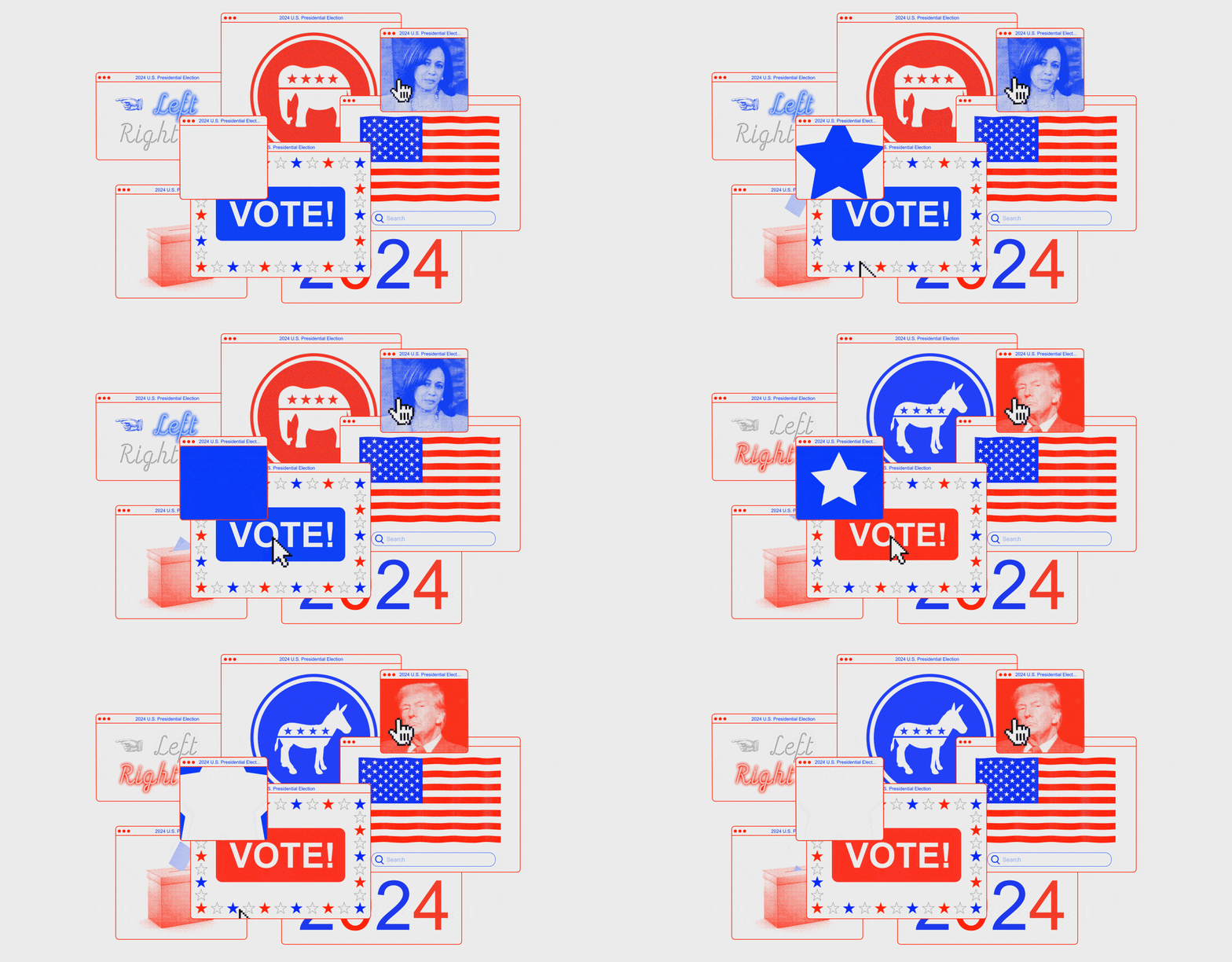
However, the pushback is palpable. Voters are described as being "broadly wary of AI in politics," disliking unlabeled AI-generated content and feeling ill-equipped to identify it. Campaigns that overtly use AI risk alienating the electorate, with anecdotal evidence suggesting such tactics can "backfire," making politicians appear worse and diminishing voter engagement. This public distrust stems from AI's broader impact on the information landscape, where it has already undermined confidence in what people see, hear, and read.
Read More: Chrome mimeHandler API lets extensions handle file types
Legal and Ethical Quandaries
The proliferation of AI-generated political ads has raised serious questions about legality and ethics. Campaign finance attorneys point to the increasing use of deepfake videos as a tool to sharpen attacks, prompting queries about legal requirements for disclosure. While social media platforms like 'Meta' and 'X' may label certain AI-generated content, their shift away from professional fact-checking towards user-generated notes offers little solace. The potential for AI to be used to fabricate candidate speech or imagery poses a direct threat to public trust.
Despite the growing concerns, some strategists argue that AI-generated videos can be persuasive, provided they are used ethically. Nevertheless, the sheer speed at which AI can generate content—producing "hundreds of ads in minutes"—raises fears that AI-powered misinformation could potentially "drown out" established political movements and destabilize democratic processes, especially in the absence of robust regulatory guardrails.
Read More: FBI Analysts Review Georgia 2020 Election Data in Fulton County
The Regulatory and Technological Landscape
The integration of AI into political advertising is not entirely new. President Biden's executive order on AI, issued last year, built upon previous discussions regarding the technology's risks. Yet, the regulatory approach has largely been one of "hands-off," allowing AI's influence to seep into campaigns without significant oversight. The potential for AI to impersonate candidates through deepfaked audio or video has been explicitly deemed by the 'FEC' as something they will not regulate with new rules.
Beyond the immediate electoral impact, the underlying technology faces its own set of challenges. Concerns have been raised about the potential biases inherent in AI systems, and the originality of AI-generated political ads remains a point of discussion. Furthermore, proposed laws against AI deepfakes are encountering pushback, often framed around 'free speech' concerns, creating a complex web of technological capability, public apprehension, and legal inertia.
Read More: BEREC Asks for Mobile Network API Ideas from Developers